


 Be The Investor Research
Schwab’s Crypto Expansion Meets a Tougher Policy and Market Test

Schwab’s direct crypto rollout gives it a new way to retain client assets, while Bitcoin’s volatility and political uncertainty keep the near-term revenue opportunity difficult to size.
Charles Schwab’s move into direct cryptocurrency trading is more important for its competitive position than any single day’s move in Bitcoin. The broker began rolling out spot Bitcoin and Ethereum trading in May 2026, adding direct ownership to an existing menu that included crypto exchange-traded products, futures and related funds.
That expansion gives Schwab a chance to keep more client activity on its own platform. The company reported 40.1 million active brokerage accounts and $13.41 trillion in client assets as of August 31. Even modest adoption across that base could deepen engagement, although Schwab has not disclosed enough trading or revenue data to measure the contribution.
The market backdrop remains difficult. Bitcoin recently fell toward $80,000 before rebounding, while Ethereum had performed worse over the year. Adam Lynch of the Schwab Center for Financial Research attributed some of the sharp movement to leverage, which can amplify both selloffs and rebounds as positions are liquidated.
Policy is the other source of uncertainty. The current federal administration has supported digital assets, but legislation and agency rules remain unfinished. A change in congressional control after the midterm elections could slow or redirect that work. Lynch described that possibility as a risk while still expressing some optimism that lawmakers could reach a bipartisan agreement.
For Schwab investors, the relevant question is not whether Bitcoin recovers this week. It is whether direct crypto trading brings assets and transactions onto the platform without creating outsized compliance, technology or reputational costs. The company’s September activity report showed cautious retail positioning more broadly, which argues against assuming rapid adoption from product availability alone.
Schwab’s crypto offering is therefore a strategic option rather than a proven earnings driver. The upside is stronger retention and a broader product set for younger or crypto-active clients. The downside is that volumes can be volatile, regulation can change, and the economics are still undisclosed. Investors should look for client adoption, pricing and risk-control details in future updates before assigning material value to the launch.
Continue your BTC research
Related News

Ethereum's Faster Proofs Still Need a Worst-Case Cost Limit
Vitalik Buterin says Ethereum's zero-knowledge provers need a hard maximum cost per unit of gas. Fast results on sampled blocks do not yet guarantee predictable resources for every valid workload.
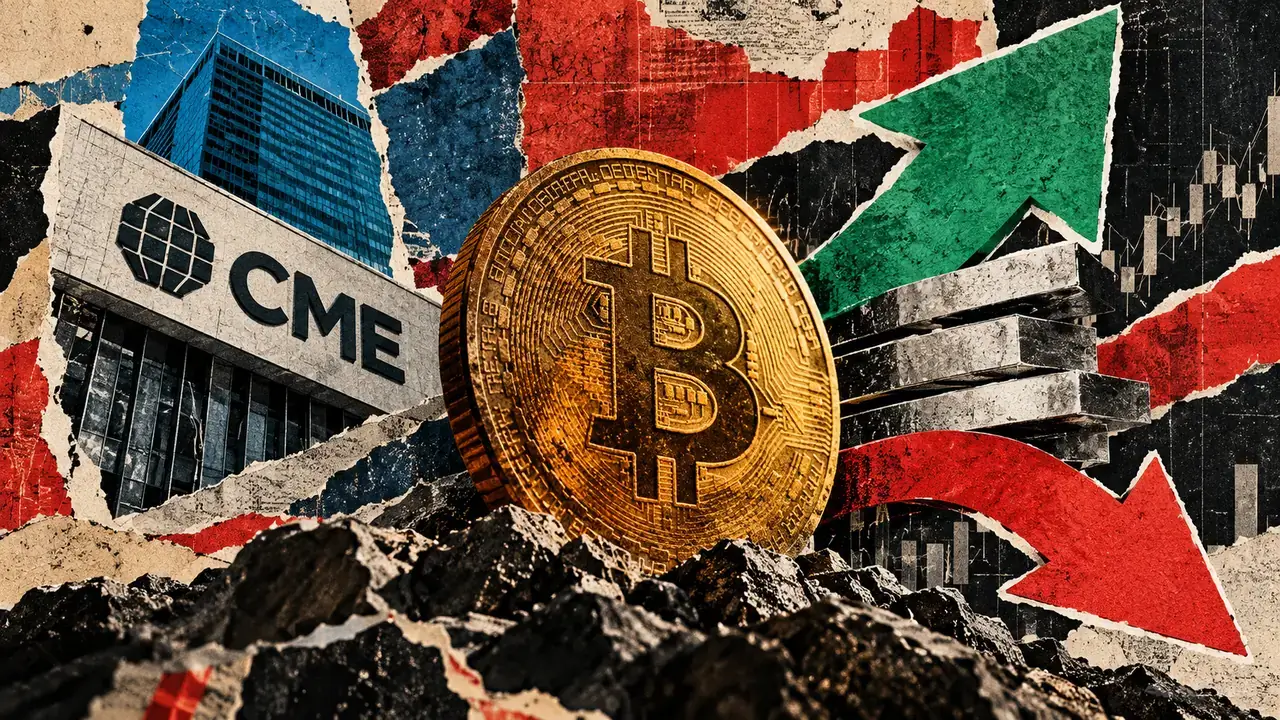
Bitcoin Funds Cut Net Shorts, but the Data Shows Less Risk, Not a Bull Turn
Leveraged funds reduced their net bearish CME bitcoin-futures position by nearly 15% through October 13. Rising spread trades and lower open interest point to de-risking rather than clear bullish conviction.
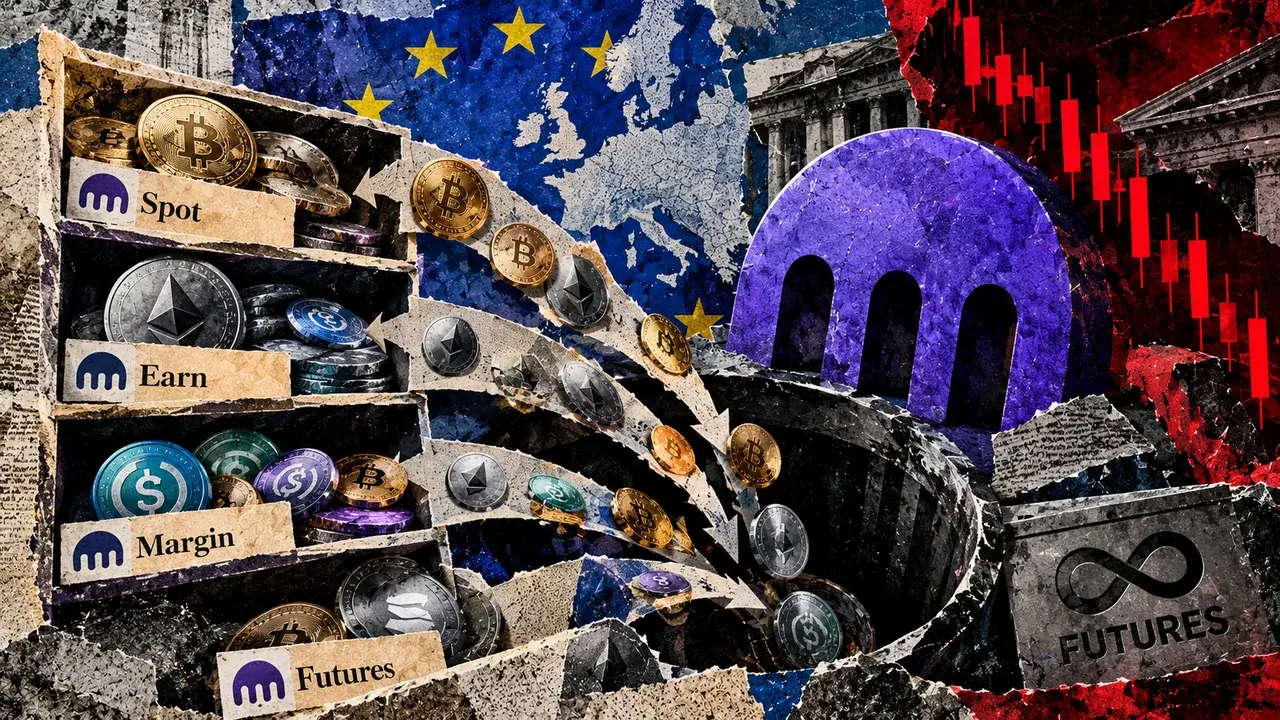
Kraken's Unified Wallet Makes Futures Losses a Broader Account Risk
Eligible European users can opt into Kraken's Unified Wallet and use spot and qualifying Earn balances as futures collateral. The convenience comes with a wider loss boundary under default cross margin.

Strive Added 3,311 Bitcoin, but the Purchase Came With More Shares
Strive bought 3,311 bitcoin for about $280 million, lifting holdings to 32,773. The acquisition increased its treasury scale while new common and preferred shares highlighted the financing cost.

BitFuFu Mining Output Slipped as Ethiopia Deal Risk Moved Forward
BitFuFu produced 167 bitcoin in September while managed computing power declined. A power-supplier dispute at an Ethiopian acquisition target now puts prepaid cash and deployed mining machines at risk.
Strategy Added 267 Bitcoin as Its Stock-Funded Treasury Expanded
Strategy bought 267 bitcoin for $22.1 million at an average of $82,900. The purchase was small relative to its holdings but again tied treasury growth to common-stock issuance.
Aave's Proposed USAT Gateway Adds Permission Risk to the Return Trip

TokenLogic has proposed a permissioned GHO Stability Module on Avalanche that would let approved counterparties exchange waUSAT for GHO. The design could add institutional stablecoin liquidity to Aave, but it creates an important asymmetry: receiving and transferring GHO would not guarantee the ability to reverse the original swap.
Approval would be checked in both directions. If access were revoked after a counterparty deposited waUSAT and received GHO, the participant could still transfer GHO but could not use the module to recover waUSAT. The proposal says that restriction should be reflected in commercial agreements.
Even a successful reverse swap would return a receipt token rather than dollars. The holder would still need to withdraw USAT from Aave, subject to available liquidity and reserve conditions, and then meet Anchorage Digital Bank's requirements for issuer redemption. Each step has its own permission and operational risk.
The proposal separates 65 million GHO of reserve funding, a 25 million GHO module draw limit and a 20 million waUSAT exposure cap. Some contract addresses and pricing details remain unspecified, and the forum post still requires governance approval and an implementation proposal.
The plan may deepen GHO liquidity, but investors should treat it as a proposal rather than an operating product. The decisive questions are whether governance approves the module, whether final contracts preserve the described limits, and how counterparties are protected if access is revoked after entry.
Cardano's New Language Plan Meets a Much Harder Adoption Test

Cardano founder Charles Hoskinson says he is working with Input Output Global developer Lucas Rosa on a new programming language built around intent-based transactions and cryptographic proofs. No technical specification, performance data or release date has been published, so the announcement is a development plan rather than a shipping product.
The project arrives as Cardano advances Ouroboros Leios, a scaling design intended to raise transaction throughput. Cardano's October development report said the Leios database had moved to the main code branch, while a public test network has been operating since June. Those milestones show engineering progress, but they do not establish a mainnet deployment date.
The commercial challenge is demand. CryptoSlate cited about $63 million of value locked in Cardano decentralized-finance applications and less than $1 million of daily decentralized-exchange volume on October 19. Solana's reported DeFi deposits and trading activity were many times larger. The comparison is imperfect because network designs and data definitions differ, but the gap is too large to treat throughput as Cardano's only constraint.
Better developer tools can lower the cost of building applications. They cannot create liquidity, users or sustainable revenue by themselves. Cardano must show that new capacity and proof features attract products people use, rather than only improving a network with limited financial activity.
Investors should separate three milestones: a published language specification, a tested Leios implementation and measurable growth in applications, liquidity and fees. The first two are engineering achievements. The third is the evidence that would connect them to economic value.
Crypto Theft Reached $1.18 Billion as Smart-Contract Losses Jumped

Crypto theft reached $1.18 billion across 107 incidents in the third quarter, according to Hacken, up 55% from the second quarter. The increase came with a sharp change in the mix of losses: smart-contract exploits represented 48% of the total, compared with roughly 12% in the prior quarter.
The published totals imply an average recorded loss of about $11 million per incident in both periods. That calculation is only descriptive because a few large attacks can dominate a quarter, and Hacken's categories are broad. Still, it shows that the aggregate increase reflected more incidents and a different failure mix, not simply a higher average loss.
Two September cases illustrate the control problem. Bitget said attackers used compromised high-privilege credentials to inject unauthorized withdrawal instructions even though private keys were not stolen. In the Liquid incident, invalid assets passed a validation check before an automated process released genuine bitcoin. One failure occurred upstream of the signing key, while the other combined a validation defect with insufficient withdrawal friction.
The lesson for exchanges, custodians and investors is that no single control is enough. Key security, transaction authorization, smart-contract validation, withdrawal limits and manual escalation protect different parts of the path. Customer reimbursement can reduce user losses without proving the control failure has been fixed.
Quarterly categories should not become a checklist ranked only by last period's losses. The more useful test is whether independent controls can stop an asset transfer after an earlier safeguard fails.
USDY Passes BUIDL, but That Does Not Make ONDO Equity

Ondo Finance's USDY token has overtaken BlackRock's BUIDL in reported size, but that ranking says little about the value of ONDO. The source report put USDY at about $2.33 billion and BUIDL at about $2.2 billion on October 18, a narrow lead that one institutional allocation could reverse.
USDY gives holders economic exposure to a portfolio built around short-term U.S. Treasuries and bank deposits. Ondo says the token is not itself a Treasury security and gives holders no right to receive the underlying Treasuries. ONDO is different again: it is a governance token, not ownership in Ondo Finance, and has no direct claim on USDY reserves, fees or cash flow.
The source report estimated that 4.87 billion of ONDO's 10 billion maximum supply was circulating. A prior discussion about revenue-funded buybacks was only a temperature check, not a binding vote. BlackRock can also earn fees from products used in Ondo's reserve structure. The key question is whether ONDO ever gains an enforceable economic link to the business. Until then, USDY adoption and ONDO value can diverge.
Latest comments