


 Be The Investor Research
Bitcoin Holds Near $78,000 While AI Stocks Sell Off, Testing Whether Crypto Can Decouple

Bitcoin held above $77,000 while AI-linked equities sold off sharply ahead of the U.S. open. The divergence offers a real-time test of whether crypto is trading on its own catalysts or remains tightly linked to broader risk sentiment.
Bitcoin held above $77,000 while U.S. technology futures weakened sharply, creating an unusual cross-asset test for investors.
The supplied source cited Nasdaq 100 futures down 1.72%, S&P 500 futures down 0.70% and Dow futures down 0.18% early on September 14, while Bitcoin traded near $77,678.
The weakness was concentrated in AI-linked hardware names.
Nvidia fell more than 2% premarket, Intel and Marvell were down nearly 6%, and AMD fell almost 5%. At the same time, some software names such as ServiceNow, Adobe and Workday moved higher.
That split suggests the market was repricing a specific part of the AI trade rather than uniformly exiting risk assets.
Bitcoin’s relative stability is notable because crypto often trades as a high-beta risk asset during sharp equity selloffs.
There are several possible explanations.
First, crypto-specific catalysts such as the CLARITY Act vote may be supporting sentiment.
Second, the equity decline may be too concentrated in AI infrastructure to create broad deleveraging.
Third, Bitcoin investors may already be positioned for a volatile Federal Reserve week and may not be reacting to the same headlines as semiconductor investors.
The distinction can disappear quickly if selling broadens.
If the Nasdaq decline spreads into the S&P 500, credit markets and other high-beta assets, Bitcoin’s ability to hold above the mid-$70,000s would become more meaningful.
If Bitcoin then begins falling in line with equities, the apparent decoupling will have been temporary.
Investors should also avoid reading too much into an early-morning snapshot. Correlation can change within hours, especially around the U.S. cash open and major macro events.
What investors should watch: whether equity weakness broadens beyond AI hardware, Bitcoin’s behavior during the U.S. session, ETF flows, the CLARITY vote and the Federal Reserve decision.
BTI’s bottom line: Bitcoin’s resilience near $78,000 is an interesting signal, but one session does not prove decoupling. The stronger evidence would be Bitcoin holding its range even if the broader risk selloff expands beyond the AI complex.
Continue your BTC research
Related News
CoreWeave and Nvidia Show Two Very Different Costs of AI Demand
CoreWeave and Nvidia are riding the same AI infrastructure boom, but CoreWeave's debt and construction cash burn contrast sharply with Nvidia's margins and cash generation. Backlog alone does not close that gap.

SpaceX's $40 Billion GPU Lease Trades Financing Access for Fixed Commitments
SpaceX secured a binding commitment for roughly $40 billion of GPU leases. The structure spreads payments over about five years, but pricing, closing conditions and equipment utilization still determine the economics.

Project Helix Has No Price Yet, but Memory Costs Raise the Floor
Microsoft has confirmed Project Helix and 2027 developer hardware, but not a consumer price. Rising DRAM and NAND costs make a premium Xbox plausible while leaving the reported $1,800 figure unverified.
IBM’s Software Cash Engine Exposes Intel’s Foundry Gap
IBM and Intel are both remaking legacy technology businesses, but IBM’s recurring software revenue and cash flow contrast with Intel’s still-lossmaking foundry and limited external customer proof.

Riot’s Valuation Gap Depends on Turning Power Into Rent
Riot’s share-price slump has widened the gap with analyst targets, but the better test is operational: contracted Rockdale capacity must become recurring rent while the much larger Corsicana opportunity remains nonbinding.

Franklin's Bitcoin DRIP ETFs Turn Stock Dividends Into Crypto
Franklin Templeton's new FBEQ and FIBT ETFs begin with 5% bitcoin exposure and redirect stock dividends into bitcoin. Low headline fees mask a structure that adds crypto volatility, derivative risk and potential tracking differences.
Reported CoWoS Price Hike Tests TSMC's AI Packaging Power
Taiwan Semiconductor Manufacturing is reportedly considering a 10% to 20% price increase for CoWoS advanced packaging, a critical process that combines AI processors with high-bandwidth memory. If implemented, the increase would test how much of the AI infrastructure boom TSMC can capture through pricing rather than volume alone.
The report came from Taiwan's China Times, citing supply-chain sources. TSMC has not publicly confirmed the specific CoWoS increase, its timing or which customers would be affected. Investors should therefore treat the percentage as a reported proposal, not a formal company price list.
CoWoS, short for Chip on Wafer on Substrate, lets chip designers place processors and high-bandwidth memory in a tightly integrated package. That integration is essential for many AI accelerators because the computing chips need rapid access to large amounts of data.
The reported increase is credible in context. On its October earnings call, TSMC said demand for leading-edge technologies remained extremely robust and described multiyear structural AI demand. High-performance computing accounted for 68% of third-quarter revenue, up 22% sequentially, while advanced nodes of 7 nanometers and below represented 79% of wafer revenue.
TSMC is responding with capacity, not only prices. The company said it is building 13 leading-edge and advanced-packaging fabs in Taiwan over the next several years as part of an unprecedented expansion. The source report estimated monthly CoWoS capacity could exceed 130,000 units in 2026 and 200,000 in 2027, but TSMC did not confirm those unit estimates in the materials reviewed.
For Nvidia, AMD and other customers, a higher packaging price would raise the cost of completing AI chips even if wafer prices were unchanged. The ultimate margin effect would depend on contract terms, product mix and whether customers pass the increase to their own buyers. A 20% rise in one packaging service is not the same as a 20% increase in the total cost of a GPU.
For TSMC, the benefit is clearer but still incomplete. Pricing power can help fund new capacity and protect margins as overseas construction, equipment and materials become more expensive. Yet aggressive increases could encourage customers to redesign packages, negotiate harder or qualify alternatives where technically possible.
The report matters because advanced packaging has become a bottleneck rather than a back-end commodity. Confirmation from TSMC or affected customers would be the next step. Until then, the proposed range is evidence of supply-chain pressure and potential pricing power, not a guaranteed earnings increase.
Super League Vote Clears Metaplanet Deal, but Dilution Comes First

Super League shareholders have approved the proposals needed for Metaplanet's planned investment, moving the gaming-media company closer to becoming a U.S.-listed Bitcoin treasury platform. The vote removes a major condition, but the transaction has not closed and still depends on Nasdaq filings and other customary requirements.
At closing, Metaplanet's U.S. subsidiary is set to contribute 2,100 Bitcoin and $2.5 million in cash. The agreement valued the Bitcoin at about $132.1 million using the August 14, 2026 reference price. Super League said the same coins were worth about $170 million on October 16, illustrating how much the economic value can move before closing.
In return, Metaplanet would receive 44,859,400 newly issued common shares at $3 each. The share count is fixed and will not change with Bitcoin's price before closing. Super League would be renamed Superplanet and trade on Nasdaq under the proposed ticker SUPA, while its advertising and media business would remain a separate operating segment.
Control and dilution are the central issues for existing investors. The company's original transaction announcement says Metaplanet would own about 95.7% of issued common stock after closing, or approximately 93.6% assuming exercise of Super League's outstanding pre-funded warrants. That corrects the secondary source's imprecise 93.7% ownership figure.
Metaplanet would also receive 100 shares of convertible perpetual preferred stock with governance rights, including the ability to designate a majority of the board. The planned nine-member board would include five Metaplanet designees, and Metaplanet would choose the chair. Its common shares, plus shares received from warrant exercises or preferred conversion, would generally be locked up for five years.
The potential share count does not stop with the initial issuance. Metaplanet would receive 10-year warrants to buy as many as 381 million additional common shares in four tranches, with exercise prices from $3 to $33.50. For 24 months after closing, it would also have the right, but not the obligation, to invest up to $210 million through non-convertible junior liquidity preferred stock.
Those instruments could bring substantial capital into the company, but common shareholders must distinguish financing capacity from value per share. Warrant exercises would increase the common share count. Preferred securities can reduce immediate common dilution, yet their dividends, seniority and asset-coverage terms would still shape the economics for common owners.
The structure is designed to let Superplanet raise U.S. dollar capital while Metaplanet continues financing in Japan. Management says Bitcoin contributed in kind avoids open-market execution costs and gives the combined group access to two public capital markets. Super League also disclosed that it separately bought two Bitcoin on October 16 at an average price of $81,444.82 as it explored Bitcoin alongside cash and cash equivalents.
The transaction would make Bitcoin price exposure a primary driver of the stock, but it would not eliminate the operating risks of the existing media business. The company also lists Bitcoin volatility, cybersecurity and custody, securities regulation, Nasdaq compliance and the cost of capital among the relevant risks.
Shareholder approval therefore changes the probability of closing, not the underlying trade-offs. Investors now need final closing evidence, the post-transaction capitalization table, preferred financing terms and a clear measure of Bitcoin per diluted common share. Without those details, a larger treasury alone does not show whether value is compounding for outside shareholders.
Meta's $95 Billion AI Funding Plan Puts Dilution in Focus

Meta is not raising the full $95 billion immediately. The company launched about $35 billion of underwritten equity offerings on October 26, while a separate $60 billion at-the-market program for a new non-voting share class remains a future plan with no agreement, final terms or assurance that it will proceed. That distinction matters because only part of the headline amount is now being marketed.
The initial package combines approximately $22.5 billion of Class A common stock with about $12.5 billion of depositary shares representing mandatory convertible preferred stock. Meta said the preferred securities are scheduled to convert around August 15, 2029 into a variable number of common shares. The common-stock leg uses forward sale agreements, so Meta does not expect to receive those proceeds at closing. It can settle the agreements on dates it chooses through November 19, 2027, subject to the contracts' terms.
Meta plans to begin the separate $60 billion program only after its Class C shares start trading, which the company expects in the first quarter of 2027. Those shares carry no voting rights, so issuing them can raise capital without giving new investors voting power. Existing holders would still face economic dilution if Meta sells the shares. The company explicitly said the program's timing, size and terms have not been determined.
The financing plan shows how rapidly Meta's AI spending has outgrown even its formidable internal cash generation. Meta expects $135 billion to $145 billion of capital expenditures in 2026. It generated $97 billion of operating cash flow during the first nine months and ended the third quarter with about $82 billion of cash, cash equivalents and marketable securities. Third-quarter revenue rose 26% to $64.6 billion, while net income was $9.9 billion.
Meta says the spending is supporting four superclusters with more than one gigawatt of capacity each and is helping the company nearly double infrastructure capacity in 2026. Management also argues that AI is already improving engagement, advertising performance and monetization. The funding question is therefore not whether the core business can produce cash, but whether returns from the next wave of infrastructure can exceed the cost of a much larger capital base.
The SEC prospectus used an assumed forward price of $642.62 for the Class A offering and reported 2.214 billion Class A shares outstanding at September 30. Dividing $22.5 billion by that assumed price produces roughly 35 million shares, or about 1.6% of the existing Class A count, in a BTI calculation. The actual share count and proceeds will depend on pricing, adjustments and settlement. This estimate also excludes the preferred conversion, any underwriter options and the possible $60 billion Class C program.
Nvidia, AMD and Broadcom indicated interest in buying up to $5 billion of the Class A offering in aggregate. The SEC filing says those indications are not binding, and the chipmakers may buy more, fewer or no shares. Investors should treat that interest as a signal of strategic alignment, not as a completed commitment.
Equity funding diversifies Meta's capital sources and can limit further balance-sheet strain, but it transfers more of the AI build-out's risk to shareholders through potential dilution. The central test is now measurable: Meta must turn its expanded compute capacity into durable cash returns fast enough to justify issuing equity despite having a highly profitable advertising business.
AMD's Valuation Leaves Little Room for a Slow Helios Ramp
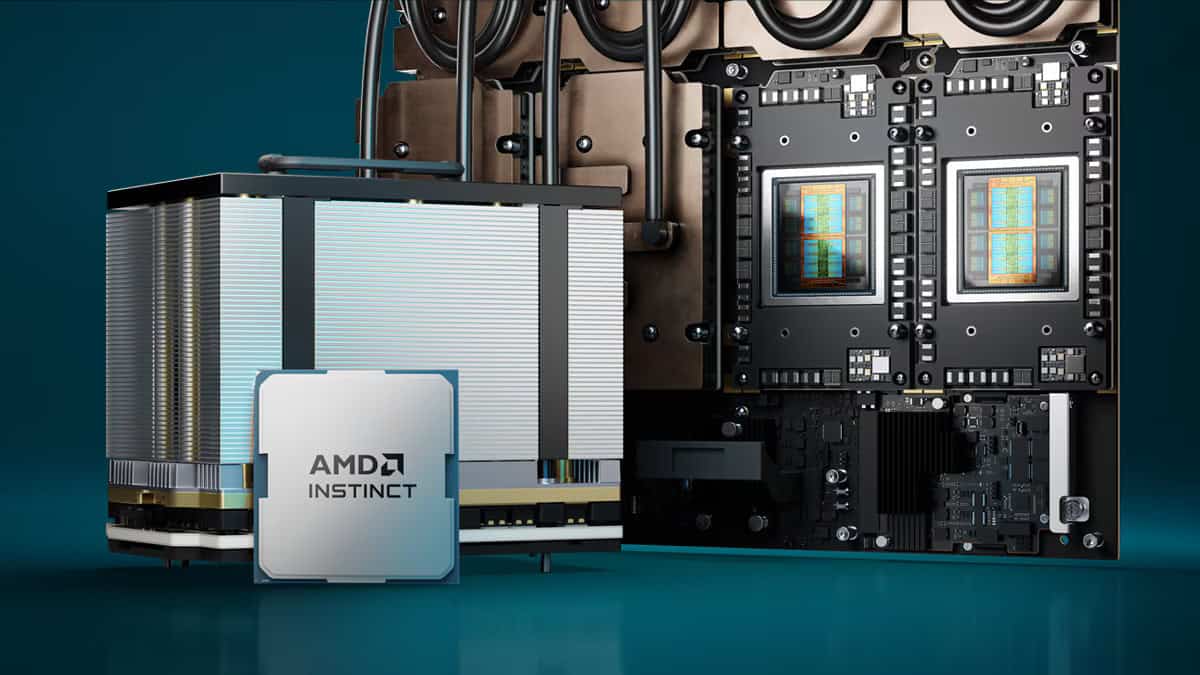
AMD's operating momentum is real, but the stock's valuation makes the next stage of execution unusually important. A 24/7 Wall St. model set a 12-month price target of $546.06 against a cited share price of $539.43, implying only 1.23% upside. That target is the publisher's scenario, not company guidance or analyst consensus.
The business entered this debate with record results. AMD reported second-quarter revenue of $11.54 billion, up 50% from a year earlier. Data Center revenue reached $6.7 billion, up 107%, as demand grew for EPYC server processors and Instinct accelerators. GAAP gross margin was 54%, while AMD's adjusted gross margin was 56%. Adjusted diluted earnings were $1.66 a share.
The source model treats that growth as largely reflected in the valuation. It presented a bullish scenario near $689 and a bearish one near $433, with the gap driven by the pace of the Helios and MI450 ramp, margins and the multiple investors are willing to pay. These outputs are sensitivity cases, not probabilities, and the source's stated 90% confidence does not turn them into observed facts.
Helios is the central operating bridge. The rack-scale platform combines Instinct MI455X accelerators, sixth-generation EPYC processors, Pensando networking and ROCm software. AMD says the system can deliver up to 30% more tokens per dollar than a leading competing solution. That claim comes from AMD's own modeling with specified workloads and projected system pricing, so investors should treat it as a vendor benchmark until customer deployments provide independent operating evidence.
Customer commitments create opportunity and concentration risk. AMD has announced plans tied to up to 6 gigawatts each for OpenAI and Meta, and up to 2 gigawatts for Anthropic. Those are maximum deployment frameworks rather than guaranteed revenue recognized at once. Timing, product availability, power infrastructure and customer buildout schedules will determine how quickly they become sales.
The margin question is just as important. AMD's second-quarter Data Center operating margin reached 31%, but the company-wide adjusted gross margin of 56% remained well below the 75% comparison the source cited for Nvidia. Cross-company margins are not perfectly comparable, yet the gap helps explain why investors are watching whether early Helios systems carry lower profitability while yields and supply scale.
There is counterevidence to a simple bull case. Gaming revenue fell 31% year over year to $779 million, and AMD's filings warn that rapid product transitions and system-level launches make supply, demand and inventory harder to manage. Export controls, third-party manufacturing, advanced packaging and memory availability add further constraints.
The company's next scheduled earnings event is November 3. The most useful evidence will be shipment timing for Helios, customer conversion from announced capacity to delivered systems, Data Center growth and whether gross margin holds as the product mix changes.
After a large share-price advance, AMD does not need another theoretical upside case as much as it needs proof that revenue, margins and deployments can rise together. A delayed ramp can hurt even if long-term demand remains strong; a clean ramp with stable margins would make today's demanding valuation easier to defend.
Intel's Server CPU Rally Now Depends on Factory Execution
Intel shares gained about 5% after New Street Research upgraded the stock to Buy from Neutral and set a $125 price target. Analyst Pierre Ferragu argued that demand from agentic artificial intelligence could keep server central processing units scarce for years. The market reaction was company-specific: the source reported AMD and Nvidia up about 3%, the semiconductor ETF SOXX up 4%, and the Nasdaq-focused QQQ up about 1% during the session.
The upgrade does not rest on scarcity alone. New Street's case also assumes Intel can remove inefficient production nodes, add capacity and keep its factories busier. That combination could improve the economics of a manufacturing network whose fixed costs remain high whether plants run full or sit partly idle.
Intel's latest reported numbers support the demand side of that argument. Second-quarter Data Center and AI segment revenue was $6.3 billion, up 59% from a year earlier. Intel Foundry recorded $5.8 billion of segment revenue, up 31%, although that figure includes transactions with Intel's product businesses and should not be read as outside-customer sales alone. Total company revenue rose 25% to $16.1 billion.
Management also described better factory yields and cycle times. Intel launched Xeon 6+, its first server-class product built on the Intel 18A process, and said it would invest 5 billion euros to expand capacity for Xeon 6 and next-generation Xeon processors built on Intel 3. The company also increased spending on equipment, clean-room space and substrates to support expected growth.
Those commitments turn the analyst's shortage thesis into an execution test. If Intel cannot raise output fast enough, it may miss revenue that scarcity made available. If it expands too aggressively and demand cools, utilization can fall and the fixed-cost burden can return. A shortage is most valuable when the company can ship more units at attractive margins without creating the next period's excess capacity.
The comparison with AMD and Nvidia also needs precision. AMD competes directly in server CPUs and relies on outside manufacturers. Nvidia dominates AI accelerators, which work alongside host CPUs but are not the same product. Intel combines chip design, manufacturing and a foundry business, so it has more direct exposure to both the benefits and costs of factory utilization.
Intel's second-quarter GAAP gross margin was 40.4%, up 12.9 percentage points from a year earlier, while non-GAAP gross margin was 41.8%. The company guided to third-quarter revenue of $15.8 billion to $16.8 billion, GAAP earnings of $0.31 a share and non-GAAP earnings of $0.38. The coming report must show that data-center demand remains firm and that higher factory activity is improving economics, not simply adding capital needs.
The $125 target is an analyst estimate, not evidence that the shortage will persist. Investors should focus on Data Center and AI revenue, Xeon shipments, foundry utilization, gross margin and management's capacity plans. If those measures improve together, the upgrade has an operating foundation. If demand is strong but yields, margins or delivery lag, the rally will have moved faster than Intel's turnaround.
Latest comments