
Vistra's AI Power Upside Still Depends on Texas and Execution
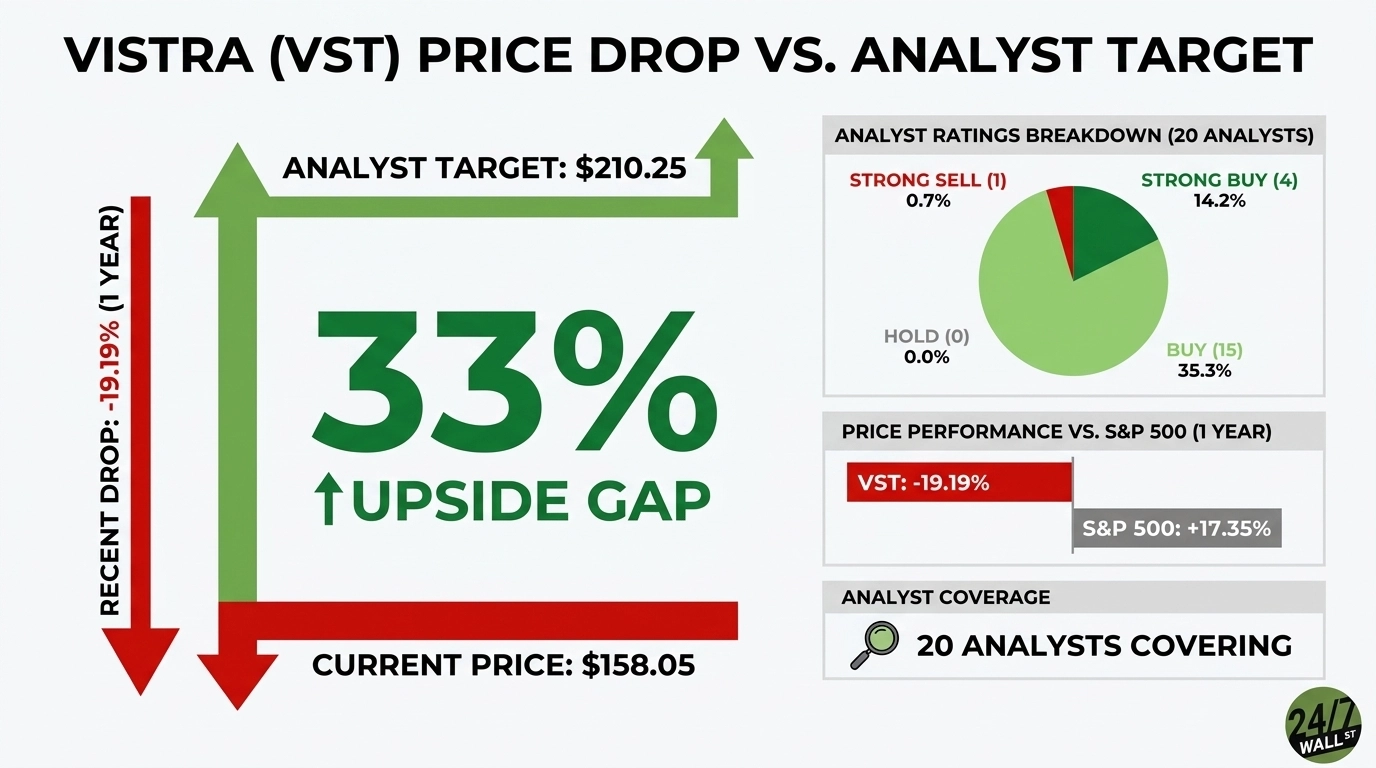
Long-term data-center power contracts support Vistra's growth case, while weak Texas prices and acquisition execution limit certainty. Aggressive analyst targets require several favorable outcomes at once.
Vistra's appeal as an AI power supplier rests on long-term contracts backed by nuclear and gas generation. The company has announced major agreements tied to Meta and Amazon Web Services, while analysts expect growing data-center demand to increase the value of dependable electricity.
The operating picture is mixed. Vistra reported second-quarter 2026 net income of $305 million and ongoing-operations adjusted EBITDA of $1.767 billion. GAAP earnings included a $472 million unrealized hedge loss, which illustrates why investors need to separate current cash generation from mark-to-market accounting.
Texas is the main counterweight. Management said ERCOT prices averaged about $30 per megawatt-hour year to date, a level that does not support much new generation. Stronger economics in PJM and future hyperscaler contracts can help, but they do not fully remove exposure to Texas power prices.
The company has also committed capital to growth. Its Cogentrix acquisition and AI-infrastructure partnership through Helix could add earnings, but both introduce execution and capital-allocation risk. Buybacks have reduced the share count substantially since 2021, increasing each remaining share's exposure to both upside and mistakes.
Analyst price targets ranging far above the current price are scenarios, not evidence. A bullish outcome requires contracted projects to begin on schedule, Texas prices to improve and acquired assets to meet expectations. Vistra's next reports should be judged on 2027 guidance, hedge coverage, free cash flow and the timing of data-center contributions.
Latest comments