


 Be The Investor Research
Visa and Mastercard’s Swipe-Fee Settlement Still Faces a Final Test

Visa and Mastercard urged a federal court to approve a merchant settlement that would reduce interchange rates and loosen card-acceptance rules. A November 16 hearing remains the decisive step.
Visa and Mastercard are asking a federal judge to finalize a settlement that would change U.S. merchant fees and card-acceptance rules, but the agreement is not yet final. The court has scheduled a fairness hearing for November 16, 2026.
The proposed settlement would reduce the combined average effective credit-card interchange rate by 10 basis points for five years. It would also cap standard consumer-card interchange at 1.25% for eight years and give merchants more ability to decline higher-cost premium and commercial cards.
Those changes matter because interchange is paid by merchants but largely set through the networks and issuing banks. A lower rate can reduce merchant costs, while narrower acceptance rules may change the value of premium rewards cards to issuers and consumers.
Visa and Mastercard argue that objecting merchants and trade groups are repeating claims the court considered at preliminary approval. Walmart and other large merchants counter that rejecting popular premium cards is commercially difficult, limiting the practical value of the new flexibility.
The settlement covers a class of more than 12 million merchants, according to the filing described by Payments Dive. Visa’s own June statement confirms that preliminary approval was granted and that final court approval is still required.
For shareholders, the immediate issue is uncertainty rather than a booked earnings change. The agreement could reduce pricing at the margin and lower litigation risk, but objections and appeals may extend the process. The November hearing will determine whether the negotiated rules advance toward implementation or return to litigation.
Continue your MA research
Related News
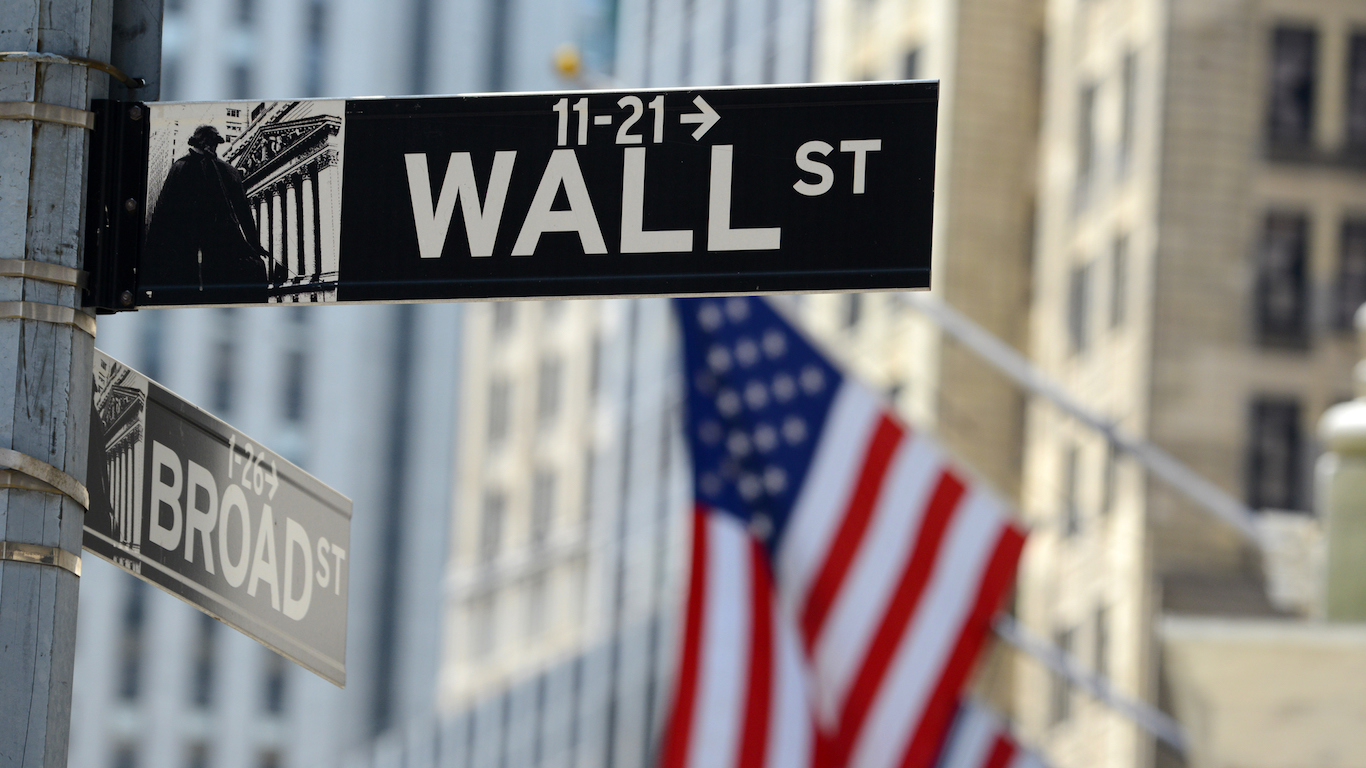
Analyst Calls Split as Inflation Raises the Market's Hurdle Rate
A busy day of Wall Street calls upgraded selected banks, retailers and energy producers while cutting PayPal and Spotify. The dispersion shows analysts rewarding company-specific resilience as inflation and rates pressure valuations.

Comcast’s 6.5% Yield Beats AT&T’s, but the Spin-Off Adds Uncertainty
Comcast offers the higher dividend yield and lower recent cash payout ratio, while AT&T presents a simpler telecom story. Comcast’s planned separation makes dividend continuity the crucial unresolved issue.

Morningstar Sees Value in LPL, Fiserv and Nu After a Weak Year
Financial stocks lagged the broader market as higher rates and AI concerns changed investor expectations. Morningstar favors LPL Financial, Fiserv and Nu, but each thesis depends on a different operational proof point.

Biotech Catalysts Put Moderna and Achieve Life Sciences in Focus
A dense clinical calendar gives investors several binary events, led by Moderna and Merck’s melanoma program and Achieve Life Sciences’ response to an FDA manufacturing rejection.

Trump Media’s Rumble Deal Cannot Hide a $238 Million Quarterly Loss
Trump Media’s planned Rumble merger broadens its platform ambitions, but its latest quarter still showed minimal revenue, a large accounting loss and heavy dependence on financial assets.

Palantir and Knox Build a Faster Route Into Secure Federal Clouds
Knox Systems will use Palantir's accredited infrastructure to help software vendors reach FedRAMP and IL5 environments. The partnership strengthens Palantir's federal distribution role, but disclosed financial terms and customer commitments are absent.
AMD's 10% Pullback Tests a 199x Valuation After a Huge Run

A Reddit user claimed to have made $16 million trading AMD and a leveraged semiconductor fund before selling everything. No brokerage proof had been published, so the gain should be treated as unverified. The useful story is not the trader's fortune. It is the tension between AMD's extraordinary share-price run and equally rapid data-center growth.
The stock rose about 361% from early June 2025 to the October 16, 2026 close, according to the source, then fell almost 10% in a week. That pullback followed a large gain rather than a collapse in the broader market.
The operating case remains strong
AMD reported second-quarter revenue of $11.5 billion, up 50% from a year earlier. Data Center revenue reached $6.7 billion, an increase of 107%, driven by EPYC processors and Instinct accelerators. Non-GAAP diluted earnings were $1.66 a share.
The official filing also shows a stronger product mix and the absence of the prior year's export-control inventory charge. That comparison means not every percentage point of margin improvement represents repeatable underlying growth.
Management expected Data Center sales to accelerate in the second half of 2026. The source also cited commitments from large AI customers and tight server CPU supply. Those conditions support revenue, but supply constraints can delay shipments and cap near-term upside.
Valuation makes execution decisive
The article placed AMD near 199 times trailing earnings. A trailing multiple can look unusually high when profit is accelerating, but it still indicates that investors expect years of growth. Gaming revenue fell 31% in the period cited by the source, showing that not every segment is advancing together.
The unverified Reddit sale says nothing about AMD's intrinsic value. The real question is whether Data Center profit can grow quickly enough to bring the valuation down without a large share-price decline.
AMD's next report should be judged on accelerator shipments, server CPU supply, gross margin and third-quarter revenue around the company's guidance. Strong revenue alone will not settle the debate if capital needs, product mix or margins disappoint. After a run of this size, the market needs evidence that earnings are catching up with the stock.
Samsung's Profit Mix Offers Less Shelter From the Memory Cycle
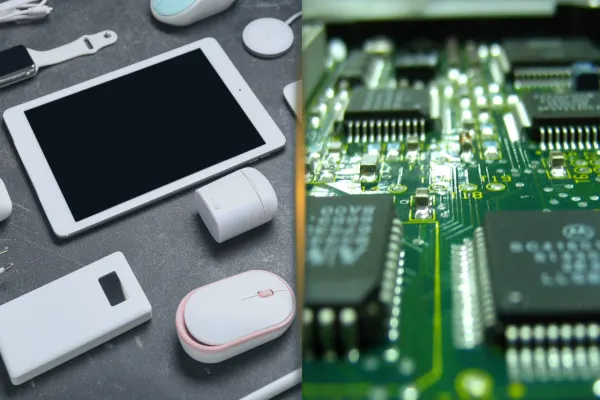
Samsung Electronics and SK hynix extended their decline on October 19 after their worst week since 2008. Samsung fell less, which fits its image as the diversified alternative to a pure memory producer. Recent segment results, however, show that diversification in products does not necessarily mean diversification in profit.
Chips are carrying the earnings
Samsung's Device Solutions division includes memory and other semiconductor operations. The source analysis estimates that Device Solutions produced nearly all of the combined operating profit from Samsung's three main segments in the first half of 2026. In the second quarter, Device Solutions generated about 89.2 trillion won of operating profit, while company-wide operating profit was about 89.5 trillion won.
Samsung's official second-quarter release supports the direction of that claim: the company said the memory business set quarterly records for revenue and operating profit, while its mobile, television and appliance businesses faced a less favorable mix.
The figures explain why Samsung and SK hynix sold off together when investors questioned the durability of AI infrastructure spending. Phones and appliances can diversify revenue, but they provide limited protection when memory contributes most of the profit.
Cheap multiples can be a warning
The source placed Samsung at roughly 3.5 times normalized next-12-month earnings and SK hynix near 3.1 times. Those ratios look unusually low relative to their recent averages, but memory stocks often trade at their lowest multiples near peak earnings. If pricing weakens, the earnings denominator falls and the apparent discount can disappear.
The cycle still has support. SK hynix reported record second-quarter results and said demand for high-bandwidth memory, advanced DRAM and enterprise solid-state drives exceeded supply capacity. Samsung likewise reported record memory performance. Those disclosures show current strength, not immunity from future oversupply.
What separates the two stocks
Samsung still has a broader balance of businesses, and that can reduce volatility over a full cycle. SK hynix offers more direct exposure to high-bandwidth memory demand. The important conclusion is narrower: Samsung should not be treated as a safe haven from the same memory cycle that drives SK hynix.
Investors should compare memory pricing, shipment commitments and capital spending rather than rely on product labels. If customer commitments remain firm while supply additions stay disciplined, both companies can sustain high profits. If the cycle turns, Samsung's other divisions may cushion the fall, but recent numbers suggest they will not fully offset it.
Memory Stocks Rebound, but China's CXMT Risk Has Not Disappeared

Memory stocks bounced on October 19, with SK hynix up about 5%, Sandisk up 6% and Micron up 3%. The move followed a severe selloff, not a resolution of the concerns that caused it.
SK hynix had fallen roughly 15% over five Seoul trading days, its sharpest weekly decline since the 2008 financial crisis. A one-day rebound therefore recovered only part of the loss.
Competition and the cycle
Investors are reassessing the threat from ChangXin Memory Technologies. CXMT said it expects 131 billion to 132.5 billion yuan of net profit for the first nine months of 2026 after losing 5.28 billion yuan a year earlier. It attributed the turnaround to AI-driven DRAM demand, supply shortages and price increases.
CXMT also plans to introduce a server-memory module by the end of 2026. A plan is not the same as proven market share in high-value server products, but the company's profit and expanding capacity give it more resources to compete. That matters to Samsung, SK hynix and Micron because memory pricing depends on disciplined supply.
Strong current demand provides a counterweight. SK hynix reported record second-quarter results and said customer demand exceeded its ability to supply high-value memory products. The company has emphasized HBM4, advanced DRAM and enterprise solid-state drives as areas where product mix can support margins.
Why the low multiple is ambiguous
The source placed SK hynix near 3 times normalized forward earnings, below its recent average. Such a multiple can signal undervaluation, but it can also mean investors expect current earnings to be close to a cyclical peak. The distinction cannot be settled by a single day's price action.
The next useful evidence will come from SK hynix's third-quarter report and from CXMT's execution. Investors should watch shipment commitments, memory pricing, capital spending and the timing of CXMT's server products.
The rebound shows that last week's selling may have moved faster than fundamentals. It does not prove the competitive or financing concerns were wrong. Memory investors are balancing exceptional present demand against the industry's long history of supply catching up.
Amazon's AI Upside Now Depends on More Than AWS Growth

Amazon's 5% rally on October 19 followed a Morgan Stanley upgrade that raised the price target to $350 and made the company a top pick. The headline focused on AWS, but the note also tied the valuation to robotics, AI shopping and Bedrock. That broader mix matters because cloud growth alone does not explain the full earnings forecast.
The cloud case is demanding
Morgan Stanley expects AWS revenue to rise 47% in 2027 and 42% in 2028, up from earlier estimates of 41% and 37%. The bank linked the revision to Nvidia's indication that AWS could deploy about two million additional GPUs across those two years.
It also expects AWS operating margins of 42% in 2027 and 44% in 2028. Combined with other businesses, those assumptions produce estimated Amazon earnings of roughly $16.50 a share in 2028. Applying about 21 times that figure supports the $350 target.
A wider operating story
The note identified two less obvious levers. Better visibility into Bedrock, Amazon's managed generative AI service, could show that customers are using more than raw computing capacity. AI shopping agents could also influence retail conversion and advertising economics, though the holiday season will provide only an early signal.
Robotics offers a more measurable path. Morgan Stanley estimates that each additional 10% of global units processed through robotics-enabled fulfillment centers could generate $2 billion to $4 billion in annual savings. That is an analyst estimate, not company guidance, but it gives investors a way to test whether automation is improving unit economics.
The valuation leaves little room for a mixed outcome
Morgan Stanley outlined a $220 bear case and a $410 bull case. That range shows how sensitive the stock is to growth, margin and multiple assumptions. At the price quoted in the source, the $350 target represented about 33% upside after the rally, less than the roughly 40% measured from the prior close.
The most useful question is therefore not whether Amazon has several AI opportunities. It clearly does. The question is whether AWS demand, retail automation and new AI services can advance together quickly enough to offset the capital required to build them.
Amazon's next earnings report should be judged on that combined scorecard: AWS growth, cloud margin, capital spending and evidence that Bedrock or robotics is contributing to profit. A strong result in only one area would leave much of Morgan Stanley's valuation case unproven.
Amazon's 47% AWS Growth Forecast Raises the Stakes for AI Spending

Amazon gained nearly 5% on October 19 after Morgan Stanley made the stock a top pick and raised its price target to $350 from $335. The more important number was the bank's forecast that Amazon Web Services revenue could grow 47% in 2027 and 42% in 2028. Those estimates turn the investment case into a test of whether enormous AI spending can produce durable cloud demand.
A higher bar for AWS
Morgan Stanley analyst Brian Nowak expects AWS to benefit from roughly two million additional Nvidia GPUs deployed across Amazon's infrastructure in 2027 and 2028. The bank also sees AWS operating like a "rule of 90" business, with growth and margin adding to roughly 90 percentage points. That framework supports an estimate of about $16.50 in Amazon earnings per share for 2028.
The forecast is aggressive. AWS grew 37% in the second quarter of 2026, while operating income reached $16.6 billion on $42.2 billion of sales, a margin near 39%. Morgan Stanley's case therefore requires growth to accelerate from an already strong level while margins remain resilient as Amazon buys chips, builds data centers and secures power.
Power becomes part of the cloud strategy
Amazon also agreed to provide milestone-based funding for feasibility work on a proposed 960-megawatt small modular reactor project in Indiana. X-energy and American Electric Power plan to study a 12-unit Xe-100 facility near the former Breed generating station. The project is not an operating asset or guaranteed source of electricity yet, but it shows how power availability has become a strategic constraint for cloud expansion.
That distinction matters for investors. The nuclear agreement may improve Amazon's long-term access to electricity, but it adds no disclosed near-term revenue and remains subject to development, regulatory and construction risk. It should not be treated as proof that the AWS growth forecast will be achieved.
What the next report must show
Amazon reports third-quarter results on October 29. AWS growth, operating margin and capital-spending guidance will reveal whether the company is converting chip availability into paying workloads. A sustained acceleration would support Morgan Stanley's thesis. Slower growth or a sharp margin trade-off would make the $350 target more dependent on distant assumptions.
The stock move reflects renewed confidence, but the forecast is not yet an outcome. Investors are paying for execution across compute capacity, customer demand and power supply at the same time.
Latest comments