
Surface Laptop Ultra's Hardware Runs Ahead of Its AI Software
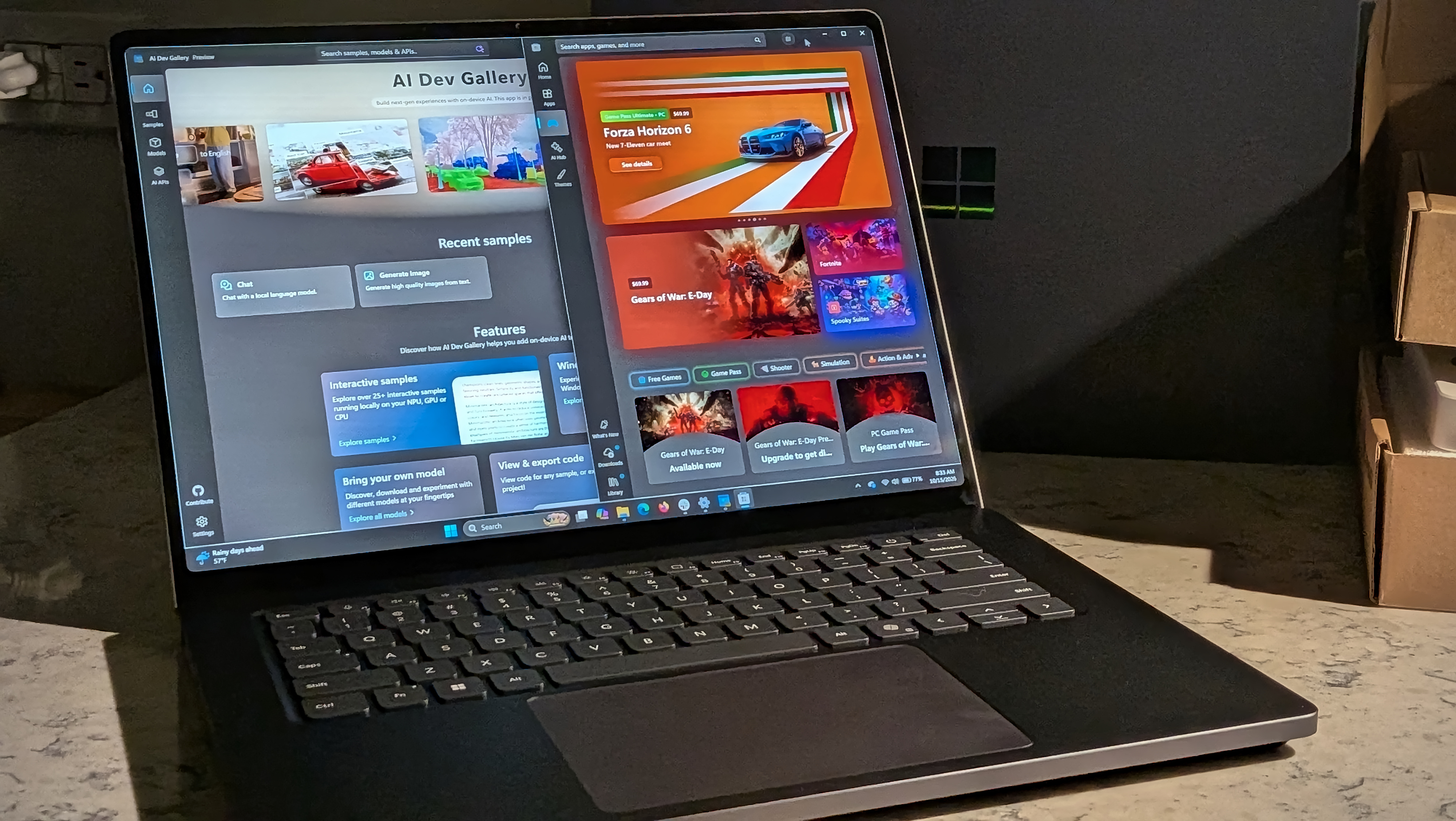
Microsoft's RTX Spark laptop delivers unusual local AI and gaming power on Arm, but a $2,599 starting price and immature accelerator support make software readiness the real adoption test.
Microsoft's Surface Laptop Ultra is a $2,599 wager that one premium Windows machine can handle local AI development, demanding creative work and modern games. The reviewed 64GB model costs $4,299, and configurations can reach $5,899. That pricing puts the machine against Apple's MacBook Pro and specialist mobile workstations, not mainstream Copilot PCs.
The hardware explains the ambition. Microsoft's RTX Spark platform combines an Nvidia Grace CPU, a Blackwell GPU with as many as 6,144 cores and up to 128GB of unified memory. The 15-inch mini-LED touchscreen runs at 3270 by 2180 pixels and up to 120 Hz. Ars Technica's review found that the system could run a 70-billion-parameter model locally and play recent AAA games at speeds that would have been difficult for an Arm-based Windows laptop a year earlier.
The central tension is software readiness. Nvidia's GPU provides the machine's unusual compute density, but some of Microsoft's showcase AI tools did not yet use it fully. In the review, conversational models inside the preview AI Dev Gallery ran on the CPU, Geekbench AI lacked a compatible accelerator path, and the gallery crashed twice. Microsoft's Phi Silica model also required developer registration rather than working as an immediate consumer feature. Those limits do not erase the hardware capability, but they reduce the value of paying early for it.
Gaming compatibility has improved, too. Microsoft says 85% of its Game Pass library is playable on Arm, and the reviewer ran demanding titles through Windows' Prism translation layer. Yet it was not always clear which games were native, and kernel-level anti-cheat software could still produce warnings. Buyers who depend on specialized drivers, plug-ins or older utilities therefore need to check compatibility before purchase, a caveat Microsoft itself includes.
The Surface Laptop Ultra matters strategically because it gives Microsoft and Nvidia a flagship for local AI workloads that need large shared memory and do not belong in the cloud. It also tests whether professional buyers will accept Arm compatibility checks in exchange for that capability. The next evidence should come from software updates that expose the GPU consistently, independent battery and performance testing, and demand beyond developers willing to tolerate first-generation friction.
Latest comments