



 Be The Investor Research
SK Hynix's HBM Lead Faces a China Risk the Market Cannot Yet Price
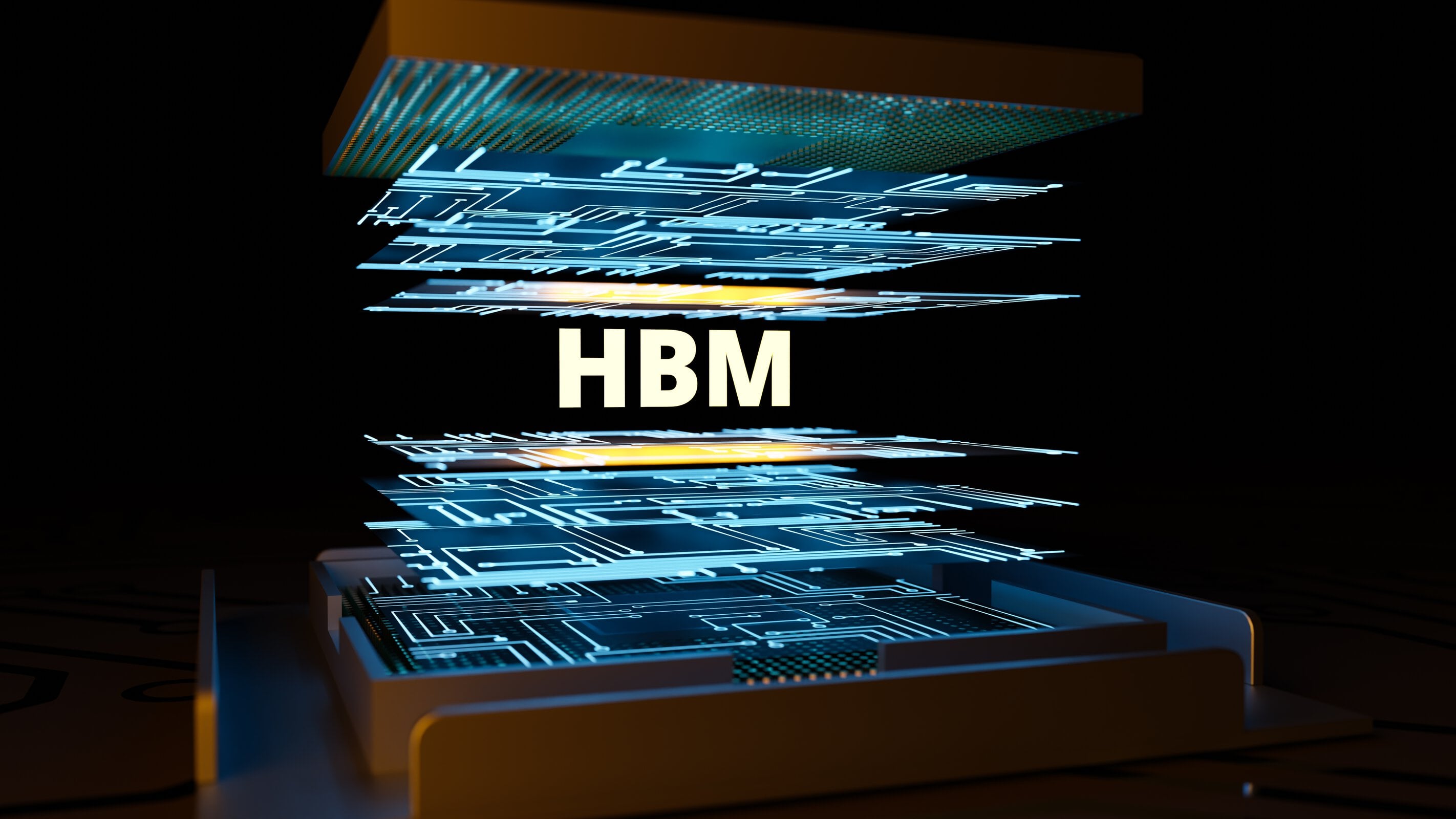
Goldman says fears about China's CXMT are excessive, while SK Hynix's HBM4 progress supports the bull case but does not remove pricing and capacity risks.
A Goldman Sachs note arguing that China's CXMT remains behind in advanced memory did not stop investors from selling SK Hynix, Micron and SanDisk. The market's caution reflects a problem that cannot be settled by a single benchmark: future capacity can pressure prices before a rival matches the leader's best product.
SK Hynix's operating evidence remains strong. The company reported record second-quarter 2026 results, expanded HBM4 production and completed sample shipments of next-generation HBM4E. High-bandwidth memory is critical for AI accelerators because it moves large amounts of data quickly while limiting power use.
That lead supports Goldman's view that the market may be overstating CXMT's near-term threat. Building a dense memory design is not the same as achieving reliable mass production, acceptable yields and customer qualification at scale.
The bear case focuses on the direction of travel. Chinese producers do not need to displace SK Hynix in the most advanced HBM tier to affect industry economics. Added conventional DRAM capacity can change supply, free other manufacturers to redirect output and weaken pricing expectations. Slower AI infrastructure spending would amplify that pressure.
Micron has similar exposure through advanced DRAM and HBM, while SanDisk is more concentrated in flash storage. Their simultaneous declines therefore signal a broad memory-cycle concern rather than proof that all three face identical competitive risks.
Investors should separate technology leadership from earnings durability. SK Hynix can remain the HBM leader and still experience multiple compression if the market expects lower memory prices or a less profitable capacity cycle.
The next evidence will come from HBM4 yields, customer qualifications, long-term supply agreements and CXMT's ability to manufacture at volume. Until those data clarify the gap, Goldman's supportive view is a credible counterargument, not a definitive answer to the China risk.
Pricing, inventory and capital-spending guidance across the group will help show whether the selloff reflects a normal memory-cycle reset or a lasting loss of competitive position.
Continue your MU research
Related News

CXMT Forecasts a Profit Surge, but Its Shares Fall 7.8%
CXMT projected nine-month profit of up to 132.5 billion yuan as AI demand tightened DRAM supply, yet its shares fell 7.8%. The reaction points to concern about durability, valuation and eventual capacity growth.
Samsung's Profit Mix Offers Less Shelter From the Memory Cycle
Samsung sells phones, appliances and displays, yet its recent profit has become heavily dependent on semiconductors. That makes its stock less defensive than the product mix suggests when memory prices and AI spending turn.

Memory Stocks Rebound, but China's CXMT Risk Has Not Disappeared
SK hynix, Sandisk and Micron bounced after a sharp selloff, yet the rally recovers only part of the damage. CXMT's profit surge and planned server products keep the competitive question open.
Microsoft's Maia 300 Is an Efficiency Bet, Not an Nvidia Exit
Microsoft says Maia 300 will deliver 40% more tokens per megawatt than leading GPU systems and scale in 2027, but the company is still operating a mixed-chip cloud.

Adobe's AI Usage Is Growing Faster Than Its Backlog
Adobe delivered 13% reported revenue growth and more than 150% growth in AI-first ARR, but remaining performance obligations rose only 8%, keeping monetization under scrutiny.

Gartner's Neocloud Warning Puts Financing, Not Demand, at Center Stage
Gartner expects more than 80% of neocloud providers to lose independent status by 2030. The risk is a mismatch between heavy infrastructure spending and cash earned before chips age.
Rocket Lab's Iridium Deal Faces an FCC Competition Challenge
Rocket Lab's proposed $8 billion acquisition of Iridium has drawn a competition challenge at the Federal Communications Commission, adding another uncertainty to a company already managing a delay to its Neutron rocket.
Ligado Networks asked the FCC to examine whether Iridium has used regulatory filings to slow competing satellite services. Ligado has a direct commercial interest: its planned SkyTerra Next service with AST SpaceMobile would use satellite connectivity for direct-to-device communications and could compete with Iridium.
The filing does not amount to an FCC finding. It is an allegation from an interested party in an active proceeding, and Rocket Lab and Iridium will have an opportunity to respond. Investors should distinguish that process from a rejection or a formal enforcement action.
The underlying transaction is much larger than a spectrum dispute. Rocket Lab agreed in June to pay $54 per Iridium share in cash and stock, valuing the company at about $8 billion including debt. Iridium brings a global L-band network, more than 2.55 million active subscribers, over 500 distribution partners and recurring communications revenue. Rocket Lab would add those assets to launch, spacecraft manufacturing and satellite components.
That vertical integration could lower launch costs for a future Iridium constellation and give Rocket Lab immediate exposure to direct-to-device, Internet of Things and positioning services. It also increases execution risk. The deal requires regulatory approvals, financing and the integration of a profitable network with a capital-intensive launch company.
Neutron makes the timing harder. Rocket Lab moved the medium-lift rocket's first flight into 2027 after identifying manufacturing defects in a carbon-composite propellant-tank component. Neutron is central to the logic of launching larger constellations internally, so further delays could postpone some expected benefits even if the acquisition closes.
Rocket Lab shares had fallen about 25% over the prior week and 38% from the Oct. 7 close reported by the source. Price action reflects both issues, but they should be monitored separately. Neutron is an engineering and schedule risk. The Iridium proceeding is a regulatory and competitive risk.
The FCC challenge is not proof that the transaction will fail. It does mean the public-interest case will receive closer scrutiny, especially around spectrum and competitor access. For investors, the next evidence is the applicants' response, the FCC timetable and whether Neutron's revised tests support a credible 2027 launch plan.
SpaceX's Spectrum Deal Raises the Stakes for Verizon

SpaceX's agreement to buy nationwide 800 MHz spectrum from Grain Management has forced investors to revisit a threat that once looked distant: satellite service becoming a meaningful alternative to terrestrial wireless.
The reported transaction value was about $8 billion, and the purchase still requires Federal Communications Commission approval. The spectrum alone does not create a national mobile network. SpaceX would also need satellites, ground infrastructure, devices and substantial capital before Starlink Mobile could compete broadly with Verizon, AT&T or T-Mobile.
The strategic direction is still clear. Lower-band spectrum travels farther and penetrates buildings better than higher-frequency signals, making it valuable for wide-area coverage. SpaceX has said upgraded Starlink Mobile service using next-generation satellites is targeted for the end of 2027. Even a limited service could affect carrier pricing if it becomes credible in rural coverage, emergency connectivity or wholesale arrangements.
Verizon enters that contest with a mixed financial profile. Its 2025 operating revenue was $138.2 billion, up from $134.8 billion in 2024, and free cash flow was $20.1 billion. Total unsecured debt was $131.1 billion at year-end, although net unsecured debt declined to $110.1 billion and the company's net unsecured debt to adjusted EBITDA ratio was 2.2 times. Those figures are more precise than treating every liability as operating debt.
The Frontier acquisition is Verizon's most important answer. The deal closed on Jan. 20 and expanded the combined network to roughly 30 million fiber passings. Fiber lets Verizon bundle home broadband with mobile service, potentially reducing churn and giving households a reason to keep multiple services with one provider.
That defense must show up in operating results. Verizon guided to 2% to 3% growth in mobility and broadband service revenue for 2026, at least $21.5 billion of free cash flow and a fiber build pace of at least 2 million passings. Meeting those goals would give the company room to invest while supporting its dividend.
SpaceX is not likely to take a large share of wireless subscribers quickly. The nearer risk is that its presence changes negotiations before it changes market share, pressuring wholesale economics or forcing carriers to spend more. For Verizon, the differentiator is no longer a simple claim of having the best mobile network. It is whether the company can combine wireless, fiber and service quality into a package that satellite connectivity cannot easily replace.
ARK Buys CoreWeave as Financing Costs Test the AI Cloud Story
ARK Invest bought 132,498 CoreWeave shares on Oct. 19, adding to the AI cloud provider after a decline that had pushed the stock toward a third straight losing week. The purchase split between 102,280 shares for ARKK and 30,218 for ARKW, worth about $8.1 million at the reported trade prices.
The trade is notable, but it does not resolve the question weighing on CoreWeave: how much of its growth will accrue to shareholders after financing the infrastructure behind it.
CoreWeave reported $2.58 billion of revenue for the second quarter of 2026, more than double the year-earlier figure, and a revenue backlog of about $104 billion. Demand is not the immediate problem. The pressure sits below the operating line. Net interest expense rose to $640 million from $267 million a year earlier, and the company posted a $626 million net loss.
CoreWeave is financing data centers and accelerators years before much of the contracted revenue arrives. That structure can work when capacity remains scarce, customers honor long commitments and refinancing markets stay open. It becomes less forgiving when interest rates rise or investors demand more protection.
The company has tried to broaden its funding base. In March, it closed an $8.5 billion delayed-draw facility backed by GPU infrastructure and a customer contract, which received investment-grade ratings from Moody's and DBRS. In September, it proposed $3 billion of convertible notes. Those transactions show that CoreWeave still has market access, but they also underline how central outside capital is to the expansion plan.
Analysts are divided for the same reason. Goldman Sachs upgraded the shares to Buy, arguing that tight AI capacity can support attractive returns. MoffettNathanson and BNP Paribas cut price targets, focusing on obligations and the risk that financing becomes more expensive.
ARK's purchase is therefore a vote on more than AI demand. It is a bet that CoreWeave can convert a large backlog into cash before its capital structure becomes the limiting factor. The next useful evidence will be cash generation, interest coverage and the terms of new financing, not the size of one fund manager's trade.
Cipher’s Zero-Coupon Notes Show the Hidden Cost of AI Data Centers

Cipher Digital priced $850 million of 0% convertible senior notes due 2032 as it expands from bitcoin mining into high-performance computing. A zero coupon lowers current cash interest, but the financing is not free. Investors give the company capital in exchange for a bond plus the possibility of converting into equity.
That structure can be attractive for a builder with heavy near-term capital needs and future lease revenue. It preserves cash during construction and can reduce refinancing pressure. The trade-off arrives if the share price rises enough for conversion, increasing the diluted share count, or if the business underperforms and the principal must still be repaid.
Contract value and financing value are different
Cipher has also extended the Barber Lake lease term to 20 years, lifting reported contracted revenue above $9 billion. Long-duration revenue can support project finance, but investors still need the delivery schedule, tenant credit support, operating costs and residual value to estimate economics. Contracted revenue is not equivalent to present value or free cash flow.
The financing also included an exchange of convertible notes due 2030. Exchanges can push maturities outward and simplify the capital structure, but the final effect depends on conversion prices, call provisions and the amount of old debt retired. Those terms matter more than the 0% coupon in isolation.
Peers illustrate the same broader challenge. Applied Digital reported $5.0 billion of debt and $4.2 billion of cash, cash equivalents and restricted cash at May 31, 2026. TeraWulf paired long leases with asset sales and large equity issuance. Each company is assembling a different mix of debt, equity, project finance and tenant support to bridge construction.
For Cipher, the clearest measures are remaining construction cost, unrestricted liquidity, interest and principal obligations, and diluted shares under conversion scenarios. If Barber Lake reaches service on time, the financing may look efficient. If delivery slips or capital needs grow, the zero coupon will not protect shareholders from dilution or refinancing risk.
AI Infrastructure Stocks Rebound, but Contracted Power Is the Real Test

Applied Digital, TeraWulf and IREN rebounded after a broad selloff in AI-infrastructure shares. The price move matters less than the operating question behind it: how much announced capacity is funded, powered, built and producing rent.
These companies are converting power access and former crypto-mining sites into data centers for artificial-intelligence workloads. That strategy can create long contracts, but it requires heavy construction spending before revenue arrives. The result is a business where contract headlines and cash flow can be separated by years.
TeraWulf shows both sides of the model. Its 20-year Anthropic lease at the Justified campus covers about 401 megawatts of critical IT load and is expected to generate roughly $19 billion of contracted revenue over the initial term. Initial capacity is scheduled for the second half of 2027, with the full load targeted for early 2028. The contract is large, but revenue depends on construction, interconnection and delivery.
Applied Digital has also raised large sums to fund campuses. At May 31, 2026, it reported $4.2 billion of cash, cash equivalents and restricted cash alongside $5.0 billion of debt. Restricted cash is not freely available for every corporate purpose, so headline liquidity must be matched to project obligations.
What the rebound does not prove
A rising share price does not lower construction risk, guarantee utility delivery or turn contracted revenue into current free cash flow. It can, however, make equity financing less dilutive and improve confidence among counterparties. That feedback loop helps only if management keeps milestones and avoids repeated funding gaps.
Investors should compare the companies on four measurements: delivered megawatts, tenant credit support, project-level financing and cash retained after interest and construction. Bitcoin exposure and power-market economics add another layer for companies that still operate mining businesses.
The next durable catalyst is not another sector rally. It is evidence that a campus moves from signed demand to energized capacity on schedule and within budget. Until that happens, the stocks remain claims on execution as much as on AI demand.
Latest comments