


 Be The Investor Research
Strive Upsizes 15% Preferred Offering to $630 Million
Strive priced 7 million SATS preferred shares at $90, expanding a financing designed to fund Bitcoin purchases while committing the company to a costly perpetual dividend.
Strive's new preferred-stock financing became larger and more demanding after the initial announcement. The company first proposed selling 5 million shares of 15% Series A Perpetual SATS Preferred Stock. On October 15 it priced 7 million shares at $90 each, an upsize of 2 million shares that implies $630 million of gross proceeds before underwriting costs.
The cash is intended for Bitcoin and bitcoin-related products, working capital and possible acquisitions. That gives Strive more purchasing capacity, but the capital is expensive. Each preferred share has a stated amount of $100 and a 15% annual cumulative dividend, so 7 million shares represent $105 million of annual dividend accrual at the stated amount if all remain outstanding.
A high-cost layer of capital
Preferred stock ranks ahead of common equity for dividends and liquidation but remains below debt. For common shareholders, the trade-off is straightforward: Strive can buy more Bitcoin without issuing the same amount of common stock today, yet it must service a substantial preferred dividend before value reaches the common shares.
The $90 offer price also sits below the $100 stated amount. That discount raises the effective current yield for buyers if dividends are paid as expected, while increasing the economic hurdle Strive must clear with the proceeds. Bitcoin appreciation can make the structure attractive, but flat or falling Bitcoin prices would leave the dividend obligation unchanged.
Strive said regular dividends would begin in November and planned to establish a reserve equal to 18 months of payments. A reserve supports near-term payments, but it does not remove the long-term funding burden because the security is perpetual.
What changes the common-stock case
The most important variables are the final net proceeds, the price paid for additional Bitcoin and the company's total preferred dividend coverage. Investors should also separate the original 5 million-share announcement from the later 7 million-share pricing. Using the smaller figure understates both the financing capacity and the recurring obligation.
This transaction increases Strive's Bitcoin exposure and liquidity, but it also raises the fixed claim ahead of common shareholders. The value created will depend on returns from the assets purchased exceeding the preferred's high cost over time.
Continue your SATA research
Related News

Standard Chartered Brings Direct Crypto Trading to UAE Wealth Clients
Standard Chartered is offering eligible professional investors in the UAE direct Bitcoin and Ether trading through existing bank accounts, with custody and settlement kept inside its system.
Bitcoin Funds Cut Net Shorts, but the Data Shows Less Risk, Not a Bull Turn
Leveraged funds reduced their net bearish CME bitcoin-futures position by nearly 15% through October 13. Rising spread trades and lower open interest point to de-risking rather than clear bullish conviction.
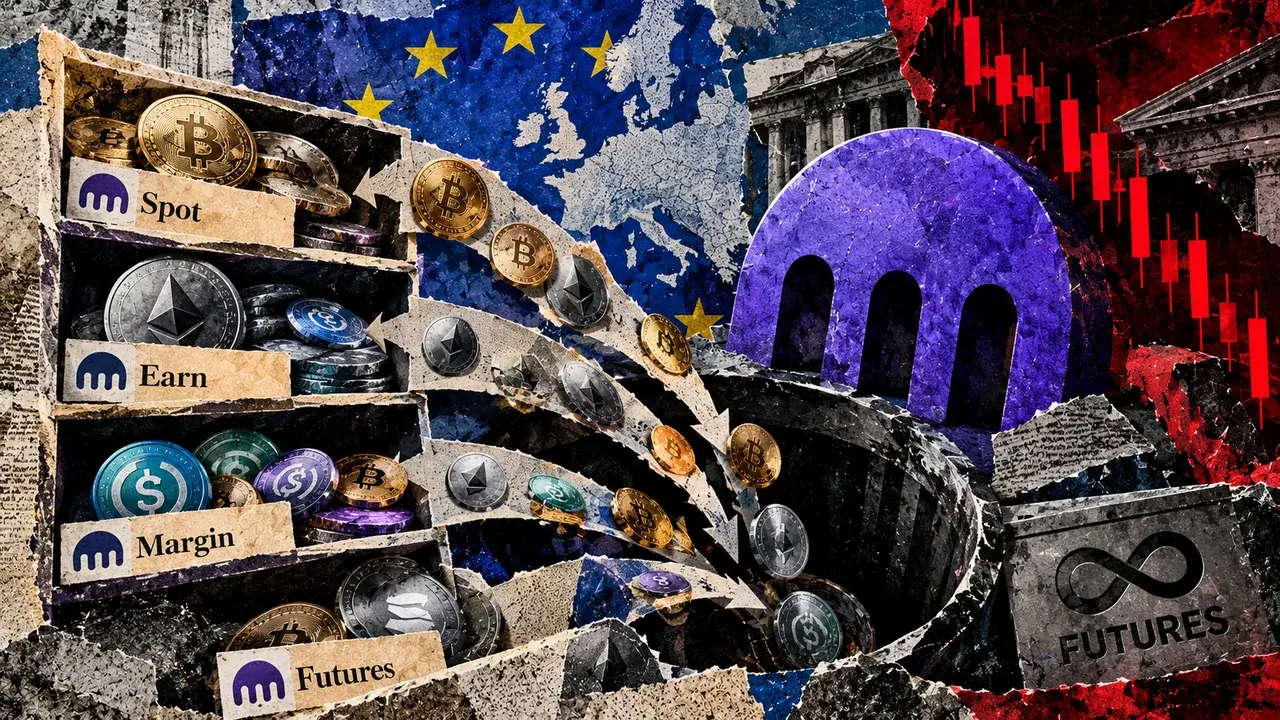
Kraken's Unified Wallet Makes Futures Losses a Broader Account Risk
Eligible European users can opt into Kraken's Unified Wallet and use spot and qualifying Earn balances as futures collateral. The convenience comes with a wider loss boundary under default cross margin.

Strive Added 3,311 Bitcoin, but the Purchase Came With More Shares
Strive bought 3,311 bitcoin for about $280 million, lifting holdings to 32,773. The acquisition increased its treasury scale while new common and preferred shares highlighted the financing cost.

BitFuFu Mining Output Slipped as Ethiopia Deal Risk Moved Forward
BitFuFu produced 167 bitcoin in September while managed computing power declined. A power-supplier dispute at an Ethiopian acquisition target now puts prepaid cash and deployed mining machines at risk.
Strategy Added 267 Bitcoin as Its Stock-Funded Treasury Expanded
Strategy bought 267 bitcoin for $22.1 million at an average of $82,900. The purchase was small relative to its holdings but again tied treasury growth to common-stock issuance.
Blur's Shutdown Shows How Far the NFT Trading Boom Has Fallen

Blur plans to shut its marketplace website on Nov. 12 and stop arranging new loans through Blend, a sharp reversal for a platform that once controlled most Ethereum NFT trading volume.
The company's smart contracts are expected to remain on the Ethereum blockchain. That distinction matters. Closing the website removes the main user interface and ends active product support, but it does not automatically erase assets or transactions recorded on decentralized contracts. Users still need to understand how to access positions, repay loans and move assets without relying on the familiar front end.
The business decline was severe. Blur launched in 2022 with tools aimed at professional traders, including faster execution, lower fees and token rewards. Monthly trading volume reached about $1.43 billion in early 2023, when the platform captured more than 70% of Ethereum NFT activity. By March 2026, monthly volume was below $7 million, a decline of roughly 99.5%.
That collapse exposes a weakness in marketplace models built around incentives. Token rewards can attract liquidity quickly, but they can also encourage activity that disappears when subsidies fall or asset prices stop rising. A platform still needs recurring demand from collectors and traders once the incentive phase ends.
Blend added leverage to the ecosystem by matching NFT-backed borrowers and lenders. Stopping new loans reduces future exposure, but existing users need clear information about outstanding positions. The source report did not provide a detailed wind-down schedule beyond the Nov. 12 cutoff, so investors and users should not assume every loan or contract ends on that date.
Blur is also the second NFT marketplace reported to close in October, after Blast announced a shutdown earlier in the month. Two closures do not prove that NFTs have no durable use, but they do show that the 2021 to 2023 trading model has not produced enough recurring fee volume for every venue.
The BLUR token fell more than 20% after the announcement, according to the source. That reaction is understandable because a governance or incentive token is only as useful as the network of products and users around it. The larger lesson is that on-chain persistence does not guarantee a sustainable business. Contracts can keep running long after the company that made them stops investing.
Interactive Brokers Adds Ether Staking to Its One-Account Model
Interactive Brokers has added Ether staking for eligible U.S. clients, turning a cryptocurrency holding into a potential source of rewards without moving it away from the broker's platform.
Clients of Interactive Brokers LLC can submit staking and unstaking requests through a dashboard in Client Portal and monitor transactions there. Zerohash provides the staking infrastructure. Rewards are credited as additional staked Ether, so they can compound while the position remains staked.
The product fits Interactive Brokers' broader strategy of putting digital assets beside stocks, options, futures and bonds in a single account. The broker supports trading in 20 digital assets and stablecoin funding with USDC, RLUSD and PYUSD. Crypto commissions range from 0.12% to 0.18% of trade value, with a $1.75 minimum per order.
The convenience does not remove staking risk. Ether used in proof-of-stake helps secure the network, and rewards compensate holders for committing assets to that process. Returns are variable rather than guaranteed. Clients can also face waiting periods when entering or leaving staking, technology or provider risk, tax consequences and the possibility that a decline in Ether's price overwhelms the rewards earned.
Eligibility and jurisdiction therefore matter as much as the advertised yield. Interactive Brokers did not announce a timetable for adding other proof-of-stake assets, and the initial rollout is limited to Ether.
For IBKR, the direct revenue effect is unlikely to be visible immediately. The strategic benefit is stickiness. A client who can trade, transfer, fund with stablecoins and earn staking rewards in one place has less reason to move assets to a specialist crypto platform. That could deepen balances and activity without requiring Interactive Brokers to become a token issuer or run its own validator infrastructure.
The service also narrows the product gap between conventional brokers and crypto-native exchanges. Interactive Brokers still competes on its strongest advantage: a wide multi-asset account with established risk controls and global market access. Ether staking adds another feature to that account, but investors should judge the initiative by client adoption, assets staked and any disclosure of economics rather than by the announcement alone.
Mastercard Adds Pre-Settlement Risk Scoring for Stablecoin Payments
Mastercard is extending its fraud and compliance business to stablecoins with a product called Stablecoin Security. Developed with Borderless and Keyrails, the service is designed to assess wallets and counterparties before a stablecoin transfer settles.
The timing matters because blockchain transfers can be difficult to reverse. Traditional payment systems often have chargebacks, delayed settlement and established monitoring layers. Stablecoin transfers can settle quickly, so screening after the event may be too late to prevent exposure to sanctions, fraud or illicit counterparties.
A risk layer before settlement
The product is expected to produce a risk score through an application programming interface that payment companies and banks can add to existing workflows. Mastercard says the approach is platform-neutral, which could allow institutions to apply one monitoring layer across multiple stablecoins and blockchains rather than build separate controls for each network.
Borderless and Keyrails bring infrastructure and compliance experience, while Mastercard brings institutional distribution and a large existing security business. The product is planned for North America first, followed by broader deployment in 2027. A phased launch gives the partners time to test false positives, coverage and integration, but it also means revenue contribution is likely to build gradually.
The investment case is not the number of stablecoin transfers alone. Mastercard must show that institutions will pay for pre-settlement scoring, that the scores reduce losses or compliance costs, and that the service works across wallets with different data quality. The company must also manage the tension between broad coverage and incorrect blocking of legitimate payments.
Mastercard's second-quarter value-added services and solutions revenue grew 20% as reported and 18% on a currency-neutral basis. Stablecoin Security fits that faster-growing segment more directly than it fits the core card network.
The measurable milestones are customer integrations, jurisdictions covered, blockchains supported and evidence on prevented risk. If the product becomes a trusted control point, Mastercard can earn from stablecoin activity even when the underlying transfer does not run over its traditional card rails.
Tron’s $200 Million ATM Plan Trades Cash for Dilution Risk
Tron Inc. has opened a new route to fund its crypto treasury: an at-the-market, or ATM, stock offering of up to $200 million through Clear Street. The company says it expects to use most of the proceeds to buy TRX, the token associated with the Tron blockchain, while reserving flexibility for working capital and general corporate purposes.
An ATM program lets a company sell newly issued shares into the market over time rather than pricing one large offering at once. That can reduce execution pressure, but it does not remove dilution. The agreement permits a commission of up to 3% and does not require Tron to sell any shares. At the $1.22 illustrative share price cited in the filing summary, raising the full amount would require about 163.9 million shares before fees.
A larger treasury, and a larger share count
The financing would deepen an existing bet. Tron reported holdings of about 718.9 million TRX, valued near $237 million at the reference price used in the source report. The company also described an earlier program to buy $50,000 of TRX per day for 360 days, a planned $18 million commitment if completed.
The economics for shareholders depend on two variables moving in different directions. More TRX can increase the value of the balance sheet if the token appreciates. Issuing stock increases the number of claims on that balance sheet, especially if sales occur when the share price is depressed. Investors therefore need to track treasury value per diluted share, not only the headline quantity of tokens.
The ATM authorization is a funding option, not evidence that $200 million has already been raised or invested. Actual proceeds will depend on how much stock Tron sells, at what prices, and after commissions. The next useful disclosures are shares issued, average sale price, net proceeds and the number and carrying value of TRX acquired.
The central question is whether management can create more treasury value than it gives away through dilution and fees. Until those figures are reported, the program expands both Tron's purchasing capacity and the range of outcomes for common shareholders.
Aave's Proposed USAT Gateway Adds Permission Risk to the Return Trip

TokenLogic has proposed a permissioned GHO Stability Module on Avalanche that would let approved counterparties exchange waUSAT for GHO. The design could add institutional stablecoin liquidity to Aave, but it creates an important asymmetry: receiving and transferring GHO would not guarantee the ability to reverse the original swap.
Approval would be checked in both directions. If access were revoked after a counterparty deposited waUSAT and received GHO, the participant could still transfer GHO but could not use the module to recover waUSAT. The proposal says that restriction should be reflected in commercial agreements.
Even a successful reverse swap would return a receipt token rather than dollars. The holder would still need to withdraw USAT from Aave, subject to available liquidity and reserve conditions, and then meet Anchorage Digital Bank's requirements for issuer redemption. Each step has its own permission and operational risk.
The proposal separates 65 million GHO of reserve funding, a 25 million GHO module draw limit and a 20 million waUSAT exposure cap. Some contract addresses and pricing details remain unspecified, and the forum post still requires governance approval and an implementation proposal.
The plan may deepen GHO liquidity, but investors should treat it as a proposal rather than an operating product. The decisive questions are whether governance approves the module, whether final contracts preserve the described limits, and how counterparties are protected if access is revoked after entry.
Latest comments