


 Be The Investor Research
Opendoor Slides as Higher Yields Collide With a Slower Path to Profitability

Opendoor’s latest selloff is doing more than reflecting a bad day for housing stocks. Higher Treasury yields are colliding with a delayed profitability timetable, exposing how sensitive the company’s inventory-heavy model remains to financing costs and home-market liquidity.
Opendoor’s latest selloff is doing more than reflecting a weak day for housing stocks. The company is being hit by two problems at once: a jump in Treasury yields and a fresh delay in its path to adjusted-net-income break-even. That combination is especially painful for a business that buys homes, carries them on its own balance sheet and depends on resale speed to protect margins.
Chief Executive Kaz Nejatian acknowledged that the break-even timetable had slipped by roughly six to eight weeks. The update arrived as long-term yields moved to multi-year highs and mortgage-sensitive stocks came under pressure. Opendoor shares fell about 7% to $2.79 in the cited session and were down sharply for the year. Zillow and Offerpad also declined, but by less, which helps isolate the company-specific component of the move.
The reason rates matter so much is structural. Every property Opendoor owns ties up capital until it is sold. Higher financing costs raise the expense of carrying that inventory, while high mortgage rates can simultaneously reduce buyer affordability and slow transaction velocity. Management has responded by prioritizing inventory clearance, even when that means accepting lower margins. That protects cash and reduces the risk of stale homes, but it also pushes profitability further out if pricing has to become more aggressive.
Management still expected current-quarter revenue to grow 10% to 15% year over year and continued to target forward adjusted-net-income profitability by year-end. The question is whether those goals can coexist with softer housing conditions. For investors, inventory age, resale velocity and gross profit per home now matter as much as revenue. Opendoor does not need a booming housing market to improve, but it does need its operating system to move homes fast enough that higher rates do not keep compounding the balance-sheet burden.
Nejatian’s comments also reveal why the company is emphasizing transparency around the break-even timetable. A six-to-eight-week delay may sound modest in isolation, but Opendoor’s economics are unusually sensitive to the pace at which homes move through inventory. When clearance slows, holding costs compound and management can be forced to choose between waiting for a better price and protecting balance-sheet liquidity.
The prior quarter adds context. Revenue had fallen 44% year over year, yet management still expected 10% to 15% growth in the current quarter. That means the company is trying to stabilize volumes while changing how aggressively it prices inventory. If it can restore transaction growth without sacrificing too much margin, the operating model becomes more credible. If volume only improves after deeper discounts, the path to adjusted profitability remains fragile.
The peer comparison reinforces the point. Zillow’s mortgage business had grown strongly in its most recent quarter, while Offerpad was working toward a transaction target of 1,000 homes per quarter. Those businesses face rate pressure too, but neither carries the same inventory exposure as Opendoor. That is why the upcoming inflation data and Fed decision matter disproportionately for OPEN: they influence both the cost of holding homes and the buyer demand needed to clear them.
The homebuilder ETF comparison adds another useful benchmark. ITB was also lower, which confirms that higher rates were hurting housing broadly, but Opendoor’s larger decline showed that the company was carrying an extra layer of risk. That relative performance is valuable because it separates macro pressure from the market’s reaction to management’s own admission about the break-even schedule.
There is also a cash-preservation logic behind management’s decision to clear inventory more aggressively. A lower-margin sale can still be rational if the alternative is holding the property for longer in a rising-rate environment. The danger is that repeated discounting can reset investor expectations for what “normalized” margin looks like. That is why the next few quarters need to show not only faster inventory movement, but evidence that the economics improve once the current housing stress eases.
Continue your SPY research
Related News

Firedancer's 1 SOL Bug-Report Fee Targets a Costly Duplicate Problem
Firedancer now requires researchers to burn 1 SOL for every report, including duplicates, after a spring audit contest generated hundreds of submissions and a large review backlog.

Pump.fun's $752 Million Winner Study Shows Why Copy Trading Can Mislead
A Bitquery study found $752.5 million of gains in large Pump.fun positions, but most winners relied on transferred, linked or potentially coordinated tokens that followers could not easily copy.

Initia Halted Its Network After a Bridge Exploit Drained Reserves
A MoveVM script-caching flaw let an attacker create unauthorized bridge claims, forcing Initia to halt its network. The incident left ordinary withdrawals failing and restart details unresolved.

Lido Opens 2,048 ETH Validators With a 32 ETH Operator Bond
Lido's new Community Staking Module lets permissionless operators run validators with balances up to 2,048 ETH. The capital efficiency is real, but activation queues and stake caps limit immediate scale.

JPMorgan Takes Tokenized Cash Funds to Solana, With Caveats
JPMorgan expanded MONY and JLTXX to Solana, giving qualified investors multichain access. The move strengthens institutional distribution, but official disclosures do not show a network split or a meaningful near-term earnings benefit.

BitMine Nears Its 5% Ether Goal After Adding 12,535 ETH
BitMine now reports 6.04 million ETH, or 4.9% of supply, with 84% staked. The scale creates recurring rewards but leaves shareholders highly exposed to Ether prices and execution.
Lilly's Q3 Revenue Test Is About Price, Not Patient Demand

Eli Lilly's October 29 earnings report presents an unusual test: revenue could decline from the second quarter even while more patients use its medicines. The apparent contradiction comes from pricing, product mix and temporary benefits that lifted the previous period.
Lilly reported second-quarter revenue of $22.97 billion, up 48% from a year earlier. Worldwide volume increased 60%, but realized prices fell 13%. In the United States, volume rose 37% and reported prices declined 3%. Lilly said U.S. prices would have fallen about 9% without favorable adjustments to rebate and discount estimates.
Outside the United States, the contrast was sharper. Volume grew 113%, while realized prices declined 36%, mainly because Mounjaro was added to China's National Reimbursement Drug List. Wider reimbursement can expand access and prescriptions while lowering the amount Lilly receives per unit. That is why patient growth and revenue growth should not be treated as interchangeable.
The second quarter also included a $250 million sales-based milestone tied to Jardiance. That payment raised revenue without creating a recurring quarterly baseline. Consensus data cited by TIKR put third-quarter revenue near $22.6 billion, slightly below the second quarter but about 28% above the year-earlier period. The comparison therefore asks whether underlying volume can offset the missing milestone and continued pricing pressure.
The quarter is the first full period under Medicare's GLP-1 Bridge program, which began July 1. Eligible Medicare Part D patients can access Foundayo or Zepbound for weight management with a $50 monthly copay, subject to clinical and program requirements. The program can expand treated volume, but its effect on Lilly's revenue depends on product mix, negotiated economics and how quickly eligible patients begin therapy.
Profit comparisons require similar care. Second-quarter adjusted earnings were $8.38 per share, but Lilly recorded $2.8 billion of acquired in-process research and development charges. Three additional acquisitions closed after the quarter, creating uncertainty around third-quarter deal-related expenses. Reported and adjusted measures should be evaluated separately rather than combined into one earnings trend.
Investors should begin with three disclosures: volume growth, realized-price change and sales by Mounjaro, Zepbound and Foundayo. Gross margin will show whether manufacturing efficiency and mix can offset lower pricing. Guidance will then reveal whether management expects the access-driven volume increase to remain strong into 2027.
A sequential revenue decline would not by itself prove weaker demand. If prescription volume continues to rise while one-time revenue disappears and net prices fall, the quarter may instead show the cost of broadening access. The more important risk is that price erosion persists after volume growth begins to slow.
Vista Energy's Q3 Test Is Cash Conversion, Not Just Oil Prices

Vista Energy's third-quarter report on October 28 will test whether a favorable mix of higher production and stronger oil prices became durable free cash flow. This is the first full quarter to include the interests acquired from Equinor in the Bandurria Sur and Bajo del Toro blocks, making the result a cleaner measure of the enlarged business.
The second quarter established a demanding comparison. Vista produced 156,061 barrels of oil equivalent per day, up 32% from a year earlier. The acquired interests were consolidated from May 1, so they contributed for only two months. Oil production reached 135,427 barrels per day, while Vista's average realized crude price rose 44% year over year to $89.40 per barrel.
The company reported second-quarter revenue of $1.212 billion and adjusted EBITDA of $805.2 million. Reported free cash flow was $99.1 million after $391.9 million of payments related to the Equinor transaction; excluding those payments, free cash flow was $491 million. Non-pro-forma net leverage was 1.41 times, while the pro-forma ratio was 1.25 times. Those figures show that the acquisition did not prevent deleveraging, but the third quarter must demonstrate that the performance can continue when the assets are included for all three months.
Volume should provide help. Bandurria Sur and Bajo del Toro added about 14,200 barrels of oil equivalent per day from May 1 during the second quarter, and their combined run rate was about 21,000. Vista also said July production reached roughly 162,000 barrels per day through mid-month. The investor question is how much of that output was sold, at what realized price and with what operating cost.
Costs could absorb part of the benefit. Second-quarter lifting cost rose to $4.50 per barrel of oil equivalent as peso-denominated expenses increased while exchange rates were relatively stable. Selling expense reached $4.10 per barrel of oil equivalent, partly because higher oil prices increased turnover tax. Strong revenue growth will be less valuable if local costs and taxes rise at a similar pace.
Management has targeted net leverage of about one times by year-end after spending $467 million on capital projects in the second quarter. Progress toward that level will indicate whether Vista can fund development, reduce debt and still consider share repurchases. Investors also need an update on the VMOS export pipeline, where logistics were affected by disruption around the Strait of Hormuz.
Vista has confirmed that it will release third-quarter results after the market closes on October 28, followed by a webcast on October 29. Revenue and production will attract attention, but realized pricing, unit costs, capital spending and free cash flow will determine whether the oil-price windfall strengthened the balance sheet or merely lifted the top line.
Comcast's Wireless Growth Is Real, but Broadband Still Sets the Pace

Comcast added 368,000 domestic wireless lines in the third quarter, taking its total to 10.6 million and lifting quarterly wireless service revenue 14.7% to $1.05 billion. The growth shows that Xfinity Mobile has become a meaningful product rather than a small bundle feature.
Wireless now reaches nearly 18% of Comcast's residential broadband customer relationships but only about 7% of the wireless lines available within those households. That gap gives the company room to grow without finding entirely new customers. Comcast can market additional lines to households it already serves, use one bill and one support relationship, and rely on its Wi-Fi footprint to carry part of the data load.
The company is also improving the mix. Premium unlimited plans accounted for about 40% of recent connections. Management said roughly 70% of customers whose free-line promotions expired converted to paid service, and about half of new postpaid connections came from those former free offers. Those figures suggest the strategy is producing recurring revenue rather than only promotional line counts.
Wireless does not yet offset the pressure in Comcast's core connectivity business. Domestic broadband customer relationships fell by 144,000 in the quarter, and domestic broadband revenue declined 4.7%. Revenue for the broader Connectivity and Platforms segment decreased 2.3%. Because broadband remains much larger and carries attractive economics, those declines matter more than the wireless growth rate alone.
The two products are connected. Wireless can reduce customer churn, add household revenue and make Comcast's broadband bundle harder to replace. But if broadband losses accelerate, the addressable base for that cross-selling strategy shrinks. Wireless growth is therefore both an opportunity and a defense for the larger franchise.
Investors should avoid treating every added line as equal. Paid conversions, service revenue, promotional costs and margins say more about value than gross additions. The third quarter was encouraging on those measures: service revenue grew at a double-digit rate and former free-line customers often stayed as paying users.
The decisive test is whether wireless can improve total household economics faster than broadband erodes. Comcast has proved that customers will buy the product. It still needs to show that wireless revenue and retention benefits can outweigh continued pressure on the business that supplies most of those customers.
Lockheed's $292 Billion Backlog Turns Demand Into Visibility
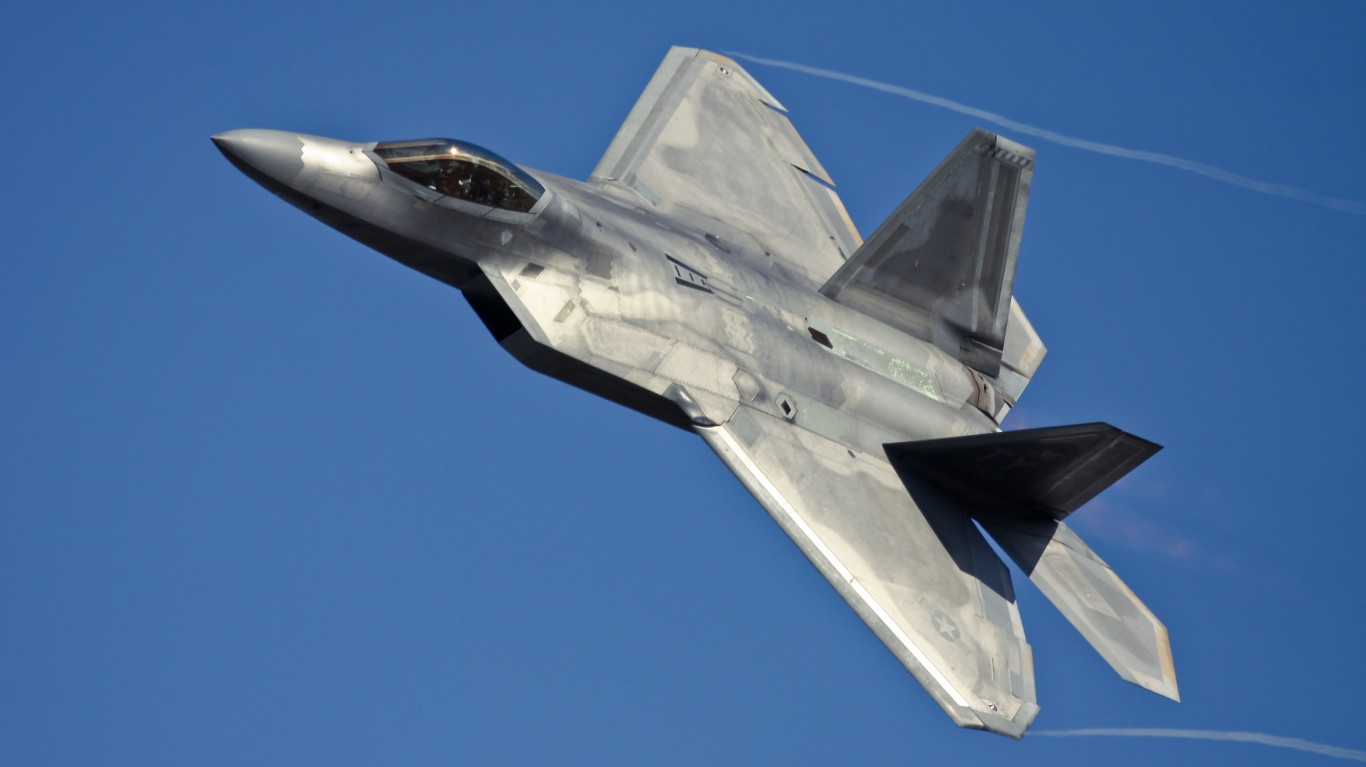
Lockheed Martin's 9% share-price jump on October 22 rested on more than a quarterly earnings beat. The defense contractor reported a record $292 billion backlog, raised its 2026 outlook for a second consecutive quarter and generated $3.0 billion of free cash flow in the third quarter.
Third-quarter sales rose 11% from a year earlier to $20.7 billion. Reported earnings reached $7.97 per share, while net earnings increased 14% to $1.8 billion. Every business segment grew. Missiles and Fire Control sales climbed 24%, helped by higher production of PAC-3 and THAAD missile systems, and Aeronautics sales rose 13% as F-35 volume increased.
Lockheed now expects 2026 revenue of $80 billion to $82 billion, reported earnings of $30.35 to $30.75 per share and free cash flow of $7.8 billion to $8.0 billion. Those ranges matter because they convert part of the long-term demand story into cash and earnings that investors can measure this year.
The backlog provides a longer runway, but not every dollar carries the same certainty. About $52.5 billion relates to a multiyear award for PAC-3 Missile Segment Enhancement interceptors. Lockheed also announced a 10-year framework with the U.S. government covering 850 U.S. F-35 aircraft, spare parts, modification kits and maintenance support. The framework is designed around annual production of 156 aircraft, yet it is not itself a finalized contract.
That distinction is important. A framework can improve supply-chain planning and support capacity investment, but revenue still depends on funded orders, delivery schedules and execution. Lockheed's quarterly release therefore gives investors two different forms of visibility: a large existing backlog and a prospective F-35 production plan that must still become firm business.
Peers rose in sympathy, with RTX up 2% and Northrop Grumman up 3%, while the iShares U.S. Aerospace & Defense ETF gained only 0.21%. The gap suggests investors treated Lockheed's results as company-specific evidence rather than a broad revaluation of the whole defense group.
The strongest part of the quarter was the combination of double-digit sales growth, cash generation and another guidance increase. The remaining test is execution. Investors should watch whether missile production scales without margin pressure and whether the F-35 framework translates into funded contracts at the planned pace.
Walmart's Next Two Quarters Will Test Its Price-Investment Bet

Walmart's next two earnings reports will test a deliberate trade-off: management is using tariff refunds to fund lower prices now, accepting near-term pressure in the hope of winning durable market share.
For the fiscal third quarter of 2027, Walmart guided to constant-currency sales growth of 3.0% to 3.75% and operating-income growth of 2.0% to 4.0%. Adjusted earnings guidance was $0.62 to $0.64 a share. The November report will show whether price investment is producing enough volume to offset cost pressure.
Calendar timing complicates the comparison. Flipkart's Big Billion Days moved between quarters, creating a headwind of more than 100 basis points to third-quarter growth and a similar benefit in the fourth quarter. Investors should therefore examine the two quarters together rather than treat the event shift as a change in underlying demand.
Walmart U.S. comparable sales rose 2.6% in the second quarter. The source reported that drug-price changes were expected to reduce fiscal 2027 U.S. comparable sales growth by about 125 basis points. That makes transaction growth, grocery share and general-merchandise demand more useful indicators than the headline comparison alone.
Fuel is the clearest cost risk. Management said in August that fiscal 2027 fuel expense could exceed its original plan by more than $2 billion. The company's outlook assumed fuel prices remained near then-current levels, so another increase would pressure distribution and fulfillment costs.
The February fiscal fourth-quarter report will close the year in which Walmart reinvested tariff refunds into customer prices. Management raised full-year sales-growth guidance to 4% to 5% from 3.5% to 4.5%, but also warned that the benefit from refunds was being spent rather than retained as profit.
The stock had gained 11.4% over the month through October 23 while remaining 7.3% lower over six months, according to Trefis. Its 9.2% fall on the August 20 earnings day shows that even strong long-term positioning does not prevent sharp reactions when the earnings mix disappoints.
November will measure the early return on lower prices. February will show whether the investment produced enough share and volume to support the raised annual outlook. If sales improve but operating income lags, Walmart may still be winning customers while asking shareholders to wait longer for the payoff.
Latest comments