
Nvidia's Growth Engine Now Comes With $366 Billion of Commitments
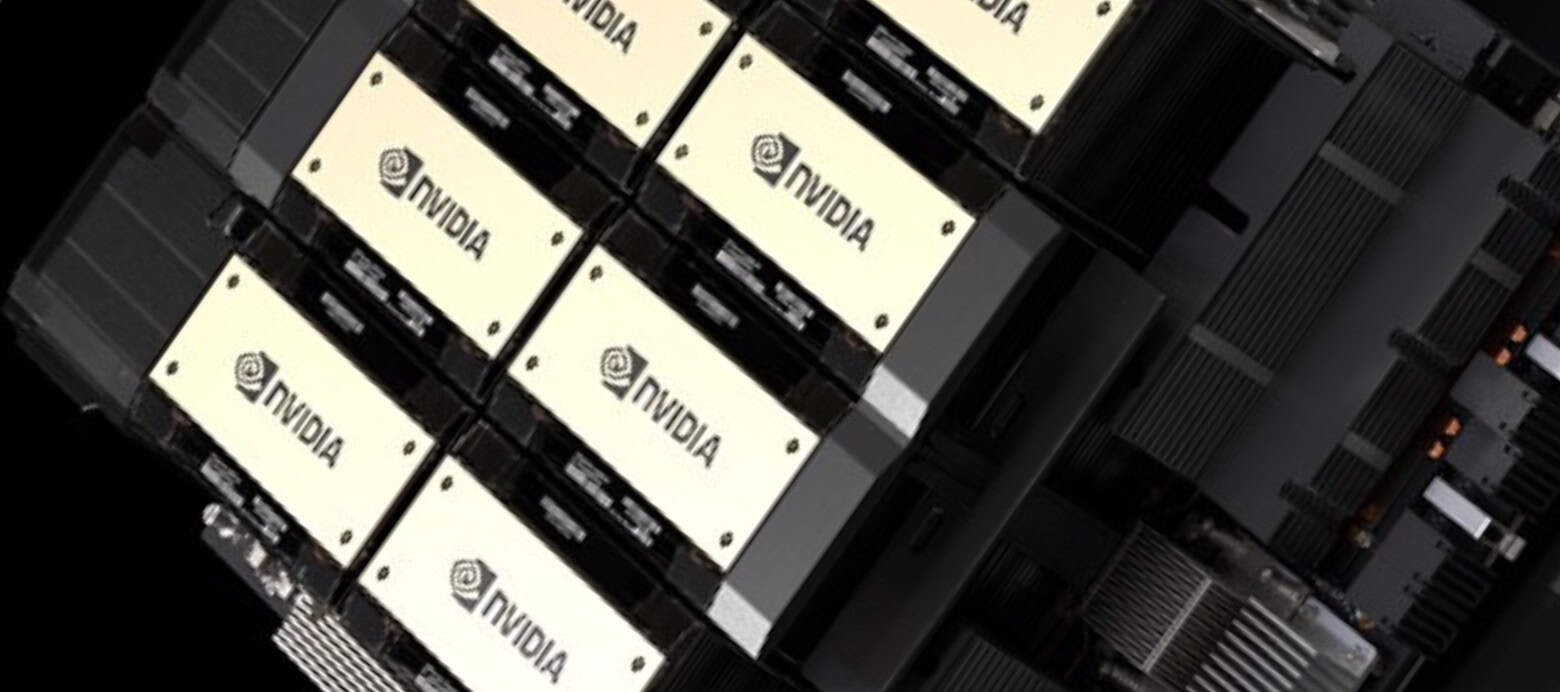
Nvidia's latest filing pairs extraordinary AI revenue growth with $366 billion of future commitments and $108.5 billion of maximum guarantee exposure, making financing discipline as important as chip demand.
Nvidia's growth story has acquired a second balance sheet. The company reported $96.2 billion of fiscal second-quarter revenue, up 106% from a year earlier, while its latest filing disclosed $366 billion of future commitments across supply, cloud services, leases, equity investments and capital spending.
That combination explains both the strength of Nvidia's position and the anxiety now surrounding the AI buildout. Demand remains immense, but the company is doing more than selling chips. It is reserving manufacturing capacity, backing infrastructure and investing across the ecosystem that buys its systems.
The operating engine is still exceptional
Data Center revenue reached $89.0 billion in the quarter ended July 26, 2026, up 117% year over year. Nvidia attributed the increase to the Blackwell Ultra ramp. Its AI Clouds, Industrial and Enterprise business generated $40.3 billion, rising 138%, while total gross margin reached 75%.
Management guided to $108 billion of revenue for the next quarter, plus or minus 2%. The company also said Vera Rubin had begun production shipments during the current quarter, although supply constraints remain.
Those figures support the argument that Nvidia's advantage extends beyond the GPU. Customers buy processors, networking, systems and software as an integrated platform. One direct customer represented 16% of quarterly revenue, however, and three direct customers each represented at least 13% of first-half revenue. The scale of the opportunity therefore comes with customer concentration.
The commitments are large, but not all alike
Nvidia listed $279 billion of supply and capacity commitments, up from $119 billion one quarter earlier. These agreements are primarily for memory and manufacturing capacity. Some can be canceled, rescheduled or adjusted before firm orders are placed, so the total should not be treated as debt due immediately.
The same table included $29 billion of cloud-service agreements, $25 billion of data-center leases that have not begun, $25 billion of equity-investment commitments and $8 billion of capital expenditures. Together, those items produce the $366 billion figure.
Separately, Nvidia disclosed $56 billion of additional commitments connected to AI clouds and third-party data-center leases. It also reported maximum gross guarantee exposure of $108.5 billion. Most of that comes from a guarantee capped at $105 billion for an SB Energy campus intended to host OpenAI workloads. The guarantee activates in phases as facilities enter service, is tied to defined lease and power payments, and declines as the tenant pays.
Why the distinction matters
These arrangements are designed to solve a real bottleneck. AI developers may have strong demand but lack the capital, land and power needed to sign long-term infrastructure contracts. Nvidia can accelerate deployments by helping secure those inputs.
The risk is that the company is increasingly exposed to the financial health of the ecosystem it supplies. If customers delay projects, fail to fill capacity or struggle to finance expansion, Nvidia could face weaker revenue timing, extra costs or guarantee exposure. Its filing explicitly warns that these commitments depend on customer and partner performance.
For investors, the central question is no longer whether AI demand exists. It is whether that demand can be funded and converted into productive capacity at the pace Nvidia has underwritten. Blackwell and Rubin keep the competitive case strong, but the next phase of the story will be judged as much by capital allocation and customer quality as by benchmark performance.
Latest comments