



 Be The Investor Research
Nasdaq Rebound Ends a Brutal AI Week, but Expectations Still Set the Risk
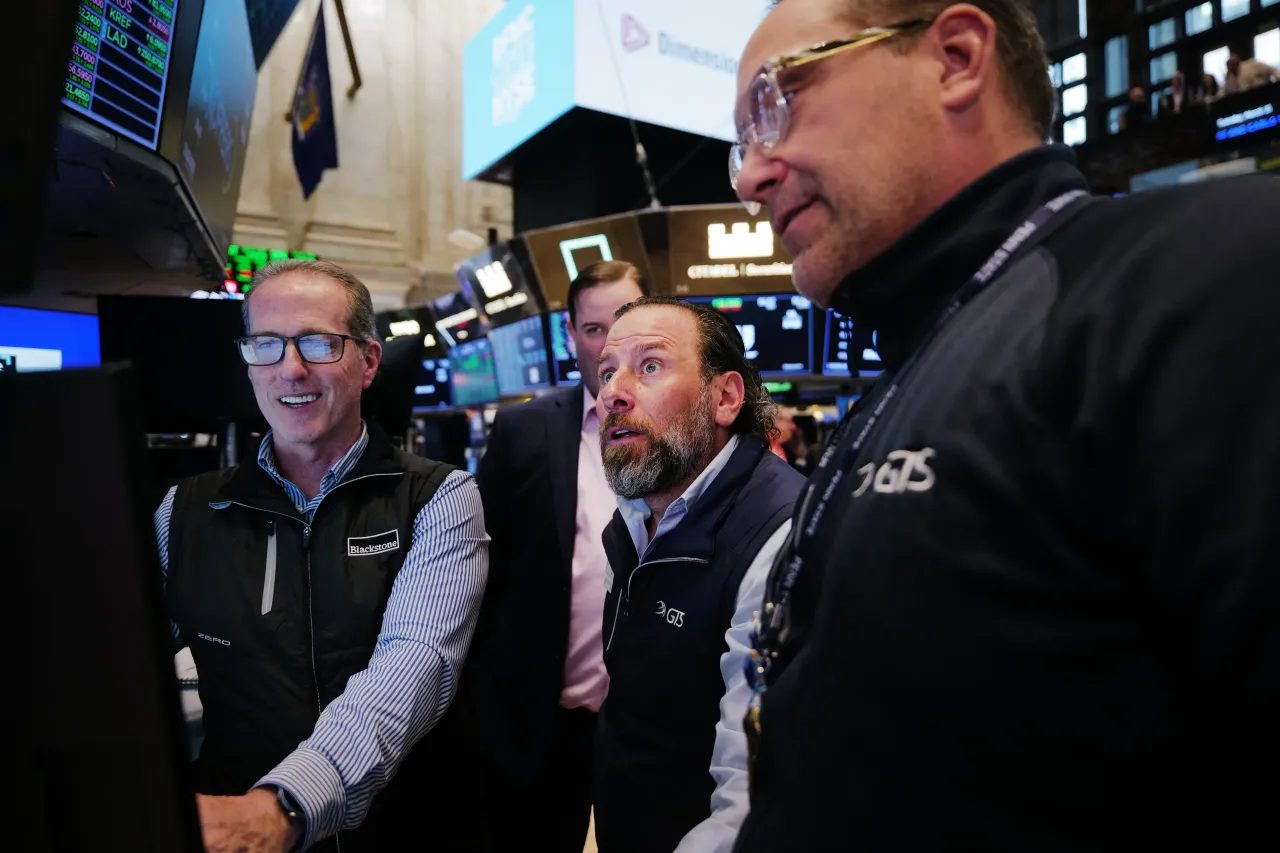
The Nasdaq 100’s strongest session in nearly a month interrupted an AI-led selloff. The rebound showed buyers remain willing, while crowded earnings expectations leave little room for disappointment.
Technology shares rebounded sharply on Monday, giving the Nasdaq 100 its best day in nearly a month after a week that punished many of the market’s most crowded AI trades. Amazon, Apple and Palantir rose, while CoreWeave and other volatile infrastructure names recovered part of their recent losses. The move was broad enough to cool fears that the prior week’s decline had become a disorderly exit.
One session does not erase the damage. The Nasdaq Composite had fallen about 4.5% in the previous week, and semiconductor shares had endured a nine-session losing streak. CoreWeave, a focal point in the debate over AI capital spending, had dropped nearly 12% on Friday alone. Monday’s gains therefore looked partly like short-covering and bargain hunting after a rapid repricing.
The more durable support came from earnings. According to LSEG figures cited by CNBC, 47 S&P 500 companies had reported by Monday morning and 85% had beaten earnings estimates. Blended earnings growth was running near 29%. That is a strong start, but it also explains why investors are unforgiving: valuations embed continued profit growth, especially among the largest technology companies.
The key question is whether the rebound can move beyond a handful of megacaps and speculative AI names. A healthier recovery would combine stronger market breadth with company results that validate capital spending. For Amazon and other hyperscalers, investors need evidence that cloud and AI revenue can scale alongside depreciation and data-center costs. For infrastructure providers such as CoreWeave, financing costs and the pace of capacity delivery matter as much as booked demand.
The day’s rally is therefore best read as a reset in positioning, not proof that the AI correction has ended. Upcoming megacap earnings can support the market if revenue, margins and guidance justify expectations. They can also expose the same asymmetry that drove the selloff: when forecasts are already optimistic, even solid results may not be enough.
Continue your AMZN research
Related News

Gartner's Neocloud Warning Puts Financing, Not Demand, at Center Stage
Gartner expects more than 80% of neocloud providers to lose independent status by 2030. The risk is a mismatch between heavy infrastructure spending and cash earned before chips age.

ARK's Third Quarter Was Powered by AI Biology, Not Its Famous Names
10x Genomics and other AI-linked biotech holdings drove ARK's third-quarter gains, while Tesla and Rocket Lab detracted. Contribution data show where fund performance actually came from.

Three Stocks Hit New Lows, but the Risks Were Very Different
EyePoint, CoreWeave and Eos Energy touched new lows on the same day. The selloffs reflected three distinct problems: a failed pivotal trial, financing pressure and manufacturing execution risk.

ServiceNow’s Decagon Denial Refocuses Investors on Organic AI Growth
ServiceNow denied that it was pursuing Decagon, lifting its shares and easing near-term acquisition concerns. The harder question is whether its own AI products can sustain growth without a large deal.

AI Stocks Rebound After a Rate Shock, but Valuation Risk Remains
A broad technology rebound followed a sharp AI selloff driven by rising yields and profit-taking. The recovery can last only if earnings support the spending and valuation assumptions already embedded in prices.

Chip Stocks Snap a Nine-Day Slide as Investors Reprice AI Risk
Semiconductor shares finally rebounded after nine consecutive declines. The bounce reduces immediate selling pressure, but investors still need earnings evidence that AI spending will produce durable returns.
AI Tools Let TV Owners Remove Ads, Tracking and Bloat

Some smart-TV owners are using AI coding agents to remove the advertising, tracking and slow interfaces that manufacturers added after the sale. The projects are small, but they reveal a conflict in connected hardware: the owner buys the screen, while the platform continues monetizing attention and viewing data.
Two open-source efforts, dumbtv and cleanyourtv, use Android Debug Bridge tools over Wi-Fi to disable unwanted packages, replace the home screen and limit telemetry. Their developers say the changes do not require root access and can be reversed. Repositories include device-specific checks and blocklists intended to preserve updates and playback.
The target is not only visual clutter. Many smart TVs use automatic content recognition, or ACR, to identify programming through screenshots, audio or digital fingerprints. That data can support recommendations and advertising, creating recurring revenue long after the hardware transaction.
AI makes the modification process easier because an agent can inspect instructions, adapt commands to a device and build a simple launcher. It does not make the process safe. Users reported disabled packages, incomplete installations and at least one bricked Android TV. The projects remain works in progress across platforms from Sony, TCL and Hisense to Fire TV and Nvidia Shield.
The business implication is limited today but worth watching. If consumer-friendly tools make opt-outs common, television makers and advertising platforms could lose data or impressions. Manufacturers could respond by improving controls, locking down software or separating subsidized models from privacy-focused products.
For now, the strongest signal is product dissatisfaction, not a measured revenue decline. Download activity, manufacturer countermeasures and formal privacy options will show whether the movement extends beyond technically adventurous users.
The VIX Jumped Above 22, but Options Trades Are Signals, Not Forecasts

The Cboe Volatility Index moved above 22 for the first time in about four months, reflecting a sharp increase in the price of short-dated protection on the S&P 500. That is evidence of greater expected volatility, not a mechanical forecast that stocks will fall.
Cboe calculates the VIX from a strip of S&P 500 index options to estimate the market's expectation of volatility over the next 30 days. The index usually rises when investors rush to buy downside protection, but direction and volatility are different concepts. Stocks can rebound while volatility remains high, and a volatile market can move upward as well as downward.
The source data identified several large VIX call trades. One involved about 9,200 November 18 calls with a 20 strike for roughly $1.7 million in premium. Another involved about 12,500 calls at the 23 strike for approximately $1.1 million. Across nine prominent contracts, premium totaled about $27 million. A VIX call can gain value if expected volatility rises, so these trades may hedge equity exposure or express a direct volatility view.
The identity and full portfolio of the trader are not visible from a tape print alone. A call purchase could offset another position, form one leg of a spread or be closed before expiration. Treating the order as proof that a sophisticated investor expects a crash would overstate the evidence.
For equity investors, the more useful reading is that the cost of insurance has risen. That can pressure strategies that depend on calm markets and can increase the value of diversification, liquidity and position sizing. It can also create attractive option premium for sellers, although selling volatility carries substantial tail risk.
The VIX level and the options flow should therefore be monitored alongside credit spreads, market breadth, earnings revisions and realized volatility. A single threshold such as 22 is psychologically notable, but it is not a timing system. The market is paying more for uncertainty; it has not disclosed which outcome will cause it.
Big Tech Rebounds, but Earnings Must Justify the AI Spending Cycle

Large technology stocks rebounded on Monday after a difficult week, with semiconductor shares ending a nine-session slide and the Nasdaq recovering part of a 4.5% weekly decline. The move lifted names including Meta and Tesla as investors repositioned ahead of major earnings reports.
The earnings backdrop is strong. LSEG data cited by CNBC showed that 47 S&P 500 companies had reported and 85% had beaten profit estimates. Blended earnings growth was near 29%. Those figures support the idea that the market’s advance is grounded in corporate profits, not only enthusiasm for artificial intelligence.
They also create an expectations problem. When most early reporters beat and the largest technology companies trade at premium valuations, a conventional earnings beat may not be enough. Investors want evidence that AI capital spending produces faster cloud growth, stronger advertising tools, lower costs or new paid products.
Meta’s results will be judged against its heavy infrastructure investment and the returns from AI-driven recommendations and advertising. Tesla faces a different test involving vehicle demand, margins and the timetable for newer technologies. Semiconductor suppliers need confirmation that customer orders remain broad rather than concentrated in a few hyperscalers.
The rebound is therefore a bridge to earnings, not a verdict on the selloff. A durable advance would require strong guidance and wider market participation, especially if bond yields remain high. Weak forecasts could revive the same concern that drove the prior week: companies are spending aggressively while investors have already priced in much of the future benefit.
For investors, the useful comparison is between incremental profit and incremental capital. Revenue growth alone does not prove that the AI cycle creates value. The next group of earnings reports will matter because management teams must connect ambitious spending plans to margins and cash flow, not because any single quarter can settle the long-term AI debate.
NYSE Extends Options Trading, but Early Volume Shows the Limits

The New York Stock Exchange has extended options trading beyond regular market hours, opening a new test of whether investor demand for near-continuous access can translate into reliable liquidity.
The first phase runs from 7:30 a.m. to 9:25 a.m. Eastern time and from 4:00 p.m. to 4:15 p.m. It covers 29 heavily traded stocks and funds, including Nvidia, Bank of America, the SPDR S&P 500 ETF Trust and the iShares Russell 2000 ETF. NYSE plans to expand trading in the same names to 23 hours a day, five days a week, beginning Dec. 6.
The change follows a similar move by Cboe and reflects competition from crypto, prediction markets and perpetual futures, which conditioned users to expect round-the-clock access. Cboe data cited by CNBC showed extended-hours options volume had reached a record average above 199,000 contracts a day.
NYSE's own opening session was far quieter. Tesla options led activity ahead of earnings, but only a little more than 3,000 contracts changed hands, nearly all calls, with a total value below $100,000 according to SpotGamma. That is too small to establish whether spreads and execution quality will be dependable.
Longer hours can help investors react to overseas news and corporate announcements before the opening bell. They can also fragment liquidity, widen bid-ask spreads and leave retail traders facing prices set by a small number of participants. NYSE's rule filing acknowledged the limited industry experience with physically settled equity options outside regular hours and initially capped the eligible classes.
The experiment will be judged by more than headline volume. Investors should watch quoted spreads, depth, market-maker participation and the frequency of price gaps between extended and regular sessions. Access is valuable only when the market is liquid enough to support fair execution.
Bank OZK's Rising Dividend Is Well Covered, but Credit Still Sets the Limit

Bank OZK raised its quarterly common dividend to $0.49 on Oct. 1, the 65th consecutive quarterly increase. The new annualized rate is $1.96 per share, and the source calculated a forward yield of about 4.3% at the price then quoted.
The dividend is well covered by recent earnings. Trailing 12-month earnings of $6.06 imply a payout ratio of about 32%. Put differently, the bank retains roughly two-thirds of reported profit for capital, growth and credit losses.
Second-quarter earnings were $1.49 per diluted share, down from $1.58 a year earlier but up from $1.44 in the first quarter. Net income available to common shareholders was $163.3 million. Those figures support the current payment, even without assuming faster profit growth.
Bank OZK is also returning capital through repurchases. It authorized a new $200 million program in June after using most of a previous authorization over the preceding four quarters. Buybacks below tangible book value can increase value per remaining share, but only if the bank's assets and credit reserves are sound.
That qualification matters because Bank OZK has a large commercial real estate and construction-lending franchise. Management said Real Estate Specialties Group repayments approached $10 billion over four quarters, reducing concentration. It expected construction loans to fall below the relevant concentration guideline around year-end or early 2027.
Credit indicators were not uniformly benign. Special-mention loans increased, and the bank charged off $22 million on a Seattle office property. Special mention is not the same as nonperforming, but it identifies loans that require closer monitoring. Management said reserves had been built before the charge-off and warned that additional problem assets could emerge.
The dividend record is therefore supported by arithmetic rather than tradition alone. A payout near one-third of earnings, steady quarterly profitability and retained capital give the board room for small increases.
The limit is credit. If losses in office, life-science or other construction exposures rise faster than allowances, earnings and capital will absorb the damage before the dividend. Investors should watch special-mention balances, charge-offs, reserve coverage and the pace of RESG repayments alongside the next one-cent increase.
Bank OZK is scheduled to report third-quarter results after the market close on Oct. 20. That release will provide fresher evidence than the dividend history about whether the yield remains comfortably funded.
Latest comments