


 Be The Investor Research
Morgan Stanley's $232 Billion Wealth Inflow Tests Its New Model
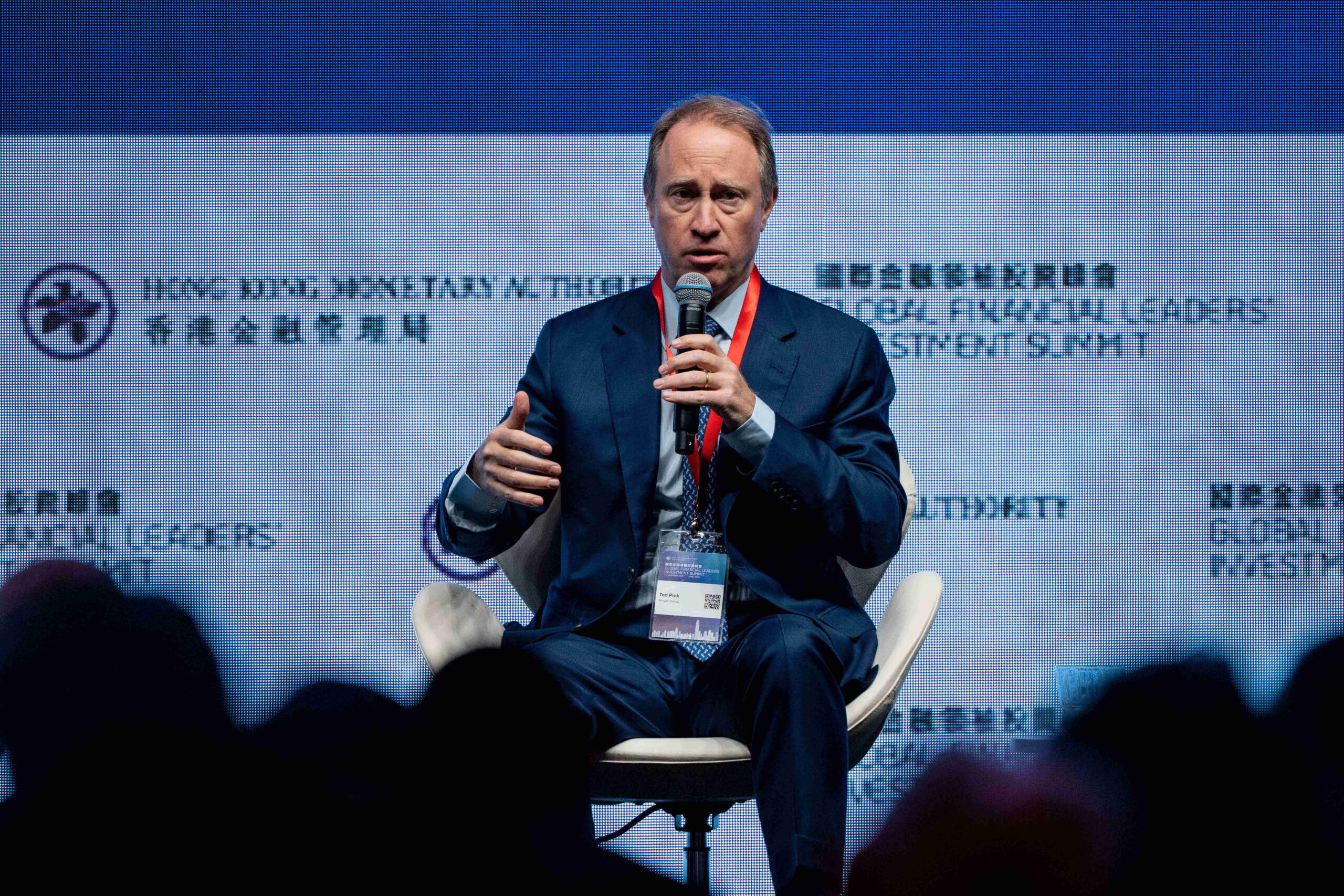
Morgan Stanley's wealth unit posted record quarterly revenue and $232 billion of net new assets, but more than half of those flows were tied to IPO activity. The recurring-revenue strategy is working, with a cyclical caveat.
Morgan Stanley's wealth-management strategy delivered a record third quarter, but the quality of the quarter deserves a closer look. The division generated $9.1 billion of net revenue, up from $8.2 billion a year earlier, while net new assets reached $232 billion compared with $81 billion in the prior-year period.
More than half of the new assets were associated with initial public offerings. That does not make the inflow less real, but it means the quarter benefited from a channel that can fluctuate sharply with capital-market activity.
A larger pool of fee-producing assets
Morgan Stanley now oversees about $10.5 trillion across wealth and investment management. That asset base supports advisory, lending and other recurring revenue, reducing the firm's dependence on trading and investment banking.
The shift began after the 2008 financial crisis and continued through acquisitions and adviser expansion. It gives Morgan Stanley a different earnings mix from Goldman Sachs, which remains more exposed to whether deals close, and from Charles Schwab, whose results are particularly sensitive to client cash balances and interest rates.
The latest quarter also showed that the old engine still matters. Morgan Stanley reported $5.8 billion of equities trading revenue, up 41% from a year earlier. The firm is not abandoning trading. It is using wealth management to make the overall business less dependent on a single market cycle.
Where the moat can narrow
Asset-based fees rise when markets and client balances grow, but the same mechanism works in reverse during a selloff. A concentrated equity market adds another risk because falling prices among a small number of large technology holdings can reduce client assets quickly.
IPO-linked flows also complicate the comparison. Management said the active IPO calendar accelerates its funnel and deepens client relationships, yet those flows should not be extrapolated as a steady quarterly run rate. The better test is whether Morgan Stanley retains those assets and expands advice, lending and investment services around them.
The quarter validates the strategic direction without eliminating cyclicality. Wealth management has made Morgan Stanley more durable, but record flows arrived with favorable markets and unusually strong IPO activity. Investors should watch asset retention and the share of future inflows that comes from repeatable adviser-led channels rather than one-time liquidity events.
Continue your GS research
Related News

RTX's Pratt Sales Rise 16% Even as New-Engine Mix Weighs on Growth
Pratt & Whitney's second-quarter sales rose 16%, but commercial original-equipment revenue fell as engine mix and repair demand redirected parts. RTX's next report should show whether service recovery and new deliveries can advance together.

Tesla, Meta and RTX Earnings Put AI Spending and Industrial Demand to the Test
A concentrated earnings calendar will test two market concerns at once: whether heavy AI spending is producing returns and whether industrial and consumer demand can withstand higher financing costs after a bruising week for technology shares.

American Airlines Faces a Narrower Margin for Error as Fuel Costs Surge
American Airlines’ revenue growth was overwhelmed by an 83% jump in fuel expense, pushing margins and earnings sharply lower. Premium demand and liquidity help, but the carrier’s outlook remains unusually wide.

Spotify's Buyback and Rogan Renewal Put Q3 Margins in Focus
Spotify renewed Joe Rogan and expanded its repurchase authorization by $1.5 billion ahead of third-quarter results. Subscriber growth and record gross margin support the case, but content costs and advertising remain key tests.

GE Aerospace and RTX Earnings Must Clear Guidance Already Priced Higher
GE Aerospace and RTX report Tuesday after raising guidance last quarter. Consensus estimates already meet or exceed those ranges, so cash flow, aftermarket growth and production capacity may matter more than headline beats.

Fifth Third’s Comerica Deal Starts to Show Operating Leverage
Fifth Third lifted third-quarter profit as Comerica integration boosted net interest income, while stable credit, stronger capital and locked-in expense savings supported the combined bank’s outlook.
Capital One and Meta Earnings Will Put Spending Discipline on Trial

Capital One and Meta report earnings on consecutive evenings with a common investor concern: both are spending heavily now in pursuit of future advantages.
Capital One reports after Tuesday's close. The bank and card issuer has been investing in technology, integration and business growth, while its shares were down more than 16% for the year in the original report. Investors will want to know how much of that spending continues and when management expects it to support stronger earnings.
The important measures extend beyond one quarter's net income. Credit-card delinquencies and charge-offs show how borrowers are performing. Net interest margin shows how effectively Capital One earns the spread between asset yields and funding costs. Operating expense and integration targets indicate whether investment is becoming permanent overhead or creating future efficiency.
Meta reports after Wednesday's close. Its new Muse personal AI agent had drawn strong early attention, according to CNBC, but expanding the service may require additional data-center capacity and product spending. The stock rose after the September 8 launch and later cooled as investors considered the cost.
Meta's central test is whether AI investment strengthens its advertising engine, user engagement or new paid products. Capital expenditure by itself does not establish value. Investors need evidence that incremental computing capacity supports measurable revenue or operating gains.
For both companies, the useful question is not whether investment rises, but whether each dollar creates enough growth or efficiency to justify the cost. Capital One must balance modernization against credit risk and profit pressure. Meta must balance product momentum against depreciation, energy needs and a larger infrastructure base.
The comparison has limits. One company is a regulated lender exposed to consumer credit and funding markets; the other is an advertising platform financing AI from substantial operating cash flow. Their spending should not be valued with the same multiple or risk assumption.
No reported result was available when this preview was prepared. An earnings preview is a map of uncertainties, not a forecast that those uncertainties will resolve favorably.
Investors should use the companies' official releases and calls to check the numbers: credit performance and expense guidance at Capital One, then capital expenditure, operating expenses and evidence of monetization at Meta. The market reaction will likely depend less on headline revenue than on whether management can define the return on investment.
Trump Media and Rumble Fell Faster Than the Market as Merger Risk Loomed

Trump Media fell 6% and Rumble dropped 8% during an October 16 market selloff, compared with a 1.4% decline in the S&P 500 proxy cited by the source. The gap is consistent with both stocks' smaller size and high sensitivity to changes in risk appetite, but the companies have different fundamental catalysts.
Trump Media's central event is its proposed all-stock merger with TAE Technologies. A September 30 SEC registration statement advances the approval process but remains preliminary. The filing says roughly 292.6 million new Trump Media shares are expected to be issued to TAE stakeholders based on then-current awards and warrants.
That share issuance would transform the company. TAE develops fusion energy, power management and cancer-therapy technology, while Trump Media operates Truth Social, streaming and financial brands. The merger could provide capital for TAE's development, but commercial fusion remains unproven and the transaction still requires approvals and completion conditions.
Rumble's exposure is more conventional. Its revenue depends on advertising, subscriptions, licensing and creator activity. A market selloff can pressure the shares, but its operating test is whether users, monetization and cash generation improve.
The one-day declines do not prove either business deteriorated that afternoon. They show how quickly valuation risk can surface when investors retreat from speculative equities. For DJT holders, the decisive evidence is the final merger terms, shareholder approval and the combined company's financing plan.
JPM Coin Goes Live on Ethereum for Institutional Dollar Transfers

JPMorgan has made JPM Coin available to institutional clients on Ethereum, extending the bank's deposit token beyond Base and its private Kinexys infrastructure. The token represents dollar deposits at JPMorgan and supports transfers between approved institutional clients.
The public-network deployment matters because Ethereum already hosts a large ecosystem of tokenized assets, stablecoins and financial applications. Clients can move bank deposits on the same network used for collateral and settlement, reducing the need to bridge between a private ledger and public blockchain infrastructure.
JPM Coin is not a public stablecoin available to any wallet. Access remains tied to JPMorgan client relationships, compliance checks and the bank's deposit structure. That distinction gives institutions a bank claim rather than exposure to a separate reserve company, but it limits open distribution.
JPMorgan says its Kinexys network processes more than $7 billion of transactions daily. Adding Ethereum can widen the set of counterparties and tokenized assets that connect to its deposit token, although transaction volume on the new network has not yet been disclosed.
For JPMorgan, the opportunity is deeper client integration and fee-generating payment infrastructure rather than a direct speculative token. For Ethereum, the launch is evidence that a major bank is willing to settle institutional deposits on its main network. The next measure is actual client volume, not the announcement alone.
Ethereum's Faster Proofs Still Need a Worst-Case Cost Limit

Ethereum's zero-knowledge proof systems are becoming fast enough to prove ordinary blocks in near real time, but Vitalik Buterin says speed is no longer the only test. He has called for a hard upper bound on prover cost relative to the amount of gas in a block.
Gas is intended to meter execution work and keep blocks within a resource budget. Proof generation can impose a different workload. A block that is inexpensive for a conventional execution client may contain operations that are unusually expensive for a prover, so a speed result on typical blocks does not establish a worst-case guarantee.
ZKsync reported that one modern GPU proved 99% of a sample of 7,200 Ethereum blocks in under 10 seconds each. That is an important engineering milestone. It still measures the selected historical blocks, not every workload Ethereum rules permit an adversary to assemble.
EIP-7904 reaches a similarly narrow conclusion from the other direction. Its current analysis recommends no change to compute gas costs at a targeted native-execution throughput, but the document explicitly says it does not specifically address zero-knowledge proof generation.
A credible bound would need stated hardware, security settings, implementations and a maximum proving deadline. Without it, independent operators may have to provision for uncertain peaks or risk falling behind. Ethereum's next proof milestone is therefore not another average-speed record. It is a reproducible demonstration that the hardest valid blocks remain within a predictable resource envelope.
Binance's SOXL Perpetual Fell 5.9% Without Breaking Its 3% Price Band
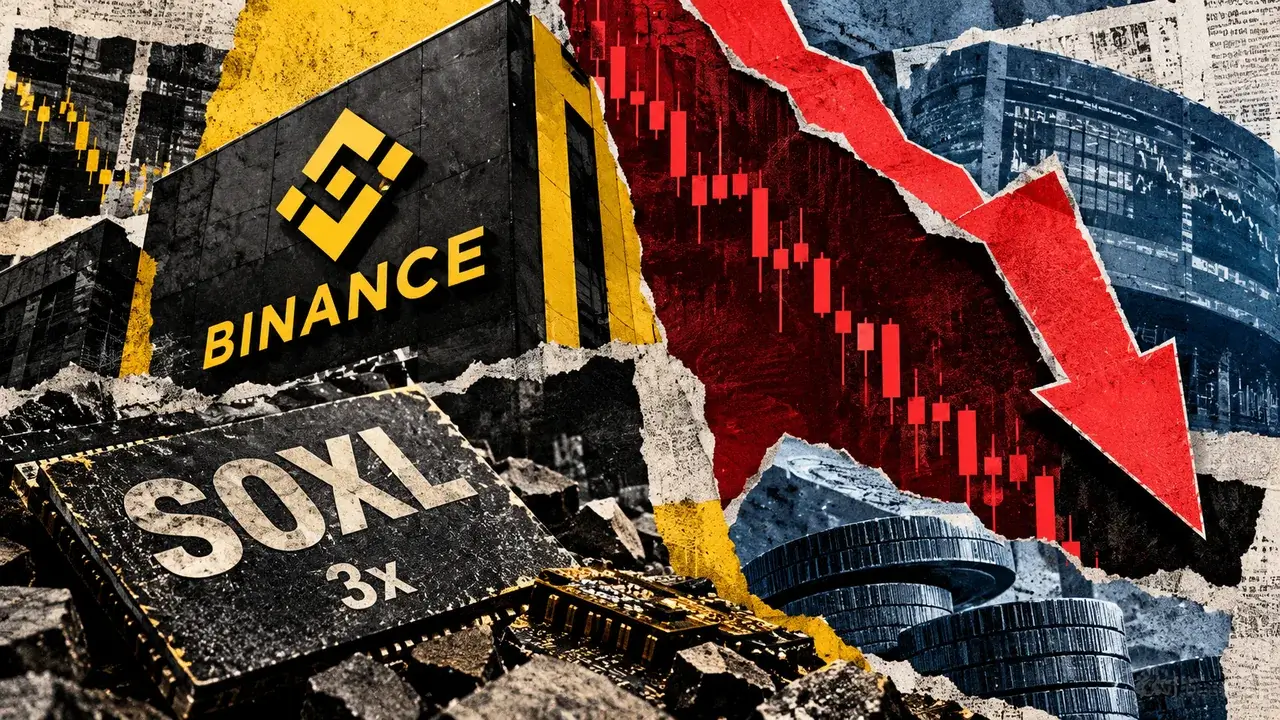
Binance's SOXL-linked perpetual contract fell 5.9% from its opening mark to its intrahour low during an October 17 weekend trading hour. At the same time, all 60 sampled minute-close differences between the mark and its reference index remained below the platform's stated 3% weekend band.
The figures are not contradictory. The 3% rule limits how far the mark can sit from the index at a given time. It does not stop the index itself from moving. During the sampled hour, the reference index declined nearly 4%, carrying the band and the mark lower together.
That distinction matters because Binance's contract trades while the underlying SOXL shares on NYSE Arca are closed. The weekend reference can be derived from crypto order-book inputs and smoothing procedures rather than a new exchange print for the ETF. Traders therefore hold exposure to Binance's reference methodology as well as semiconductor-market expectations.
Liquidation adds another layer. A position is closed when the mark reaches an account-specific threshold determined by collateral, leverage and margin mode. Staying within the mark-to-index band does not protect a highly leveraged position from liquidation after a cumulative price move.
Binance states that the contract tracks the Direxion Daily Semiconductor Bull 3X ETF and permits leverage up to 20 times. SOXL itself targets three times the daily move of a semiconductor index. Combining an equity-based leveraged product with a leveraged perpetual can create risk far beyond what a 3% reference band appears to imply.
Latest comments