


 Be The Investor Research
Kroger Beats on Profit but Cuts Sales Growth Outlook as Core Demand Slows
Kroger posted stronger adjusted earnings and digital growth but reduced its full-year identical-sales outlook. Cost discipline, buybacks and eCommerce are supporting profit, while weak underlying sales remain the main question for the next phase of the story.
Kroger’s second-quarter 2026 results showed stronger profitability than expected but softer underlying sales momentum, leaving investors with a mixed picture: cost discipline and digital improvement are supporting earnings while identical-store sales growth remains weak.
Adjusted EPS was $1.09, up 5% from a year earlier, and adjusted FIFO operating profit reached $1.076 billion. Revenue was about $34.6 billion. Identical sales excluding fuel increased only 0.2%, a sharp slowdown from the prior-year period.
Management lowered full-year identical-sales guidance excluding fuel to 0.2% to 0.8% from 1.0% to 2.0%. Kroger attributed part of the pressure to an approximately 140-basis-point headwind related to the Inflation Reduction Act.
The company did not cut its adjusted EPS outlook, keeping guidance at $5.10 to $5.30. It also maintained adjusted FIFO operating-profit guidance of $5.0 billion to $5.2 billion. That combination tells investors that management expects productivity, mix and cost control to offset part of the weaker sales trend.
Digital performance was a bright spot. Adjusted eCommerce sales grew 20%, while profit from Kroger Precision Marketing increased 24%. These businesses matter because they can improve customer retention and create higher-margin revenue streams beyond traditional grocery sales.
Capital returns also remain significant. Kroger repurchased $1.0 billion of stock in the second quarter and $1.2 billion year to date under a $2 billion authorization. The company also increased its dividend earlier in the quarter for a twentieth consecutive year.
The risk is that financial engineering and cost discipline cannot indefinitely substitute for stronger traffic and sales growth. Grocery is a low-margin business, so weak comparable sales can eventually pressure operating leverage even if buybacks support EPS.
Kroger’s balance sheet still gives management flexibility. The company reported a net total debt to adjusted EBITDA ratio of 1.91, below its stated target range of 2.30 to 2.50. That leaves room for investment and shareholder returns, though the sales trend remains the key operating issue.
BTI’s bottom line: Kroger delivered a solid earnings quarter despite weak identical sales. The stock’s next leg depends on whether eCommerce, retail media and cost savings can sustain profit growth while management works to reaccelerate the core grocery business.
Related News

Pfizer's November 3 Report Must Separate Pipeline Progress From Decline
Pfizer reports on November 3 after raising 2026 revenue guidance. Investors must weigh 18% growth from launched and acquired products against lower COVID sales, a third-quarter research charge and a still-unproven late-stage pipeline.

Intel's Data Center Rebound Still Depends on a Mostly Internal Foundry
Intel's data center sales jumped 59% in the June quarter, but outside customers supplied only about 5% of foundry revenue. The October 29 report must show whether manufacturing losses are shrinking as external demand develops.
Costco's Cash Engine Is Strong, but Growth Is Getting More Expensive
Costco closed fiscal 2026 with double-digit sales growth, high renewal rates and about $9.4 billion of calculated free cash flow. Its expansion plan is accelerating just as the stock's valuation leaves little room for weaker execution.

Visa's Record Run Faces an Earnings Test on Costs and Regulation
Visa reports fiscal 2026 results near a record share price. Payment growth remains solid, but investors need evidence that expense growth can fall below revenue growth while routing regulation remains unresolved.
UPS Raises Its 2026 Outlook as Better-Priced Shipments Lift Revenue
UPS raised revenue, profit, earnings and free-cash-flow targets after all three segments grew, but Supply Chain Solutions profit fell sharply despite higher sales during the quarter.

SLB's Q3 Beat Shows a Recovery, but the Mix Still Matters
SLB beat third-quarter estimates as Middle East activity recovered and North American sales strengthened, while year-over-year margins and regional comparisons reveal a less uniform improvement.
Cincinnati Financial's Earnings Beat Came With a Reserve Tailwind

Cincinnati Financial's third-quarter adjusted earnings beat was substantial, but the quality of the result cannot be judged from the headline alone. Higher investment income helped, while unusually favorable development of older claim reserves offset part of the pressure from catastrophe losses.
The insurer reported non-GAAP operating income of $443 million, or $2.86 per share, compared with $2.85 per share a year earlier. The source article said analysts expected $2.03 per share. Revenue rose 5% to $2.69 billion, about $50 million above the cited consensus estimate.
Premium growth was positive but modest. Property and casualty net written premiums increased 2% to $2.55 billion. Pretax investment income rose 10% to $325 million as bond interest income increased 11%, partly offset by a 4% decline in equity dividend income.
The combined ratio needs context
Cincinnati Financial's property and casualty combined ratio rose to 90.9% from 88.2% in the third quarter of 2025. A ratio below 100% generally indicates an underwriting profit before investment income, so the company remained profitable on that basis. The 2.7-percentage-point deterioration nevertheless shows that catastrophe losses made underwriting less favorable than a year earlier.
Older reserves provided a meaningful benefit. Favorable prior accident-year reserve development was $94 million, equal to 3.6 percentage points of the combined ratio, compared with $22 million and 0.9 percentage points a year earlier. Excluding that favorable development, the underlying ratio would have been higher, although the reported data do not by themselves provide a complete normalized measure.
Reported profit tells a different story
Reported net income fell to $459 million, or $2.96 per share, from $1.122 billion, or $7.11 per share, a year earlier. The company attributed most of the $663 million decline to a $657 million reduction in after-tax net investment gains. Property and casualty underwriting profit also declined by $41 million after tax.
That contrast does not mean adjusted operating income is misleading. Changes in unrealized and realized investment gains can make reported net income volatile for an insurer with a large securities portfolio. It does mean investors should keep reported earnings, operating earnings, underwriting profit and recurring investment income separate.
Cincinnati Financial shares rose about 1.5% to $180 in after-hours trading after the release. The move reflected an operating beat, but future results will depend on pricing, premium growth, catastrophe severity and reserve development. The most durable positives were higher recurring investment income and continued underwriting profit. The largest caveat was that older reserve releases contributed materially to the quarter's combined ratio.
ServiceNow's Q3 Setup Hinges on Growth Quality, Not a Price Target

Bank of America raised its ServiceNow price target to $180 five days before the company's third-quarter report, but the target itself is not the evidence investors need. The more useful test is whether ServiceNow can meet its growth outlook after some federal revenue arrived earlier than planned.
ServiceNow reported second-quarter subscription revenue of $3.877 billion, up 24.5% as reported and 23% in constant currency. Total revenue reached $3.987 billion, while current remaining performance obligations, a measure of contracted revenue expected within 12 months, grew 21% to $13.2 billion.
The quarter also showed commercial momentum. ServiceNow signed 123 transactions worth more than $1 million in net new annual contract value, nearly 40% more than a year earlier. Its AI business crossed $1 billion in annual contract value, and management said agentic AI deployments had increased ninefold in nine months.
Part of the beat belonged to Q3
Management said the second quarter exceeded the high end of subscription guidance by 1.5 percentage points. About half of that outperformance came from a higher mix of on-premise revenue, largely tied to U.S. federal demand, that moved from the third quarter into the second.
That does not erase the revenue, but it changes the comparison. A clean third-quarter result needs to show that underlying new business can offset the pull-forward rather than relying on investors to ignore the timing effect.
For the third quarter, ServiceNow guided to subscription revenue of $3.975 billion to $3.980 billion, about 20% growth in constant currency. It also guided to a 31% non-GAAP operating margin. The company estimated that currency movements would create an approximately $35 million year-over-year headwind to current remaining performance obligations.
AI growth brings a margin tradeoff
ServiceNow expects stronger AI adoption and greater use of hyperscaler partners to pressure gross margin in the near term. That is a real economic cost of scaling the platform, even if management expects efficiency to improve over time. Investors should therefore compare AI contract growth with subscription gross margin and free cash flow rather than treating every new AI booking as equally profitable.
The October 28 report will be judged against the company's own guidance, not Bank of America's target. Subscription revenue near the top of the range, resilient contract growth and stable cash generation would support the bullish call. A shortfall would matter more if it showed that the Q2 pull-forward masked weaker demand.
Bloom Energy's Rebound Still Has to Pass a Cash Conversion Test
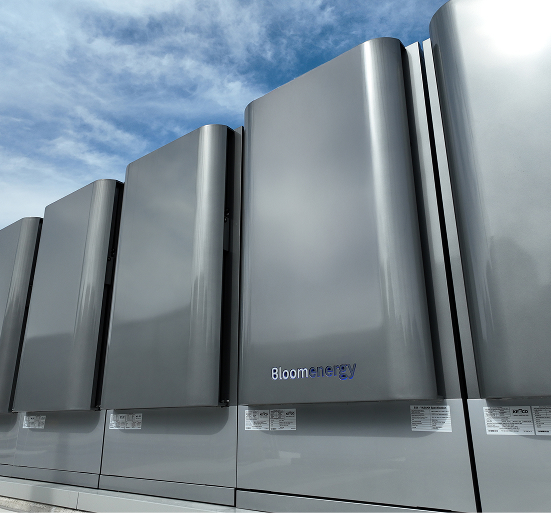
Bloom Energy's 7% rebound on October 26 recovered part of its post-earnings decline, but the price move did not settle the most important question in the quarter: whether exceptional revenue growth will convert into cash.
Bloom reported third-quarter revenue of $1.236 billion, up 138.1% from a year earlier. Product revenue rose 179.4% to $1.074 billion, while reported gross margin improved by 4.5 percentage points to 33.8%. Operating income reached $225.4 million, compared with $7.8 million a year earlier, and reported earnings were $0.78 per share.
Those results explain why investors returned after the initial selloff. The company also raised its 2026 revenue outlook for a third time, setting a range of $4.4 billion to $4.6 billion. At the midpoint, that would represent 122% growth from 2025.
Growth consumed cash in the quarter
The complication is working capital. The source report said free cash flow turned negative after four positive quarters. Chief Financial Officer Simon Edwards attributed the cash use to inventory, contract assets and receivables needed for future deliveries, while emphasizing that year-to-date free cash flow remained positive.
That explanation is plausible for a company scaling production quickly, but it is not yet proof of cash conversion. Inventory must be delivered, contract milestones must be reached, and customers must pay. If any step slips, revenue growth can coexist with a longer period of cash absorption.
The official results also show why the issue deserves attention. Revenue rose by about $717 million from the third quarter of 2025, and reported operating income improved by almost $218 million. Those gains are economically meaningful. Still, an investor cannot assume that accounting profit and cash generation will move together every quarter when receivables and contract assets are expanding.
The fourth quarter can validate management's explanation
Bloom's fourth-quarter results should reveal whether billing milestones and collections reverse the working-capital build. Positive conversion would support management's view that the cash outflow was temporary. Another negative quarter would make the growth model look more capital intensive than the headline margins suggest.
Bloom's backlog and demand from data centers provide visibility, and inclusion in the S&P 500 broadened the shareholder base. Neither removes execution risk. After the rebound, the strongest bull case is not simply that sales are rising. It is that Bloom can translate those sales into repeatable cash without sacrificing the capacity investments needed for the next wave of deliveries.
Affirm's Q1 Setup Turns on GMV Growth Above Guidance

Affirm enters its November 5 earnings report with analysts expecting growth above management's own starting point, but the gap between expectations and guidance is now a source of risk as well as potential upside.
Morgan Stanley lowered its Affirm price target to $79 from $82 and kept an Equal Weight rating, according to the original report. The firm still expects fiscal first-quarter gross merchandise volume, or GMV, to grow about 34%, compared with roughly 31% at the high end of the company's implied outlook. The report says investors may be positioned for growth closer to 37%, which means a result above management's range could still disappoint if it falls short of the market's unofficial bar.
A second firm took a more bullish position. Monness Crespi initiated coverage with a Buy rating and a $90 target, arguing that buy-now-pay-later providers and neobanks have taken a larger share of spending and lending. The next phase depends on customers using the services more often and on changes in customer mix, not simply adding more users.
Affirm's own outlook calls for first-quarter GMV of $13.7 billion to $14.0 billion and revenue of $1.19 billion to $1.22 billion. The original report cites Fiscal.ai consensus revenue of $1.21 billion and earnings of $0.38 per share, compared with $0.23 a year earlier. Revenue consensus therefore sits inside the company's range, while the more demanding debate is about GMV growth and profitability.
The company also expects a GAAP operating margin of 11.5% to 13.5% and an adjusted operating margin of 28% to 30%. Its outlook assumes a promotional event with a large merchant will not repeat and that another merchant's move to its own wallet will remain a year-over-year headwind for part of the quarter. Affirm also expects short-term benchmark rates to be higher in fiscal 2027 than in fiscal 2026, adding pressure to funding economics.
Affirm reports after the market closes on November 5, with its conference call scheduled for 5 p.m. ET. A clean beat requires more than strong transaction volume. Investors should compare GMV with revenue less transaction costs, which the company guides to $575 million to $590 million, and check whether credit performance and funding costs support the margin forecast.
Amazon's AWS Forecast Raises the Bar Ahead of Q3 Earnings

Amazon's third-quarter report on October 29 has a narrow test at its center: can Amazon Web Services accelerate again without making the returns on the company's AI spending harder to see? Bank of America's forecast says the cloud business can clear that bar, but the rest of the quarter leaves little room for a weak margin result.
The bank forecasts Amazon revenue of $202.0 billion and operating income of $26.4 billion. The revenue estimate is just below the $202.2 billion consensus cited in the original report, while operating income is slightly above the cited $26.1 billion consensus. Amazon's own guidance calls for revenue of $197 billion to $202 billion and operating income of $22.5 billion to $26.5 billion. In other words, the analyst's case sits near the top of management's ranges rather than assuming a broad companywide beat.
Bank of America expects AWS revenue to grow 40% from a year earlier, two percentage points above the consensus rate cited in its note. It estimates AWS will add roughly $4 billion of revenue from the second quarter and produce a 39% operating margin. The note attributes that growth to added capacity, price increases, AI laboratory contracts and enterprise demand for inference, while greater use of Amazon's Trainium chips and Bedrock platform could help absorb higher depreciation.
The starting point is already strong. In the second quarter, AWS sales rose 37% to $42.2 billion and AWS operating income reached $16.6 billion, according to Amazon. Advertising grew 26%, and total operating income rose to $27.5 billion. Yet Amazon's trailing free cash flow was a $7.6 billion outflow after property and equipment spending increased by $66.1 billion, mainly for AI infrastructure. That gap between reported operating profit and cash generation is the central counterweight to the cloud growth story.
The retail and advertising businesses could make the comparison less clean. Bank of America expects North American retail growth to slow to 6%, while advertising growth eases to 15% because Prime Day timing becomes less favorable. It forecasts fourth-quarter revenue guidance of $239 billion to $246 billion, with a midpoint below the consensus cited in the note, and operating income guidance of $29 billion to $34 billion.
A 40% AWS result would be encouraging, but investors also need evidence that new capacity is being used efficiently. The most revealing figures will be AWS operating margin, total capital spending, depreciation and the fourth-quarter profit range. Rapid cloud growth matters more if it can convert Amazon's unusually heavy AI investment into durable cash returns.
Latest comments