



GLDM Drew More New Money Than GLD as Fees Took Center Stage

State Street's lower-cost GLDM attracted substantially more new money than GLD in the reported period. The choice turns on holding costs, trading liquidity and taxes, not a different exposure to gold.
Investors directed almost $500 million into SPDR Gold MiniShares Trust while the much larger SPDR Gold Shares received about $182 million over the reported period through October 14. Both funds hold physical bullion, so the flow gap points less to a new view on gold than to a preference for a cheaper wrapper.
State Street lists a 0.10% annual expense ratio for GLDM and 0.40% for GLD. On a $100,000 position, that difference is $300 a year before compounding. Gold produces no dividend or operating cash flow, and each trust sells a small amount of bullion to pay expenses, so a lower fee leaves investors with more gold exposure over time.
GLD still offers advantages for institutions and active traders. Its larger asset base, heavier trading volume and established options market can reduce execution costs for large or short-term trades. GLDM's lower share price and smaller fee are more relevant to long-term savers, especially when purchases are modest and options liquidity is not needed.
Taxes can overwhelm the annual savings for existing holders. Selling appreciated GLD in a taxable account realizes a gain, while both physical-gold trusts can face the higher U.S. collectibles tax rate on long-term gains. A switch therefore makes the cleanest economic case inside a tax-advantaged account or for new contributions.
The flow data does not prove GLDM will outperform gold or that GLD is obsolete. It shows that when two funds deliver nearly the same underlying exposure, investors are increasingly treating cost and trading purpose as separate decisions.
Continue your GLD research
Related News

Binance's SOXL Perpetual Fell 5.9% Without Breaking Its 3% Price Band
Binance's SOXL-linked perpetual fell 5.9% from its hourly open even though sampled mark-to-index gaps stayed below 3%. The episode shows why a price band does not cap trading losses.

IBIT's $165 Million Outflow Looks Large, but Context Matters
BlackRock's bitcoin trust drove most of a $228.4 million weekly ETF outflow. Against $104.3 billion in sector assets, the move was small and concentrated in one session.

XRP ETF Outflow Broke a 13-Week Streak, but It Was Only 0.13% of Assets
U.S. spot XRP ETFs posted a $1.84 million weekly outflow after 13 weeks of inflows. Relative to $1.47 billion of assets, the reversal was small and does not establish a durable trend.
Trump Media and Rumble Fell Faster Than the Market as Merger Risk Loomed
Trump Media dropped 6% and Rumble 8% during a broader selloff, highlighting their high volatility. For DJT, the pending TAE merger adds execution, dilution and fusion-development risk.

JPM Coin Goes Live on Ethereum for Institutional Dollar Transfers
JPMorgan made its dollar deposit token available to institutional clients on Ethereum after launching on Base. The move broadens bank-backed settlement but keeps access inside JPMorgan's permissioned client network.

Ethereum's Faster Proofs Still Need a Worst-Case Cost Limit
Vitalik Buterin says Ethereum's zero-knowledge provers need a hard maximum cost per unit of gas. Fast results on sampled blocks do not yet guarantee predictable resources for every valid workload.
Aave's Proposed USAT Gateway Adds Permission Risk to the Return Trip

TokenLogic has proposed a permissioned GHO Stability Module on Avalanche that would let approved counterparties exchange waUSAT for GHO. The design could add institutional stablecoin liquidity to Aave, but it creates an important asymmetry: receiving and transferring GHO would not guarantee the ability to reverse the original swap.
Approval would be checked in both directions. If access were revoked after a counterparty deposited waUSAT and received GHO, the participant could still transfer GHO but could not use the module to recover waUSAT. The proposal says that restriction should be reflected in commercial agreements.
Even a successful reverse swap would return a receipt token rather than dollars. The holder would still need to withdraw USAT from Aave, subject to available liquidity and reserve conditions, and then meet Anchorage Digital Bank's requirements for issuer redemption. Each step has its own permission and operational risk.
The proposal separates 65 million GHO of reserve funding, a 25 million GHO module draw limit and a 20 million waUSAT exposure cap. Some contract addresses and pricing details remain unspecified, and the forum post still requires governance approval and an implementation proposal.
The plan may deepen GHO liquidity, but investors should treat it as a proposal rather than an operating product. The decisive questions are whether governance approves the module, whether final contracts preserve the described limits, and how counterparties are protected if access is revoked after entry.
CFTC Challenges CME's Standing in U.S. Perpetual-Futures Fight

The Commodity Futures Trading Commission has asked a federal court to reject CME Group's challenge to the agency's policy on perpetual futures, arguing that the exchange has not shown a concrete injury. The dispute concerns a CFTC framework that treats certain bitcoin perpetual contracts as futures that regulated exchanges may list.
CME says the policy changes the competitive and regulatory landscape. The agency's response focuses first on standing, a threshold legal question about whether CME is harmed enough to sue. If the court accepts that argument, it could dismiss the case without deciding whether the CFTC's interpretation of the Commodity Exchange Act is correct.
The competitive stakes are real even though the current fight is procedural. Perpetual futures have no fixed expiration date and are widely used on offshore crypto venues. Allowing them on U.S.-regulated exchanges could attract volume from conventional futures and give newer markets a product associated with crypto-native trading.
A dismissal would not automatically guarantee broad adoption. Exchanges would still need product approvals, surveillance, margin rules and sufficient liquidity. A ruling for CME could slow the framework or force the agency to provide a fuller legal justification.
For CME investors, the immediate effect is limited because the company can seek to list comparable products. The longer-term issue is whether the policy lowers barriers for rivals and changes the economics of U.S. crypto derivatives. The next meaningful event is the court's ruling on standing and dismissal, not the rhetoric in either side's filing.
Bitcoin Funds Cut Net Shorts, but the Data Shows Less Risk, Not a Bull Turn
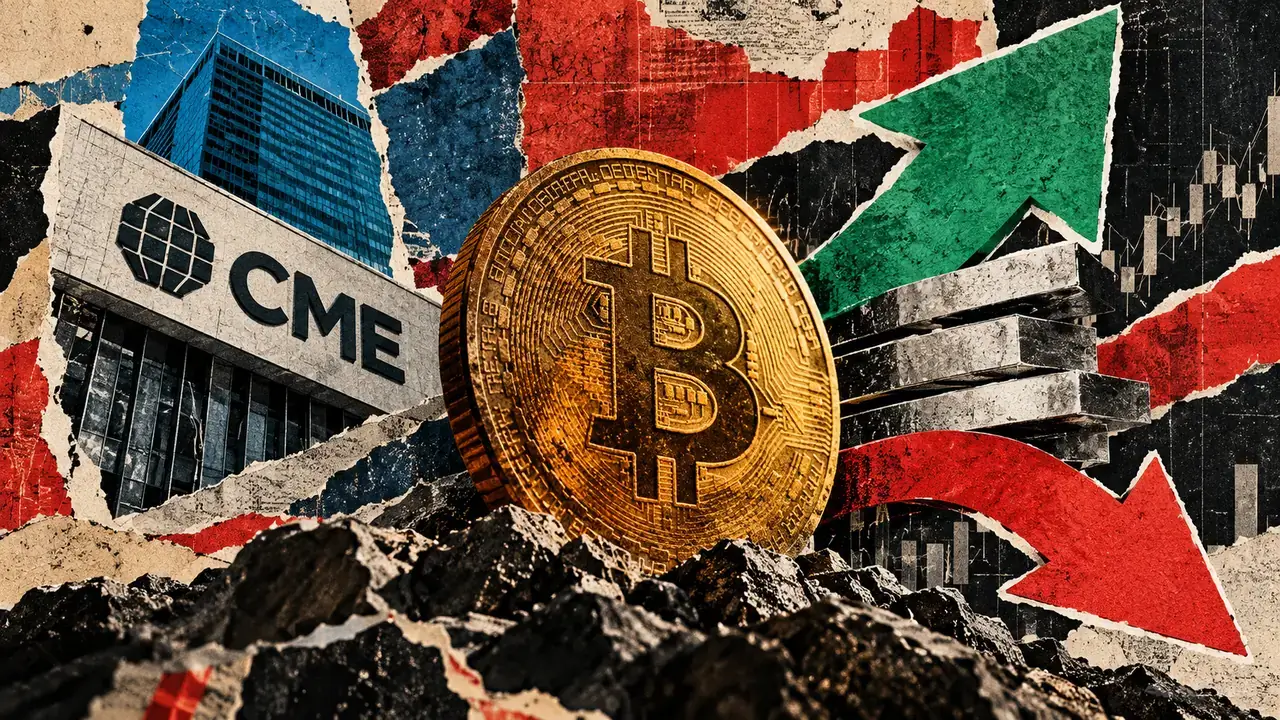
Leveraged funds reduced their net short position in CME bitcoin futures to the equivalent of 30,611 bitcoin as of October 13, down from 35,903 a week earlier. The 5,292-bitcoin change occurred while the underlying asset fell, a combination consistent with some bearish traders taking profits or reducing exposure.
The details weaken a simple bullish interpretation. Outright short positions fell by 6,437 bitcoin, but outright longs also declined by 1,145. Leveraged funds still held more than twice as much outright short exposure as long exposure. The market became less bearish at the margin without turning net bullish.
Spread positions rose by 2,719 bitcoin per leg to about 8,434, an increase of nearly 48%. Those trades often pair long and short contracts with different maturities, seeking changes in the futures curve rather than a directional price move. Their growth lifted gross exposure even as outright bets and combined open interest contracted.
CFTC positioning is also delayed. The October 13 snapshot does not include bitcoin's subsequent fall below $80,000 and rebound toward $82,000. It cannot establish whether funds continued covering shorts or rebuilt them after inflation data and higher bond yields pressured risk assets.
The next report, covering positions through October 20, should be read alongside open interest and the split between outright and spread trades. Fewer net shorts can support price if positions are closed aggressively, but this week's data mainly shows traders reducing directional risk in a volatile market.
Kraken's Unified Wallet Makes Futures Losses a Broader Account Risk

Kraken has opened its Unified Wallet to eligible clients in the European Economic Area, allowing spot, margin, qualifying Earn and futures balances to support positions from one pool. Users must opt in, but once they do, the default cross-margin setting can expose much more than the amount they intended to trade in futures.
Under cross margin, losses are calculated against the eligible account pool. Bitcoin, ether, dollars, euros and other approved assets can support positions at asset-specific collateral ratios. That improves capital efficiency because gains and unused balances in one part of the account can prevent liquidation elsewhere.
The same mechanism expands the loss boundary. A losing futures position can consume collateral that was originally held for spot investing or in a qualifying Earn balance. Kraken's documentation says the full eligible account value, including unrealized gains, can be used in cross-margin mode. Regional haircuts and product exclusions still apply.
Kraken also offers isolated margin for eligible linear futures, limiting a position to its allocated collateral. That is the more important control for a user who wants trading risk separated from long-term holdings. Switching back to separate wallets requires all derivatives positions and active orders to be closed first.
Unified collateral is useful infrastructure, not a free reduction in risk. European clients should decide whether the operational convenience is worth linking assets that previously had separate loss paths.
Latest comments