
Blackstone's $200 Billion Data Center Bet Concentrates AI Risk
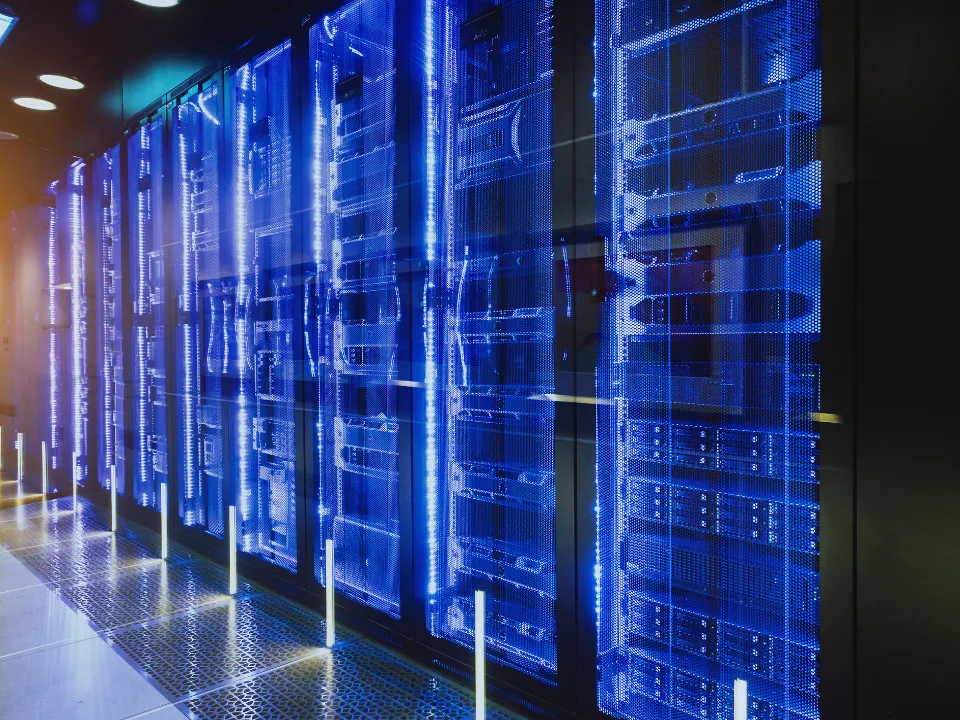
Blackstone has expanded data center exposure from $55 billion to about $200 billion including debt and projects, creating scale across AI infrastructure while concentrating capital, power and demand risks.
Blackstone's data center investments reached about $200 billion in July when debt and projects under construction are included, up from roughly $55 billion in June 2024. The expansion gives the asset manager unusual scale in artificial intelligence infrastructure, but it also concentrates exposure to a theme that depends on power, financing and sustained computing demand.
The strategy began before the current AI boom and accelerated with Blackstone's roughly $10 billion acquisition of QTS in 2021. It later added AirTrunk in Asia-Pacific, expanded QTS into Europe and financed graphics processors for CoreWeave. Blackstone also owns or backs power assets, AI infrastructure companies and a data center real estate investment vehicle.
This is more than a real estate trade. Data centers combine long-lived buildings and electrical infrastructure with customers whose technology and capital needs can change quickly. Returns depend on lease terms, tenant credit, construction costs, power availability and the useful life of installed equipment. A contracted hyperscale tenant can reduce demand risk, but it can also create concentration.
Blackstone's official materials emphasize an enormous pipeline of required digital and energy infrastructure. The firm has announced more than $25 billion of planned Pennsylvania investment and says that program could catalyze an additional $60 billion. It has also described data centers as one part of a broader AI portfolio that includes power and computing capacity.
The scale creates advantages. Blackstone can secure land, negotiate power, finance large campuses and spread development expertise across regions. It can also match long-duration institutional capital with projects that public companies may prefer not to own.
The same scale magnifies errors. Communities are pushing back against power and water use, grid interconnections can take years, and construction costs can rise before a lease begins. If AI customers slow capital spending or technology improves computing efficiency faster than demand expands, projected capacity could earn less than expected.
For Blackstone shareholders, the relevant measure is not the headline asset value alone. Investors need fee-earning assets, realized returns, occupancy, development yields and credit performance across the portfolio. The $200 billion figure proves commitment and access to capital. It does not yet prove that every project will meet its underwriting assumptions.
Latest comments