
Apple Gains Smartphone Share as Global Shipments Fall 22%
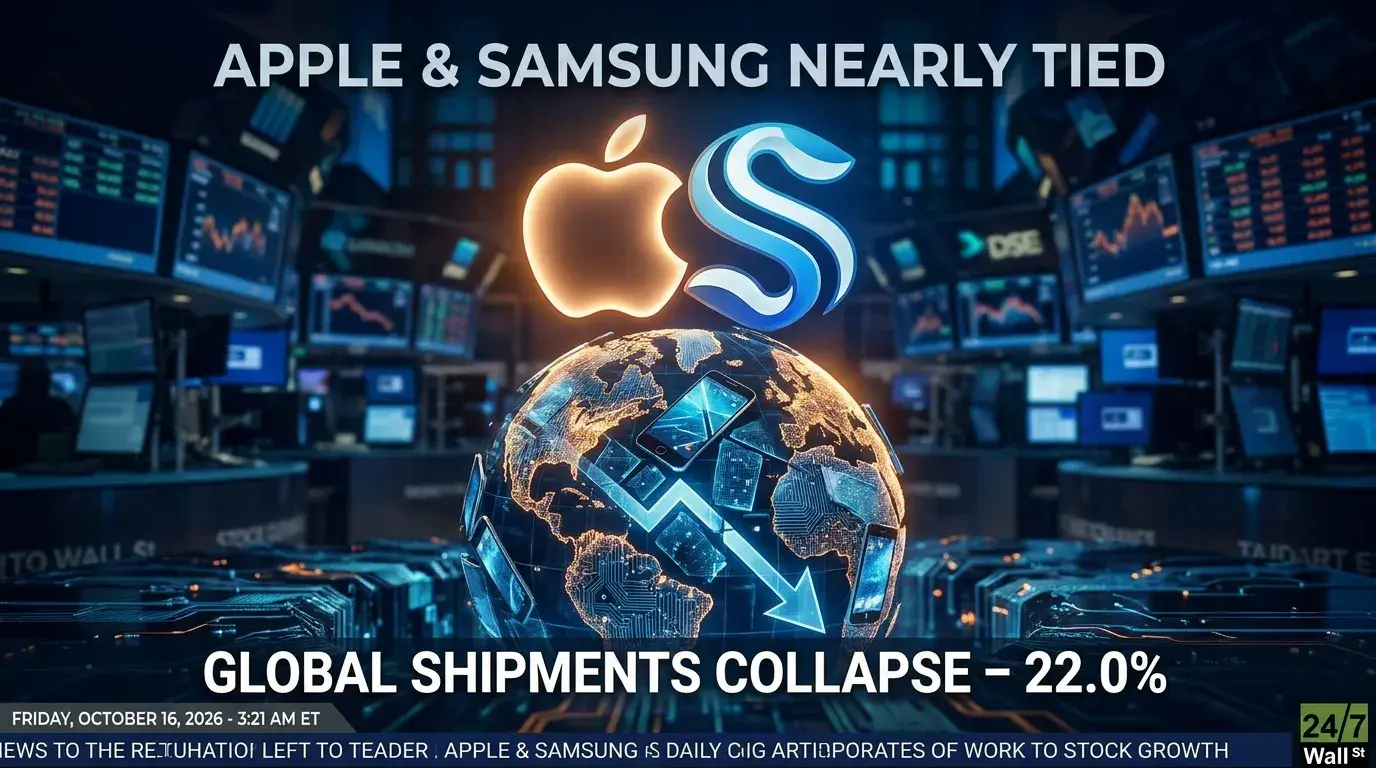
Apple and Samsung nearly tied for the global lead during a record smartphone contraction, showing that market-share gains can coexist with lower unit shipments and rising memory costs.
Global smartphone shipments fell 22% year over year to 255.3 million units in the third quarter of 2026, the largest quarterly decline in IDC’s preliminary series. Apple and Samsung gained share because smaller rivals contracted even faster.
Samsung shipped 57.8 million devices for 22.6% share, while Apple shipped 57.3 million for 22.4%. IDC treats differences of one-tenth of a percentage point or less as a statistical tie, so the two companies finished effectively level at the top.
Share gains do not mean Apple sold more iPhones. Market share is relative, and a company can gain it while its unit volume falls if competitors decline faster. The distinction matters because device revenue depends on units and pricing, not on rank alone.
Memory inflation adds a second pressure. AI data centers and consumer devices compete for DRAM supply, raising component costs across the smartphone industry. Apple’s premium customer base and purchasing scale may soften the effect, but higher input costs can still reduce gross margin or force price increases that lengthen upgrade cycles.
The next earnings report should clarify whether services revenue and premium pricing offset weaker hardware volumes. Investors should compare unit demand, iPhone revenue and gross-margin guidance rather than treating a near-first-place market share as a complete measure of business strength.
Latest comments