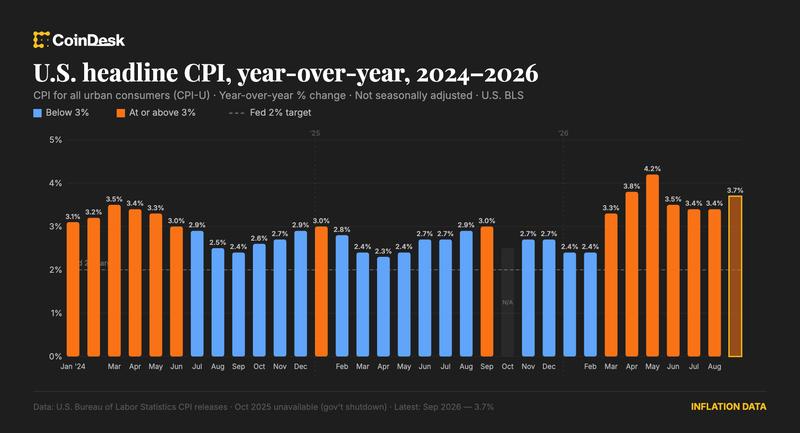
Bitcoin fell after September inflation came in hotter than economists expected, reminding crypto investors that interest-rate expectations can still dominate short-term trading.
The U.S. Bureau of Labor Statistics reported that the consumer price index rose 0.6% in September and 3.7% from a year earlier. Core CPI, which excludes food and energy, increased 0.3% for the month and 2.6% over 12 months. Reuters said consensus forecasts had been 0.2% monthly and 2.5% annually for the core measure.
Gasoline prices rose 9.1% during the month and accounted for more than half of the increase in the headline index. That concentration matters because an energy-driven spike can behave differently from persistent inflation in rents or labor-intensive services, although policymakers cannot ignore it when inflation expectations are at risk.
CoinDesk reported that bitcoin moved sharply lower after the release. Its pages showed bitcoin around $83,450 before the data and lower readings later in the session, but those figures are market snapshots rather than official opening and closing prices.
The transmission mechanism is straightforward. A stronger inflation report can increase expectations for Federal Reserve rate hikes or delay future cuts. Higher expected interest rates raise the return available on cash and government bonds, while tighter financial conditions can reduce demand for volatile assets that produce no contractual cash flow.
One report does not determine the Federal Reserve's decision. Policymakers will also consider employment, wage growth, inflation expectations and subsequent data. The 0.6% headline increase was unusually large, but core inflation was lower on an annual basis than the headline rate.
For bitcoin investors, the important question is whether the decline reflects a brief repricing or the start of a broader liquidity squeeze. Bond yields, the dollar and rate-futures pricing can help answer that question. The CPI release provides a credible catalyst for the move, but it does not prove that inflation alone caused every trade in a global, continuously operating market.