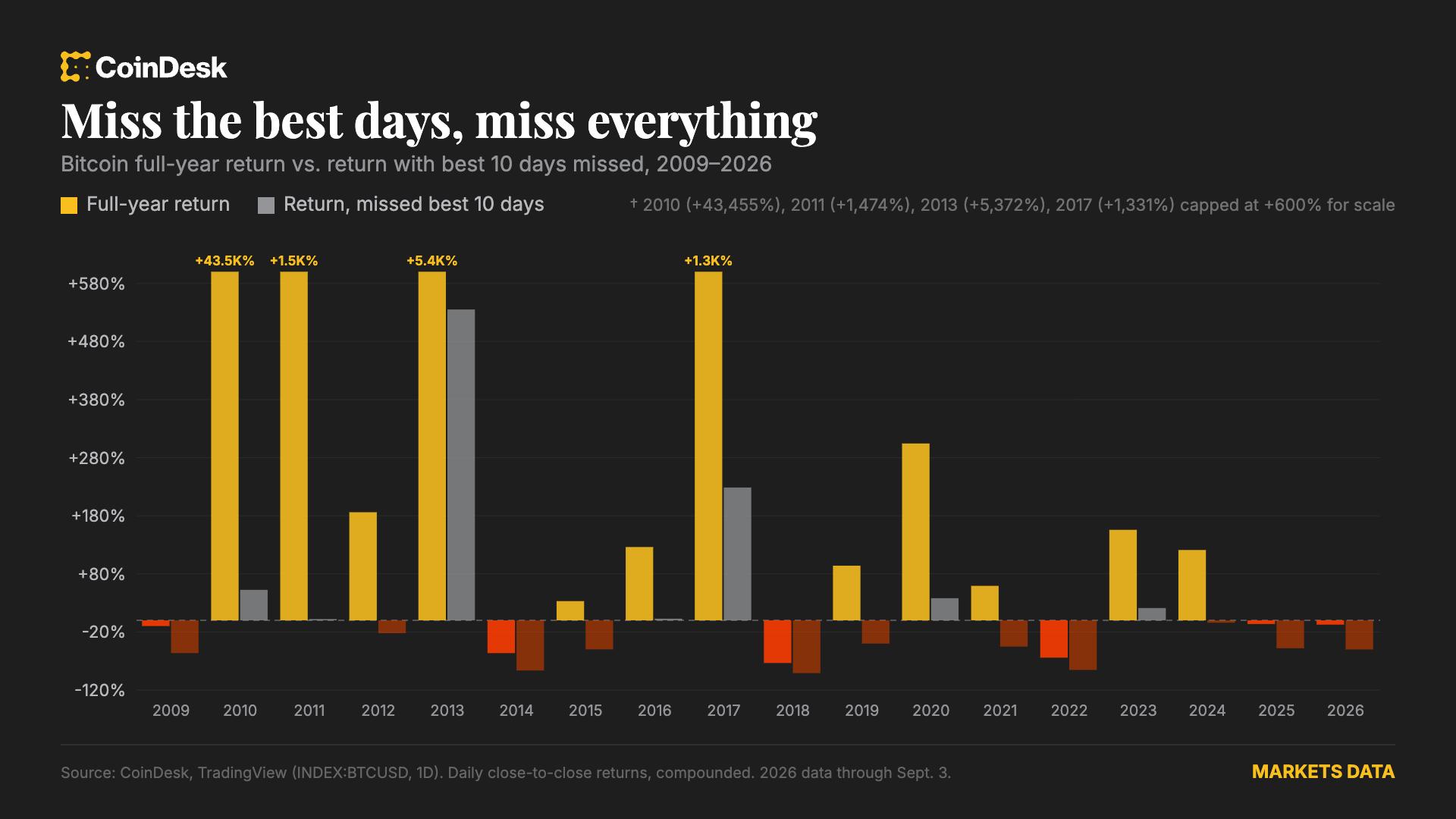
A historical analysis of bitcoin price performance from 2010 through 2026 highlights a central challenge for investors: the vast majority of the asset’s annual returns occurred during only a tiny fraction of the calendar year. That concentration helps explain why timing bitcoin can appear attractive but remains nearly impossible in practice. Investors moving in and out of BTC must identify a narrow period in which much of the year’s performance is generated. Missing that window can materially reduce the outcome of an otherwise successful strategy. The finding also complicates short-term decisions across the broader digital-asset market. BTC is the focus of the historical analysis, while ETH and SOL are related market tickers that investors may track when assessing cryptocurrency exposure. The available analysis does not establish that ETH or SOL followed the same return pattern. For investors, the central message is not that bitcoin rises consistently, but that its annual performance has historically been highly concentrated. Holding the asset through the year may expose investors to substantial volatility. Attempting to avoid weaker periods, however, risks missing the limited portion of the calendar responsible for most annual returns. The analysis provides historical context rather than a forecast for BTC, ETH or SOL. Past concentration of returns may inform risk assessment, but it does not reveal when the next major move will occur. Bitcoin’s potential rewards can be compelling, yet the difficulty of consistently identifying the market’s most important days remains a significant timing risk.
crypto
Be The Investor Research
Read Original Source (Coindesk)
Timing the bitcoin market is exciting but nearly impossible. Here's why
Bitcoin’s historical returns from 2010 through 2026 were concentrated in a very small portion of the calendar, underscoring the difficulty of market timing for investors tracking BTC and related digital assets such as ETH and SOL.