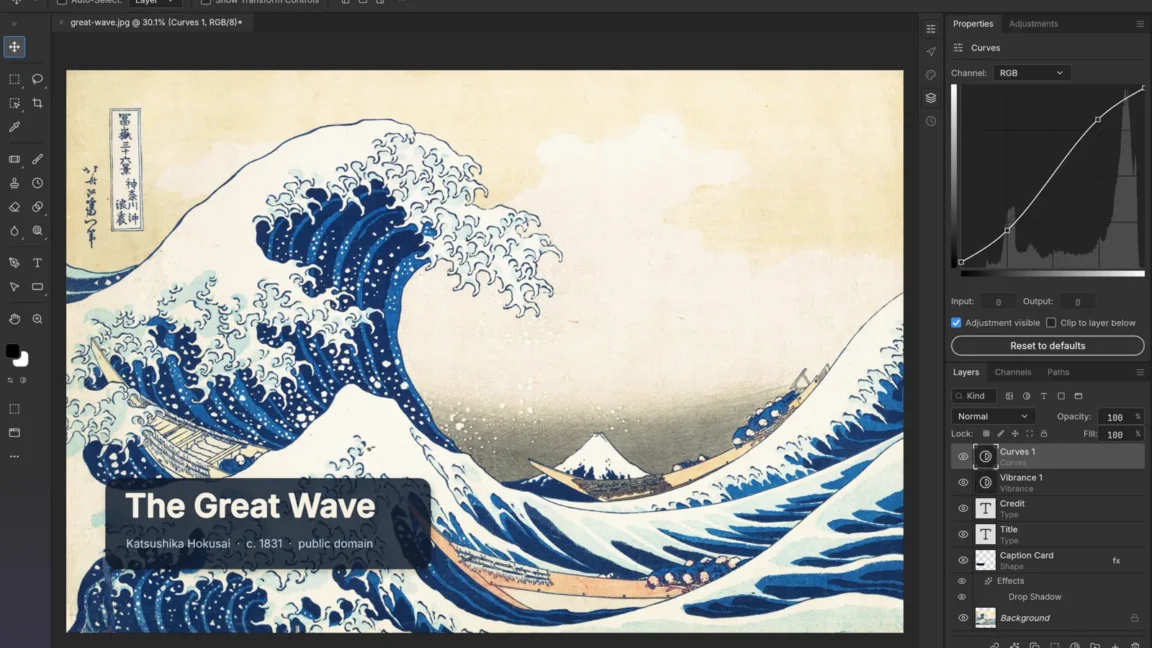
Artcraft has released seven open-source applications designed to resemble major Adobe products, including alternatives to Photoshop, Illustrator, Premiere and Acrobat. The launch matters to Adobe investors because it demonstrates how generative coding tools can lower the cost and time required to imitate established software workflows. It does not yet show that professional users are ready to replace Creative Cloud.
Developer Brandon Thomas said Anthropic's Claude Opus 5.5 helped create clean-room replacements in Rust, with browser versions compiled through WebAssembly. The applications are available under permissive open-source licenses and are funded through paid access to Artcraft's existing visual-AI tools rather than software subscriptions.
The first version is explicitly an early alpha
Thomas initially suggested feature parity could arrive within a month, then acknowledged that near-total parity would take longer. Users commenting on the release identified many missing or incomplete capabilities. That matters because creative software competes on reliability, file compatibility, plug-ins, color management, collaboration and support—not merely on whether a familiar toolbar appears.
Artcraft's own materials reinforce that distinction. Its apps page presents a broad suite, while the representative VectorCraft repository describes an alpha-stage product and documents both implemented functions and known gaps. Public code can accelerate outside contributions and scrutiny, but it also exposes the distance between a working demonstration and a maintained professional tool. Release cadence, issue resolution and contributor growth are therefore more informative than the initial count of applications.
Adobe also benefits from switching costs built over decades. Agencies and enterprises standardize workflows, train employees and archive projects in proprietary formats. An open-source rival must read and write those files accurately, preserve complex projects and maintain security across operating systems. A free price can attract experimentation, but professional adoption requires trust.
Where the strategic risk is real
AI changes the economics of competition even if Artcraft fails. A smaller team can now prototype interfaces, automate testing and reverse-engineer user-visible behavior faster than before. That can expand the number of credible niche alternatives and pressure Adobe to justify subscription pricing with integrated AI, cloud services, collaboration and enterprise governance.
Legal risk cuts both ways. Clean-room reimplementation of functionality can be lawful, but copying distinctive visual presentation too closely could create trade-dress or other intellectual-property disputes. Litigation might slow a particular project without reversing the broader decline in software development cost.
The investor conclusion should remain measured. Artcraft is evidence that the barrier to building a recognizable creative application is falling; it is not evidence that Adobe's revenue will immediately decline. The next useful metrics are active users, project-file compatibility, crash rates, third-party extensions and conversion into paid Artcraft services. Until those appear, the launch is a strategic warning about future competition rather than a current earnings event for Adobe.