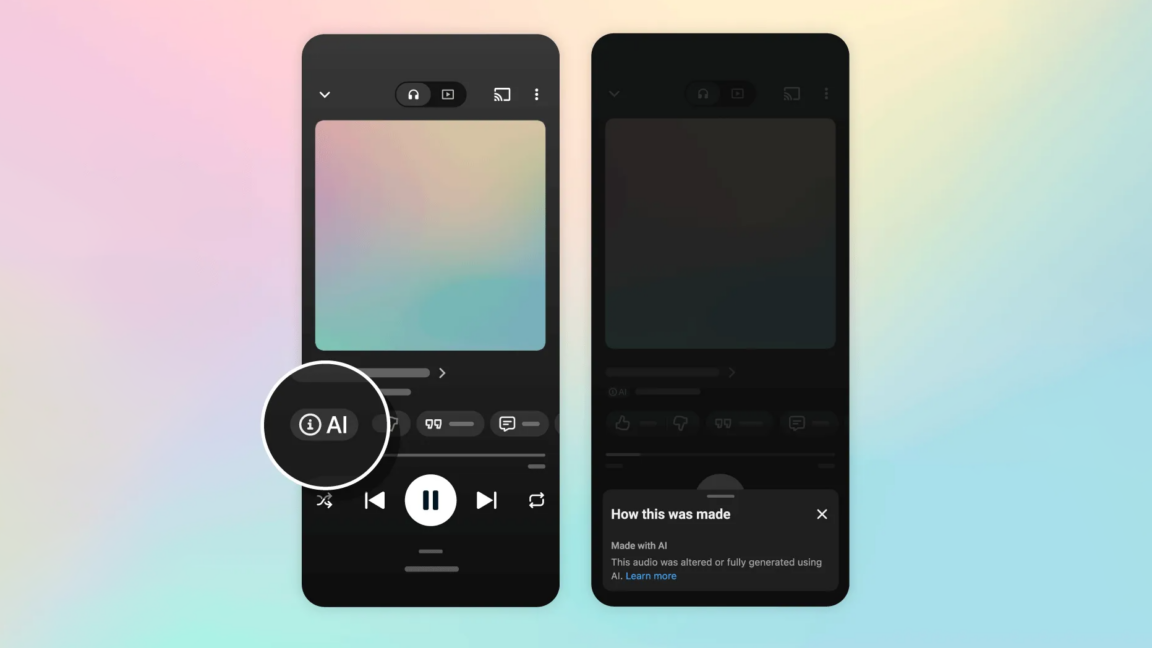
YouTube Music is labeling tracks made primarily with generative AI using uploader disclosures and detection signals. The policy improves transparency, but unlabeled music cannot be assumed human-made and listeners cannot block AI tracks.
YouTube Music is rolling out labels for songs in which generative AI played a significant role, extending a disclosure system already used for video. The label appears on the player page and opens an explanation of how AI was involved.
Google says the policy covers tracks created primarily with generative tools, including AI-generated composition and vocals. It will use information from music partners, uploader disclosures and internal detection. Content created with Google's own tools may also carry SynthID watermarks, while C2PA metadata can provide another signal.
The system improves transparency, but it is not a complete detector. Uploaders may choose whether to disclose AI use, and many tools leave no reliable mark in an exported audio file. YouTube can apply labels automatically when its systems identify significant use, yet the absence of a label cannot prove that a track was made entirely by people.
Disclosure without filtering
The new label does not let listeners exclude AI-generated songs from recommendations or playlists. That limits its usefulness for people who want a human-only catalog. Music is also often consumed with the screen off, making an on-screen badge less visible than a similar label on video.
For Alphabet, the product decision balances creator experimentation with trust. A strict ban could remove legitimate uses of AI in production, while no disclosure could erode confidence and create disputes with artists and rights holders. Labels preserve access while giving the platform room to refine detection.
The financial effect on Alphabet is unlikely to be material by itself. The important operating question is whether labels reduce complaints and rights disputes without discouraging uploads or listening. Investors should watch enforcement consistency, appeals for false positives, licensing rules and whether users eventually receive filtering controls.
Research and commentary are provided for information, not personalized investment advice. Verify material claims with the linked source and original company disclosures. Report a correction · About BTI