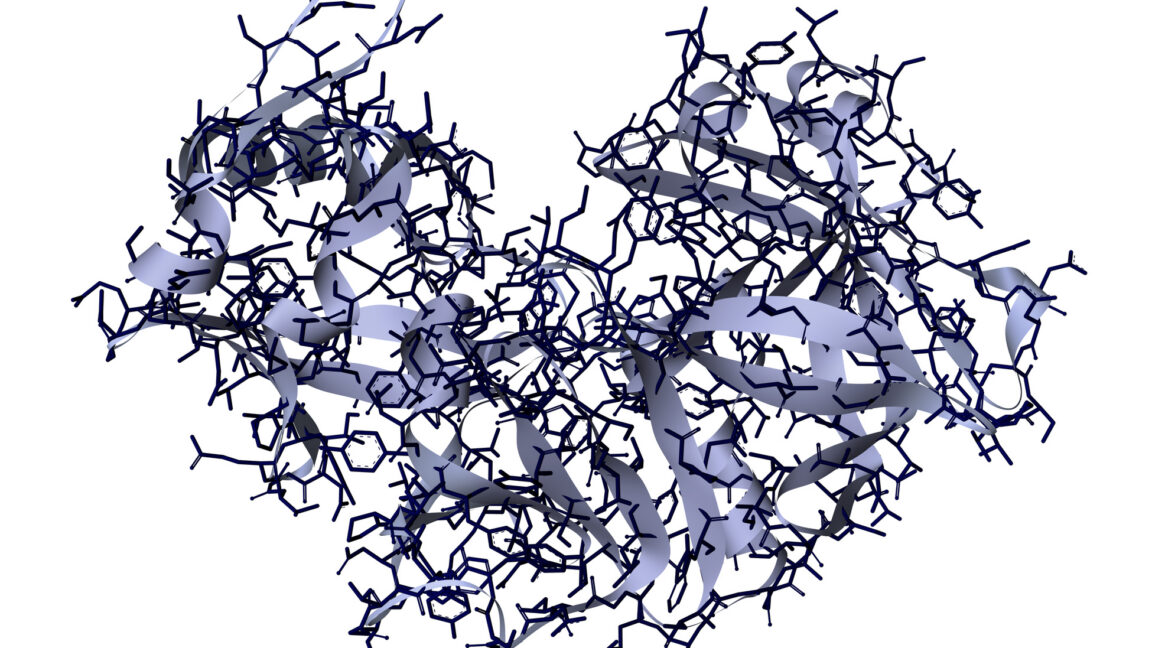
Researchers have used AI-guided protein design to build proteases, enzymes that cut other proteins, from largely new structures. Two studies published in Nature on October 14 describe cysteine-based and zinc-based designs that accelerated the normally slow cleavage of peptide bonds while recognizing selected target sequences.
The result matters because peptide bonds are exceptionally stable without a catalyst. Biology solves that problem with proteases, but natural enzymes evolved for particular substrates and can be difficult to reprogram without losing activity or stability. The researchers instead specified the geometry of an active site, generated new protein backbones and used sequence-design tools to fill those structures with amino acids.
The experiments also show the limits of current design. For one cysteine-protease program, 13 of 69 tested designs worked, a 19% success rate, and the initial versions were less active than the natural yeast enzyme used as a model. A zinc-based effort produced weak activity in only 14 of 89 early designs. Refining the design constraints improved that result: 35 of 38 later candidates showed some catalytic activity.
Speed is not a therapy
The best reported versions accelerated peptide-bond cleavage by factors of up to one billion or ten billion relative to the uncatalyzed reaction. Those large multiples compare an engineered enzyme with an extremely slow baseline, not with an approved drug or necessarily with the best natural enzyme. The more commercially relevant findings are target specificity, stability, manufacturability and activity under biological conditions.
The studies used tools including RFdiffusion2 to generate protein backbones and AlphaFold3 to predict structures. Database searches found no close matches for many designs, supporting the claim that the models were producing novel structures rather than simply retrieving known enzymes. Experimental testing remained essential because computational scores did not reliably identify every active candidate.
Programmable proteases could eventually support therapeutics, industrial processing and environmental cleanup. They might remove a disease-related protein, activate another medicine at a chosen site or break down a persistent material. Each use will require different evidence.
The next milestones are activity in cells and animals, off-target cleavage, immune response, delivery and manufacturing yield. The research expands the design space for enzymes, but investors should treat it as platform science rather than a near-term product catalyst.