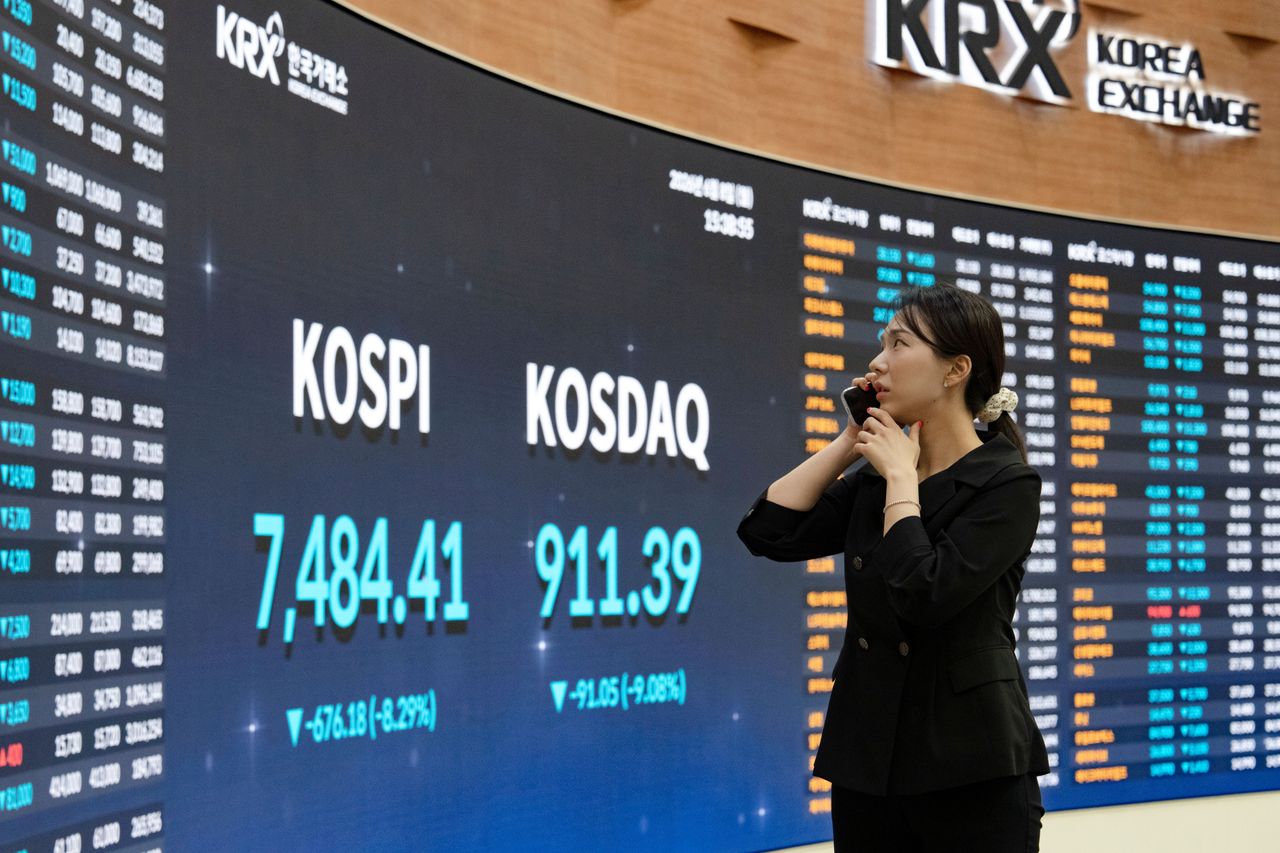
International equity leadership has widened dramatically in 2026, especially across Asian semiconductor markets.
The supplied source says the iShares MSCI South Korea ETF had gained more than 97% year to date, while the iShares MSCI Taiwan ETF was up about 83%.
By comparison, SPY, QQQ and DIA were up 13.75%, 22.44% and 7.52%, respectively.
Japan and broader emerging markets also outperformed. The WisdomTree Japan Hedged Equity Fund gained 27%, while the iShares Core MSCI Emerging Markets ETF rose 23.5%.
The common thread is not simply geography.
South Korea has benefited from the high-bandwidth-memory boom, supporting Samsung and SK Hynix, while corporate-governance reforms have helped improve market valuations.
Taiwan's performance is heavily influenced by TSMC and the global demand for advanced semiconductor manufacturing.
Japan has benefited from corporate-governance changes, higher buybacks, dividends and improved profitability.
Currency is another part of the story. A weaker U.S. dollar can improve relative returns from non-U.S. markets, while a stronger dollar can reverse some of that benefit.
The source also highlights concentration risk in U.S. equities. A small number of large technology companies have accounted for a substantial share of S&P 500 returns.
That does not automatically mean investors should abandon U.S. assets. It does mean geographic diversification can now provide exposure to the same AI structural trend through different companies, currencies and policy environments.
The risk is that recent gains have already been enormous. South Korea and Taiwan are no longer cheap momentum-free alternatives, and both remain sensitive to the semiconductor cycle.
What investors should watch: HBM demand, TSMC earnings, Korean governance reforms, the U.S. dollar, global AI capex, valuation multiples and whether earnings growth continues to justify the scale of recent ETF gains.
BTI's bottom line: 2026 is showing that the AI trade is no longer exclusively an American mega-cap story. South Korea, Taiwan and Japan offer different ways to participate, but the magnitude of the rally makes valuation discipline increasingly important.