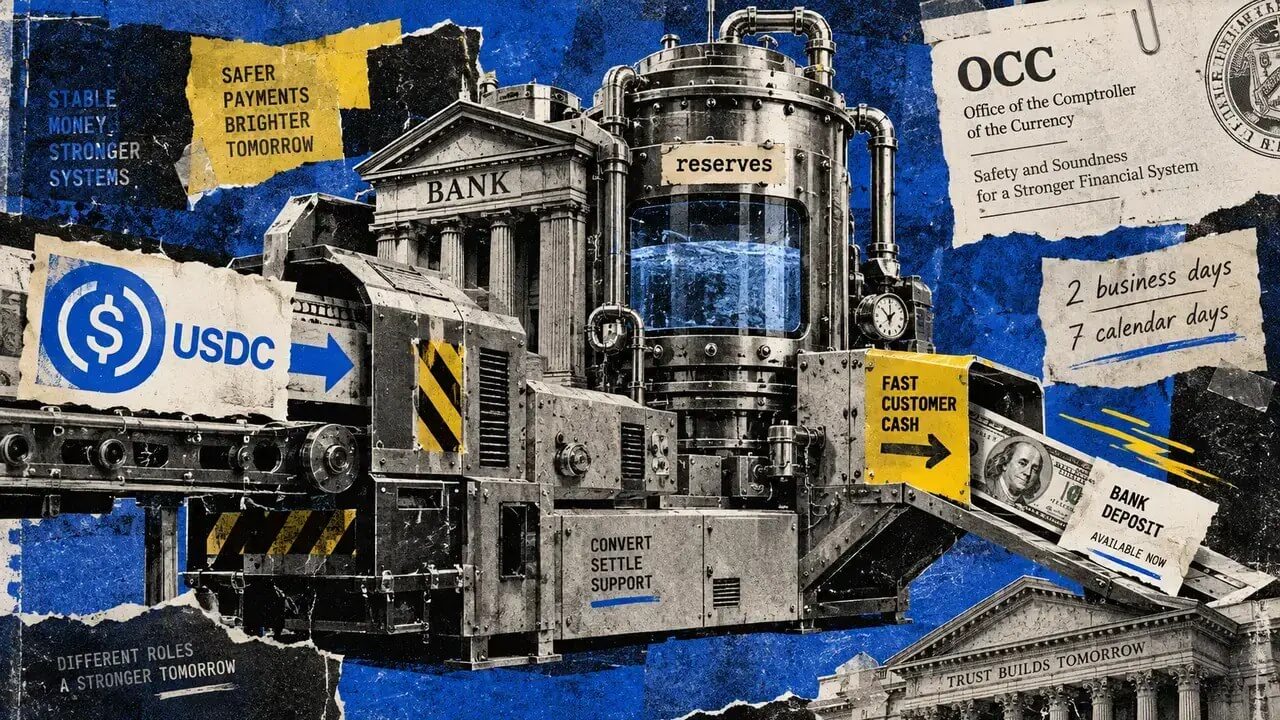
Proposed U.S. stablecoin redemption rules could protect the one-dollar redemption promise while still allowing customers to wait several days for cash.
The supplied source says the OCC proposal would give issuers two business days for ordinary redemptions.
If redemption requests exceed 10% of outstanding issuance value in a 24-hour period, the period could automatically extend to seven calendar days.
The structure is designed to prevent forced reserve sales during a run.
It also creates a gap between token value and immediate cash access.
A stablecoin can still be contractually redeemable at one dollar while the holder waits for the issuer to process the redemption.
Secondary markets can bridge that gap.
An exchange, market maker or conversion provider can buy the token and pay the customer earlier, then wait for the issuer to redeem it.
That makes the customer experience appear instant.
The liquidity risk has not disappeared.
It has moved to the intermediary.
If many users want to exit at once, providers need enough cash and balance-sheet capacity to keep buying tokens while issuer redemption is delayed.
During stress, spreads and fees can widen.
That is why a redemption guarantee is not the same as guaranteed immediate liquidity.
Direct access also matters.
The source notes that some issuers require eligible institutional accounts for direct redemption.
Retail holders may depend on exchanges or payment platforms rather than redeeming with the issuer themselves.
The framework can still improve systemic stability.
Giving issuers time to sell reserves in an orderly way may reduce the chance that a run forces fire-sale losses.
The trade-off is settlement speed.
For investors and businesses using stablecoins as cash equivalents, this difference is critical.
The proposal also creates a funding question for conversion providers.
A platform that promises instant cashouts during a seven-day issuer window needs enough cash, bank access or credit lines to finance the gap.
That liquidity has a cost.
Providers may respond by charging wider spreads, imposing limits or slowing withdrawals during stress.
The system can therefore remain solvent while becoming less convenient.
For users treating stablecoins as cash equivalents, that difference is crucial.
A one-dollar accounting value is not the same as immediate purchasing power if the path back to bank money becomes congested.
What investors should watch: final OCC rules, redemption thresholds, exchange liquidity, market-maker balance sheets, stablecoin spreads during stress and whether issuers offer faster channels for large institutional holders.
BTI’s bottom line: stablecoins can be redeemable at par without being instantly liquid. The proposed rules strengthen reserve management, but they make intermediary liquidity the key link between a one-dollar promise and spendable bank cash.