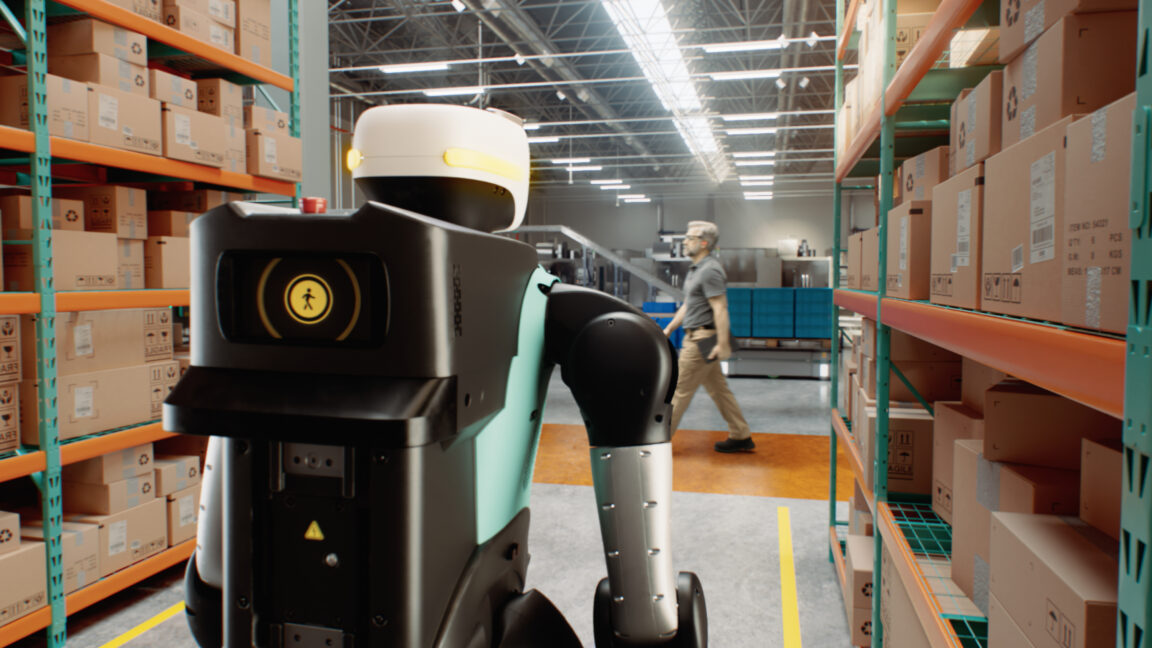
Nvidia is betting that safety will become the gating constraint for robots moving from demonstrations into factories, warehouses and hospitals. Its Halos for Robotics platform combines compute, sensor processing, safety software and validation tools so developers can build machines that operate around people without designing every safeguard from scratch.
The opportunity is strategically important because safety can turn Nvidia’s robotics products from standalone chips into a system. Halos links IGX Thor edge computers, Holoscan sensor technology, operating software, simulation and development processes. If robot makers standardize on that stack, Nvidia can capture value across hardware and software while raising switching costs.
From capability to deployability
Better AI models and robot hardware do not automatically create a production-ready machine. A warehouse vehicle must detect blind corners; a humanoid needs safe behavior around workers; a surgical device faces still different requirements. Nvidia designed Halos so customers can add task-specific safety functions without altering the protected foundation underneath.
Agility Robotics is integrating IGX Thor and Halos Core into its Digit humanoid, according to Nvidia’s June 22 announcement. Ars Technica also identified Boston Dynamics, KION and LG in the broader ecosystem. Named partners matter because they provide environments in which the platform can be validated, but partnerships are not the same as booked, recurring revenue.
The revenue bridge
Nvidia’s physical-AI narrative spans automotive, robotics and edge computing. Management has described the category as a multibillion-dollar business, yet the company does not disclose Halos as a separate revenue line. Investors should therefore avoid attributing the full economics of a robot or autonomous vehicle to Nvidia. The investable mechanism is narrower: more deployed machines can require accelerated compute, networking, development software and safety-certified modules.
Safety certification can improve pricing power because customers value validated components in applications where failure is costly. It can also slow sales. Standards vary by use case and jurisdiction, and a flexible platform still needs application-specific testing, documentation and integration.
Competitive and execution risks
Robot manufacturers can build proprietary safety systems or choose other edge-compute platforms. Large customers may resist dependency on one vendor, especially when models and sensors evolve rapidly. Nvidia must also show that a unified stack reduces total development cost rather than adding an expensive layer.
The strongest near-term evidence will come from production deployments, safety certifications and disclosed sales of IGX Thor systems. Demonstrations and design wins are leading indicators, not proof of scale.
Halos strengthens Nvidia’s attempt to make physical AI an ecosystem rather than a component market. The upside is a larger share of each deployed robot’s technology budget; the risk is that safety remains fragmented and application-specific. For investors, the platform expands Nvidia’s long-duration optionality but should not be valued like mature data-center revenue until commercial deployments become visible.
The business model could extend beyond one-time hardware. Safety-certified modules can pull through Nvidia AI Enterprise software, simulation tools and support, creating recurring revenue around each deployed system. Conversely, customers may use Nvidia hardware while keeping safety logic proprietary, limiting software monetization. Disclosure of software attach rates would help distinguish those outcomes.
Nvidia’s automotive-and-robotics reporting remains too aggregated to isolate Halos. That means investors should treat partner announcements as a pipeline indicator, then look for conversion into production programs. A design win in a prototype humanoid has a different economic weight from a certified platform shipping across thousands of forklifts or vehicles.
The platform also creates liability and reputation risk. Nvidia is supplying tools and reference architecture, not guaranteeing the safety of every completed robot. Still, a high-profile failure involving a partner could slow adoption across the ecosystem. The decisive proof will be repeatable deployment under recognized standards, measurable reductions in customer development time, and growing edge-compute revenue—not the number of announced collaborations.
A durable investment case will require both technical leadership and evidence that customers pay for the integrated safety layer at production scale.
Until then, contribution to Nvidia’s valuation should remain proportionate to disclosed edge revenue rather than the much larger theoretical robotics market.