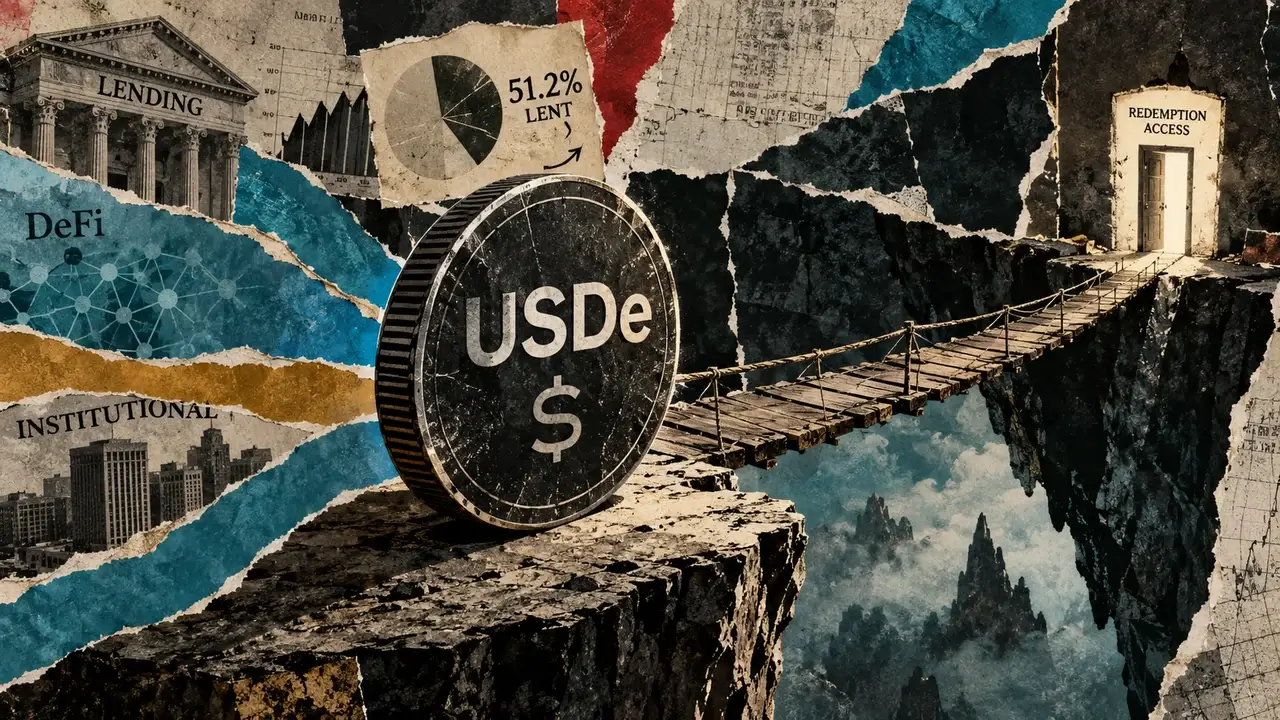
Ethena's USDe had 51.2% of its backing allocated to lending on October 12, according to the LlamaRisk assessment reported by CryptoSlate. The figure combines 36.9% in decentralized finance lending with 14.3% in institutional lending. It does not mean that half the backing was impaired, but it makes the timing and route of redemptions more important.
Backing and immediate liquidity are different
The snapshot reported $4.76 billion of backing against 4.76 billion USDe outstanding. The remaining allocation included 24.9% in liquid stablecoins, 17.6% in crypto basis positions and 6.0% in real-world assets. Those categories describe where backing sits, not how much cash every holder can obtain at once.
DeFi lending can be overcollateralized and still become temporarily hard to withdraw. Aave's published mechanics, for example, allow suppliers to withdraw only when enough liquidity remains in the pool after borrower demand. Institutional loans depend on contractual recall and redelivery terms. LlamaRisk reviewed collateral, custody and legal protections, but individual commercial terms and recovery timetables were not public.
That leaves two distinct questions. The first is whether Ethena can ultimately recover the value of lent assets. The second is whether it can deliver usable settlement assets quickly enough during heavy redemptions. Strong collateral helps with the first question but does not automatically solve the second.
Not every holder has the same exit
Direct redemption is reserved for eligible, whitelisted Mint Users who complete onboarding and compliance checks. Other holders generally depend on secondary markets, where the price can move away from one dollar if sellers exceed available demand.
Holders of sUSDe face an additional step. They must first complete the staking vault's cooldown and receive USDe. Selling or redeeming that USDe comes afterward. The active cooldown, accepted redemption orders and secondary-market depth therefore matter alongside the headline backing ratio.
The reserve fund offers a loss buffer, but it is not the same as instantly available settlement liquidity. The most useful monitoring data are unborrowed liquidity in major lending pools, institutional recall disclosures, USDe's market price and whether authorized redeemers can process orders without interruption. A stablecoin can remain fully collateralized on paper while its exit channels experience stress.