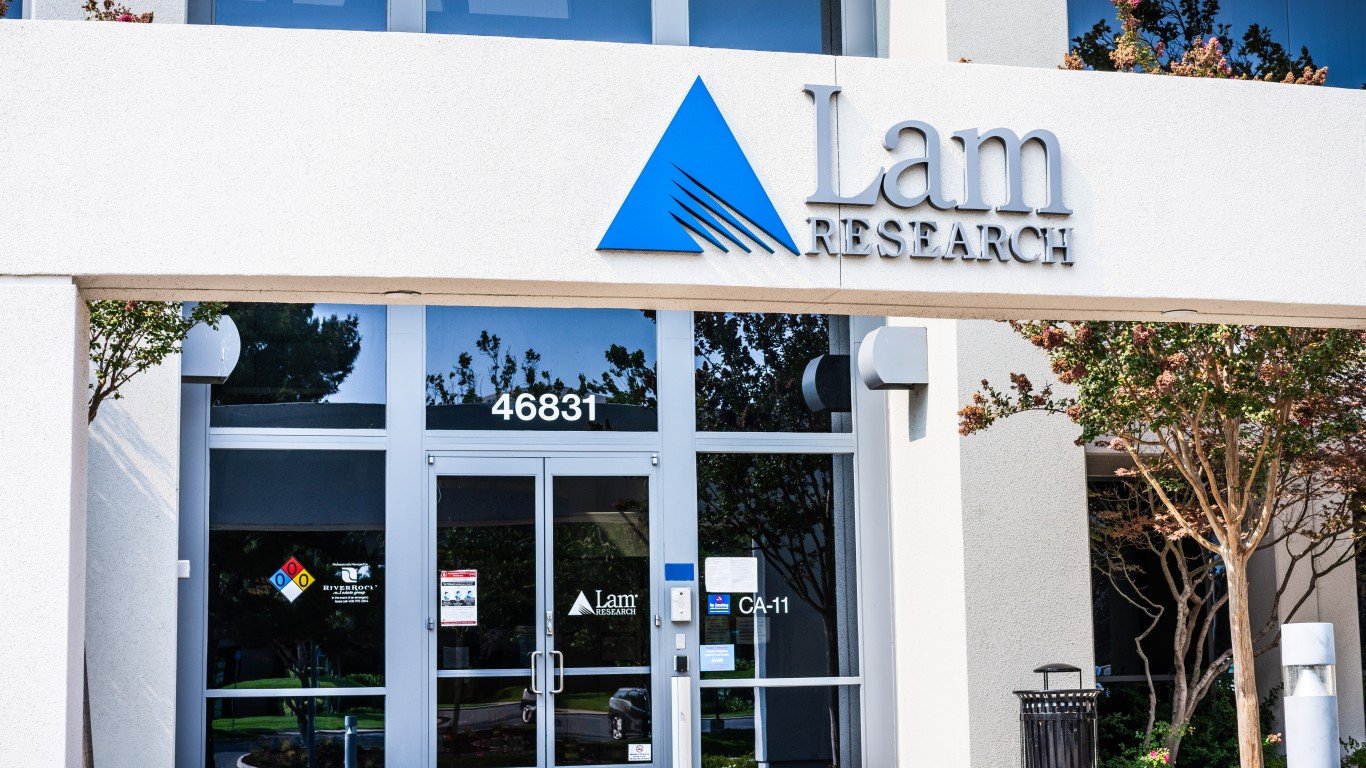
Shares of Lam Research (NASDAQ:LRCX) are rebounding after losing nearly 42% in just over a month. Since bottoming with other semiconductor stocks, they have risen close to 34%, positioning the company for a potential return to previous highs. The recovery reflects more than a broad semiconductor relief rally. Lam plans to increase its R&D laboratory budget by $3 billion over the next five years, an investment intended to preserve its edge in etching technology and strengthen its economic moat. The company also delivered a quarterly beat and upbeat guidance, while continued strength among its largest customers could lead to more aggressive capacity expansion. Lam is positioned for the next phase of AI-driven chip manufacturing. As semiconductors move toward smaller process nodes and three-dimensional designs, manufacturers will require increasingly sophisticated etching tools. Atomic layer etching (ALE) could become a standard process, but investors must determine whether Lam will control the resulting bottleneck. If its technology proves essential, the company could gain pricing power. Customer profitability remains another potential catalyst, providing capital for equipment purchases and helping Lam deepen its competitive advantage. Oppenheimer’s technical team named Lam one of its “best of the best” stocks on a momentum screen. At 33.2 times forward earnings, the shares do not appear clearly expensive given their potential earnings power and the expected growth of advanced chip manufacturing. Risks include execution challenges as shrinking processes and 3D designs increase complexity, while ALE demands exceptional precision. Although Lam’s long-term roadmap is attractive, its explosive momentum could exhaust itself, making a near-term pullback preferable. Semiconductor sell-offs can be difficult to buy, but a downturn could also create an opportunity if the company’s technology advances. Higher R&D spending may increase the likelihood of breakthroughs with broad implications for semiconductor manufacturing. If orders accelerate and a supercycle begins, Lam could be among the better-positioned beneficiaries. In a new chipmaking era, equipment makers are typically paid first.
stock
Be The Investor Research
Read Original Source (Yahoo Finance)
Lam Research’s Etch Moat Could Become the Most Profitable Lever in Next‑Gen Semiconductor Manufacturing
Lam Research has recovered nearly 34% after a 42% decline, while a $3 billion five-year R&D investment, strong results, customer capacity expansion and growing demand for advanced etching support its long-term opportunity.