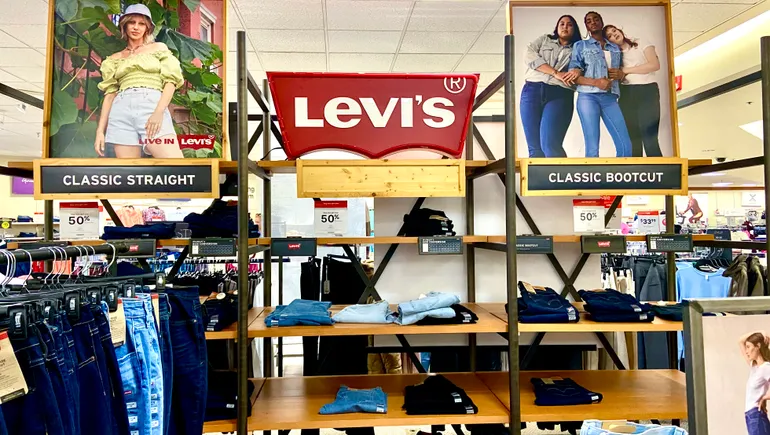
Levi Strauss's third quarter showed why channel mix can matter as much as headline revenue. Total revenue rose 4% to $1.61 billion, helped by 6% wholesale growth, while direct-to-consumer revenue increased only 2% and comparable sales were nearly unchanged.
That gap is strategically important. Wholesale partners absorb part of the expense of stores, distribution and customer acquisition, while direct sales give Levi more control over merchandising and the customer relationship. A healthy wholesale quarter can support volume, but it does not fully answer whether Levi's investment in owned retail and e-commerce is earning an attractive return.
Management attributed the direct-sales weakness to two concrete factors. In the United States, the back-to-school assortment emphasized loose fits while demand shifted toward low-rise styles. In Europe, unusually warm weather delayed seasonal purchases. The company says it adjusted merchandising and marketing quickly, and early fourth-quarter DTC trends improved.
Refunds changed the profit picture
The quarter's margin expansion was not purely operational. Levi recorded $79 million of tariff refunds in cost of goods sold plus $5 million of related interest income. It spent $25 million in the third quarter on promotions, marketing and other support, leaving a substantial net benefit.
Gross margin expanded 450 basis points to 66.2%. The company calculated that refunds contributed 490 basis points before 120 basis points of redeployment, for a net 370-basis-point benefit. Operating margin rose to 13.8% from 10.8%, with a 330-basis-point net refund benefit after reinvestment.
These figures explain why profits improved even as direct demand disappointed. They also show why investors should avoid treating the quarter's full margin gain as a new baseline.
The next test is demand quality
Levi expects direct-to-consumer growth to improve in the fourth quarter, and management has directed additional spending toward holiday promotions and marketing. Better DTC comparable sales would support the view that the third-quarter miss was temporary and linked to assortment and weather.
If the rebound does not arrive, the company may face a harder choice between protecting margin and spending more to stimulate demand. Distribution expenses in the United States were already higher than expected, which makes execution on logistics and inventory especially relevant.
Wholesale strength kept the quarter growing, and the company remains profitable with substantial liquidity. Still, the most informative fourth-quarter numbers will not be the headline EPS alone. Investors should focus on DTC comparable sales, the cost of the recovery effort and the portion of gross margin that remains after the tariff-refund benefit rolls off.