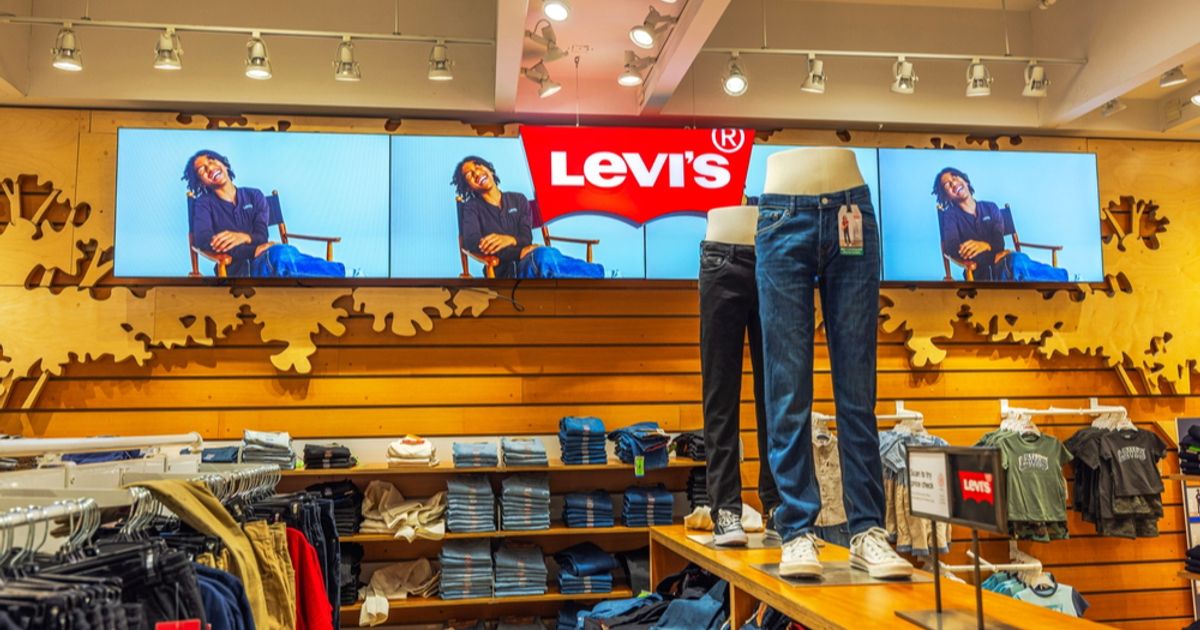
Levi Strauss raised its fiscal 2026 profit outlook after tariff refunds delivered a large third-quarter benefit, but the quarter also exposed a softer direct-to-consumer business. The result is better near-term earnings with a less certain underlying growth signal.
Net revenue increased 4% to $1.61 billion. Adjusted diluted earnings per share rose to $0.48 from $0.34 a year earlier, while adjusted EBIT margin expanded to 15.5% from 11.8%. Those figures look strong, but the company says tariff refunds contributed $0.16 to adjusted EPS before about $0.05 was redeployed into the business. The net benefit was $0.11 per share.
The same distinction matters for margins. Tariff refunds added 490 basis points to operating-margin expansion, while reinvestment absorbed about 160 basis points, leaving a net benefit of 330 basis points. Gross margin reached 66.2%, up 450 basis points, with a 370-basis-point net benefit from the refunds after redeployment.
Core demand was mixed
Wholesale revenue rose across regions, but direct-to-consumer revenue grew only 2% and comparable sales were nearly flat. Management linked the weakness to a back-to-school assortment that leaned too heavily toward loose fits as U.S. shoppers shifted toward low-rise styles, plus unusually warm European weather.
Management said those problems improved early in the fourth quarter after merchandising and marketing changes. That recovery is important because Levi's strategy has emphasized direct sales as a way to control its brand and capture more economics. Yet company-owned stores and e-commerce also carry marketing and distribution costs, so a DTC slowdown can pressure both growth expectations and operating leverage.
Levi raised full-year adjusted EBIT margin guidance to about 12.1% from 12% and lifted adjusted EPS guidance to $1.54 to $1.56 from $1.46 to $1.52. It expects organic revenue growth of about 6%, but reported revenue growth of about 7%, the bottom of the prior 7% to 7.5% range because of foreign exchange.
What the upgrade really says
The outlook is not simply a story of better operations. A one-time refund materially improved the fiscal-year numbers, while management is using much of that cash for marketing, promotions and supply-chain work intended to support future growth.
That reinvestment may be sensible, but it delays the answer to the key question: can Levi generate sustained margin expansion after the refund benefit fades? The fourth quarter should provide an early read through DTC comparable sales, distribution costs and gross margin excluding unusual tariff effects.
For now, the margin upgrade reduces near-term earnings risk, but it does not erase the softer consumer signal. Investors should separate the temporary refund benefit from the repeatable economics of product demand, channel mix and cost control.