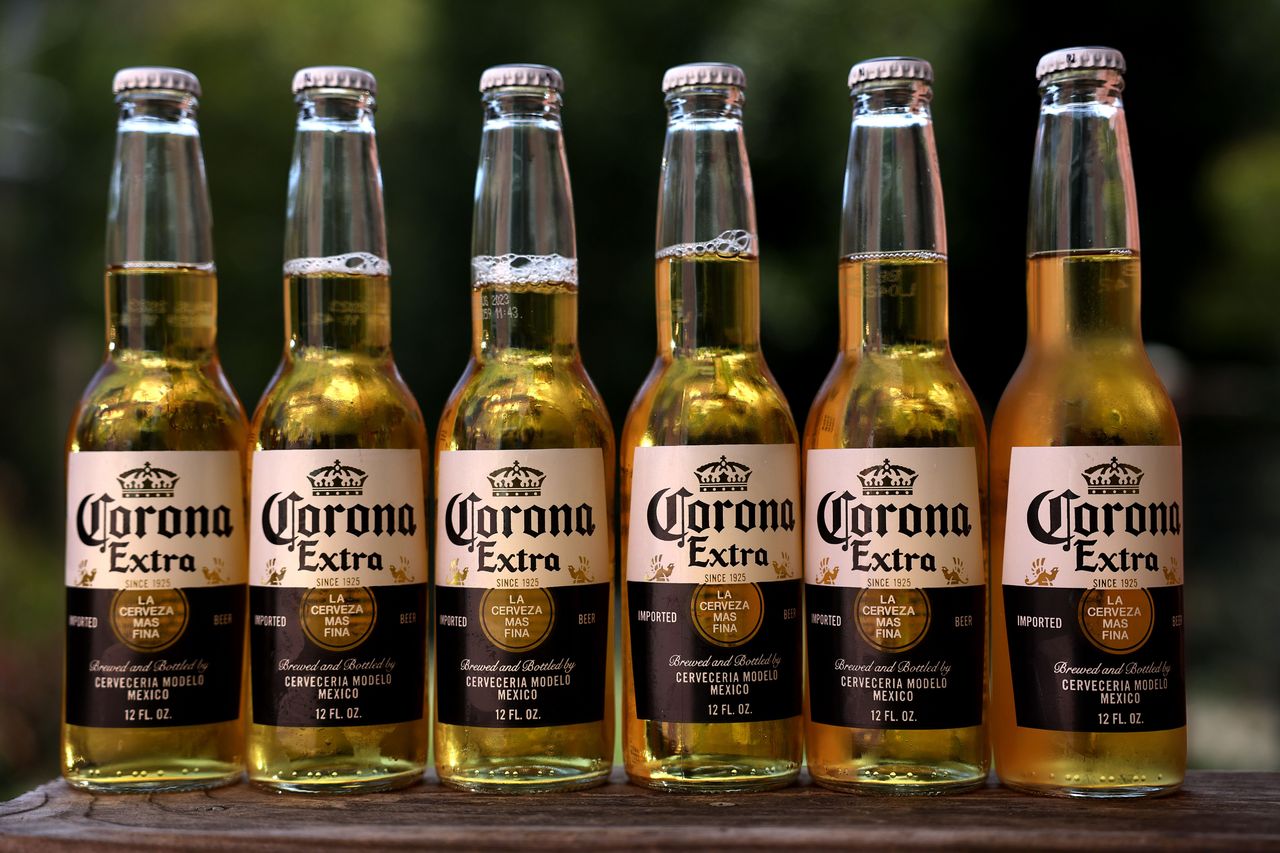
Goldman Sachs cut its Constellation Brands price target to $155 from $180 while keeping a Buy rating, a combination that captures the current tension in the stock. Beer demand is showing early improvement and fiscal 2027 guidance held, but the lower target recognizes that a turnaround must convert brand momentum into volume, cash flow and earnings.
Constellation reported comparable EPS of $3.74 versus the $3.60 consensus cited by the source. Management reaffirmed full-year comparable EPS of $11.20-$11.90 and said stronger September trends could move results toward the upper end. A target cut with an unchanged rating is not contradictory: the analyst can reduce the valuation multiple or forecast and still see upside from the current price.
Volume has begun to recover
The company's [fiscal second-quarter release](https://ir.cbrands.com/sec-filings/all-sec-filings/content/0000016918-26-000039/stzex991_83120268kearnings.htm) reported 1.5% organic beer shipment growth and 1.3% depletion growth for the quarter. Depletions measure distributor shipments to retail and are closer to consumer pull-through; shipments to distributors can be affected by inventory timing. The narrow gap suggests the improvement was not solely a channel fill.
That compares with a difficult fiscal 2026 second quarter, when beer net sales fell 7% and shipment volume declined 8.7%. The year-over-year base is therefore favorable. Investors need sustained growth beyond an easy comparison before assigning a premium multiple.
The [10-Q](https://www.sec.gov/Archives/edgar/data/16918/000001691826000040/stz-20260831.htm) says operating income for the first six months rose 4%, helped by beer volume, commodity-derivative gains, lower tariff costs and restructuring, partly offset by higher marketing and lower wine-and-spirits sales following divestitures. Some drivers are operational; others are timing or comparability items. Comparable measures help isolate the core, but cash flow remains the cleanest test.
Marketing is an investment with a measurable hurdle
CEO Nicholas Fink described green shoots for Corona and improving Modelo trends, supported by more focused execution and sports marketing. Spending can restore salience, but it reduces margin before volume arrives. The economic test is incremental gross profit relative to marketing dollars, not awareness alone.
Constellation targets $2.4-$2.5 billion of operating cash flow and $1.6-$1.7 billion of free cash flow for fiscal 2027. The midpoint conversion is $1.65 billion of free cash flow from $2.45 billion of operating cash, or about 67%. That cash supports dividends, debt reduction and buybacks. The company repurchased $530 million through September, which can lift per-share results but creates value only if shares are bought below intrinsic value.
The source cited a remaining $2.5 billion authorization as about 12% of market capitalization. Authorization is capacity, not a commitment, and execution competes with leverage and investment. Investors should avoid adding the full authorization to value as though it were cash already returned.
At the fiscal cash-flow midpoint, the $530 million already repurchased equals about 32% of expected annual free cash flow. That is a meaningful use of cash, but the ratio also shows why the remaining authorization may take time unless leverage rises or operating results exceed guidance.
Guidance has room, but the range is wide
At $3.74 of Q2 comparable EPS, Constellation has demonstrated quarterly earnings power, but seasonality and marketing timing prevent simple multiplication by four. The $0.70 full-year guidance range is about 6% of the low end. Reaching the top requires the September improvement to persist without an offset from promotional spending, input cost or weaker consumers.
The bear case is that better short-term depletion data reflect comparisons and campaigns rather than durable category growth. Beer faces consumer pressure, moderation trends and competition, while wine and spirits remain in portfolio transition. The bull case is that Modelo and Corona stabilize while cost actions and buybacks lift per-share cash flow.
One practical cross-check is working capital. If shipments rise faster than depletions, distributor inventory and receivables can absorb cash even while reported sales improve. The close shipment-depletion relationship in Q2 is reassuring, but sustained cash conversion across the second half would provide stronger confirmation.
The next two monthly depletion readings and third-quarter margin will separate momentum from noise. Goldman’s lower target acknowledges that the proof period is still underway. The Buy rating can work if beer growth persists and free cash flow lands near guidance; it weakens if marketing rises faster than depletions or September's improvement fades.