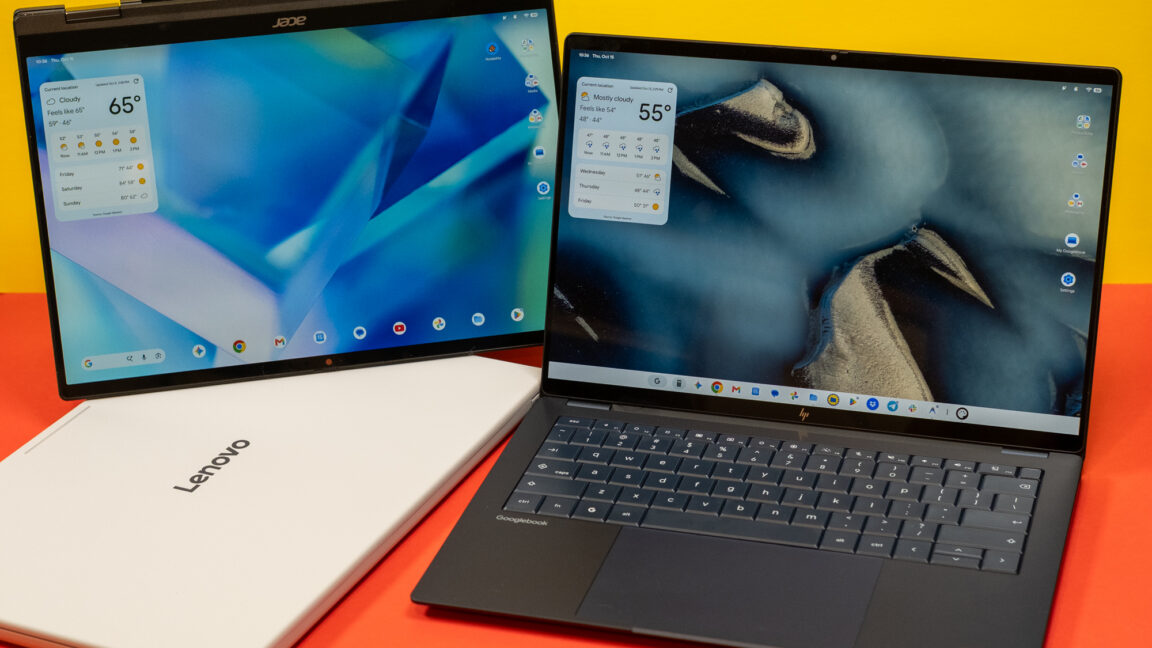
Googlebook combines premium PC hardware, Android integration and Gemini, but Ars Technica found weak desktop apps and unreliable phone features. Alphabet now has to prove that Android users will pay laptop prices for the ecosystem.
Google's first Googlebook laptops arrive with premium hardware and a clear strategic goal: move Android users into a computer designed around Gemini. Ars Technica's review found that the hardware is competitive, but the software still behaves too much like a phone to justify the premium price for many buyers.
Google launched five models from Acer, Asus, Dell, HP and Lenovo, starting at $899. The lineup uses Intel Core Ultra Series 3 or Qualcomm Snapdragon X Elite processors, with neural-processing hardware rated above 45 trillion operations per second for local AI tasks. Google positions the machines as an Android and ChromeOS combination that can hand files, apps and activity between a phone and laptop.
The problem is not the chassis
Ars found bright displays, metal construction and generally strong input hardware across the range. The review also found that the operating system could imitate a desktop with windows, multiple workspaces and a familiar browser. Setup was particularly easy for an Android user.
The weaknesses appeared in daily work. Phone integration sometimes broke when networks changed, app mirroring was slow and limited, and the Files app lacked capabilities such as tabs and network shares. Many Play Store apps still used mobile layouts or ignored common desktop interactions. Google services including Gmail, Calendar and Drive often appeared as web apps rather than full desktop clients.
That matters because Googlebook is not competing only with inexpensive Chromebooks. At $899 to roughly $1,300 for the reviewed configurations, it faces Windows laptops and Apple's MacBook Air. Solid hardware is necessary at those prices, but mature file management, background behavior and professional software are part of the product customers are buying.
Gemini is useful, but not yet a reason to switch
Googlebook integrates Gemini through features that can interpret screen content, accept voice input and generate simple widgets. Ars found some of these tools helpful, but also reported accidental activation, failed calendar actions and limited widget data. The reviewer built a more capable file manager with Google's Antigravity coding tool, but needed hours of prompting and debugging.
That experiment shows both sides of Google's strategy. AI can help users create software tailored to a need, yet buyers should not have to build basic desktop functions themselves. A premium laptop must be productive before the owner starts repairing its gaps.
What Googlebook means for Alphabet
The launch gives Alphabet a new way to protect Android loyalty as users move between phones and computers. It also creates a distribution surface for Gemini and gives Intel, Qualcomm and PC manufacturers another premium platform. Google has not disclosed sales targets, unit economics or revenue expectations, so the immediate earnings effect cannot be measured.
The investment question is adoption, not specifications. Googlebook will need reliable phone integration, more desktop-quality apps and evidence that buyers will pay premium prices for an Android-centered computer. Until Google reports demand or partners expand the category, the product is strategically interesting but not yet a material Alphabet catalyst.
Research and commentary are provided for information, not personalized investment advice. Verify material claims with the linked source and original company disclosures. Report a correction · About BTI