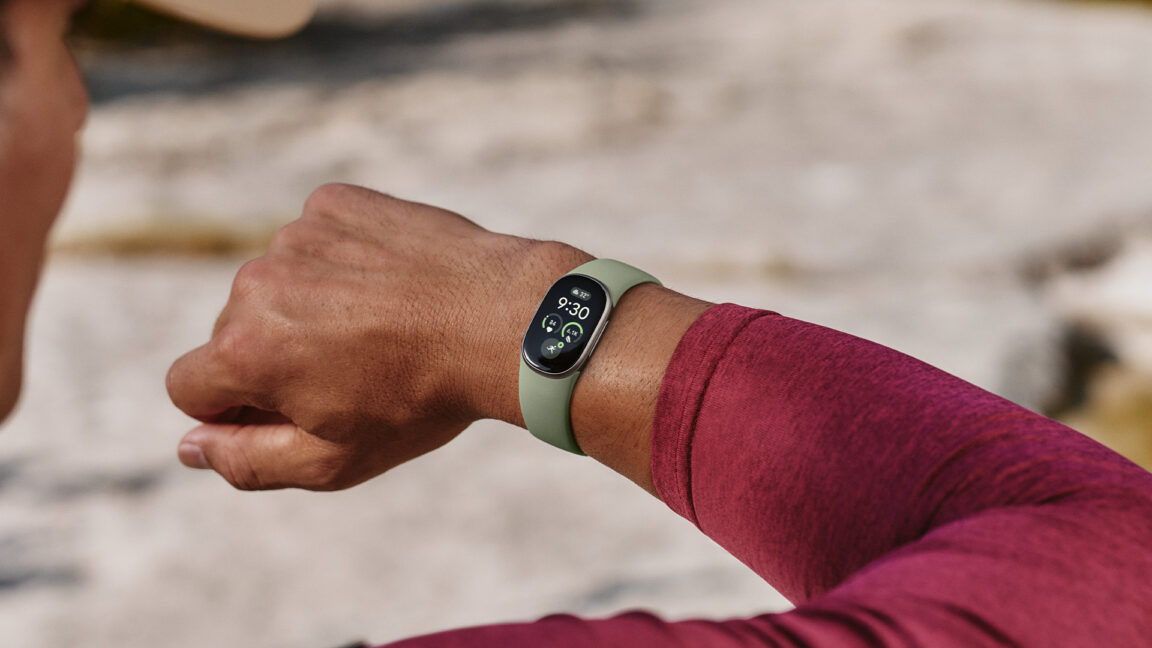
Google introduced the Fitbit Edge at $179.99, placing it between the screenless Fitbit Air and the more capable Pixel Watch 5. The device gives Alphabet a mid-priced wearable with a display, on-device GPS and several health sensors, while using paid software to deepen recurring revenue.
Fitbit Edge is available for preorder and is scheduled to reach stores on October 27. Google includes three months of Health Premium, after which customers need a subscription for Health Coach and some advanced features.
What buyers get
The 1.34-inch OLED device can show notifications, directions, weather and music controls. It includes ECG, blood-oxygen, heart-rate and skin-temperature sensors, plus an altimeter and activity tracking. Google estimates up to seven days of battery life under its test profile, although always-on display use cuts that figure sharply.
The product is not a full smartwatch. It does not run Wear OS, lacks downloadable apps, a speaker and a microphone, and does not support tap-to-pay. That narrower scope helps protect the higher-priced Pixel Watch while giving Fitbit users a clear upgrade from older trackers.
The subscription strategy
Google Health Coach uses Gemini to turn health and activity information into routines and recommendations. Health Guardian can flag changes in selected measurements, but Google says its blood-pressure and insulin-resistance trends are for general wellness and are not diagnostic tools.
That caveat is financially important. Health features can improve retention and support subscription revenue, but medical claims would bring heavier regulatory and liability exposure. Google is positioning the device as a wellness product rather than a replacement for clinical care.
Investor implications
The launch is unlikely to be material to Alphabet's near-term financial results on its own. Its strategic value is the combination of hardware, personal data, AI assistance and a subscription layer. If users pay after the trial, Google gains recurring revenue and more frequent engagement without making the Edge compete directly with its flagship watch.
Execution will depend on accuracy, privacy trust and conversion from the free trial. Investors should watch subscription attachment, device availability and whether Health Coach produces enough daily value to reduce churn.
BTI conclusion
Fitbit Edge is less about one tracker than about Google's attempt to build a tiered health platform. The hardware fills a portfolio gap, but the stronger business case requires customers to keep paying for the software around it.