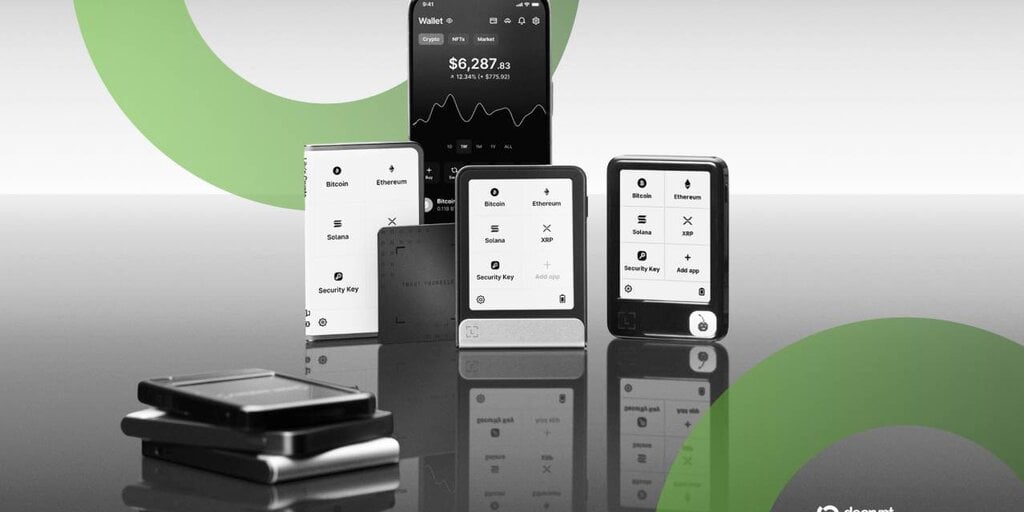
Ledger users can now obtain stablecoin liquidity without immediately selling their bitcoin exposure. The new Crypto Loan feature, announced October 7, brings Morpho lending into Ledger Wallet through Yield.xyz. The trade-off is that preserving price exposure also means accepting a debt obligation secured by volatile collateral.
Eligible users pledge wrapped bitcoin, including cbBTC or WBTC, to borrow USDC or USDT. These are tokenized representations of bitcoin rather than native bitcoin sitting untouched on its original blockchain. The borrower must evaluate the relevant wrapper and lending market as well as bitcoin's market price.
Decrypt reported the launch alongside a separate direct connection between Ledger Wallet and Morpho. The embedded loan flow and the direct-access integration are related offerings, but their interfaces and eligibility should not be assumed identical.
Signing security and loan security differ
Morpho's announcement states that collateral is deposited into isolated lending-market smart contracts. Those contracts handle accounting, interest and liquidation, and collateral can be withdrawn when the position remains sufficiently healthy.
Ledger's hardware device helps a user inspect and approve transactions while keeping private keys on the device. That protection is valuable against certain approval and key-management risks. It does not require a fresh borrower signature every time a lending contract enforces its existing liquidation rules.
This distinction changes what “keeping your bitcoin” means economically. A borrower retains exposure to bitcoin's price but commits collateral under contractual rules. If the position becomes undercollateralized, part or all of that collateral can be liquidated.
Market isolation also has a limited meaning. Separate markets can contain some lending exposures, but they cannot make a shared collateral asset, price feed or smart-contract implementation risk-free. The relevant terms must be checked for the specific market rather than inferred from the Morpho name alone.
A simple balance-sheet example
Suppose a borrower pledges assets worth $100,000 and borrows $40,000 in stablecoins. The starting loan-to-value ratio is 40%. If the collateral falls 20% to $80,000 while debt remains $40,000, that ratio rises to 50%.
The calculation is illustrative, not a quoted Ledger borrowing limit or liquidation threshold. Accrued interest would increase debt further. A borrower may need to repay some debt or supply more collateral, potentially at the same moment falling prices make either action harder.
Borrowing can therefore postpone a sale without guaranteeing that a sale will never occur. It can also concentrate risk when the stablecoins are used to buy more volatile assets: the borrower then has the original collateral exposure plus the new investment, financed partly with debt.
What the launch adds
The practical advance is distribution and a more integrated approval process. Ledger's direct-access documentation describes separate token-approval and deposit-or-borrow signatures, with readable transaction information on supported devices. It also notes that the original Ledger Nano S is excluded from that direct connection, a reminder that device support must be checked.
The release does not establish a single universal borrowing rate, fee schedule or liquidation buffer for every user. Jurisdiction, collateral choice and available market liquidity can change the terms.
The debt asset creates a separate exposure. A loan denominated in USDC or USDT is repaid in that token under the market's terms; describing it as dollar borrowing is an economic shorthand, not a guarantee that every conversion between the token and bank dollars will be frictionless. Stablecoin liquidity and the borrower's method of obtaining repayment funds can matter during stress.
The earlier loan-to-value example also shows the cost of waiting. After collateral falls to $80,000, restoring a 40% ratio would require reducing the $40,000 debt to $32,000, or adding $20,000 of collateral at the then-current value. Those are alternative illustrations before interest and fees, not a recommendation or a statement of the product's required ratio.
Thus, a borrower needs liquidity outside the pledged position if maintaining a chosen buffer is part of the plan. Hardware security cannot supply that liquidity.
For holders seeking liquidity, the useful comparison is the complete cost and collateral commitment against selling a portion of the asset. The new interface reduces friction in obtaining a loan; the essential investment decision remains whether the borrower can withstand a substantial collateral decline without being forced out.