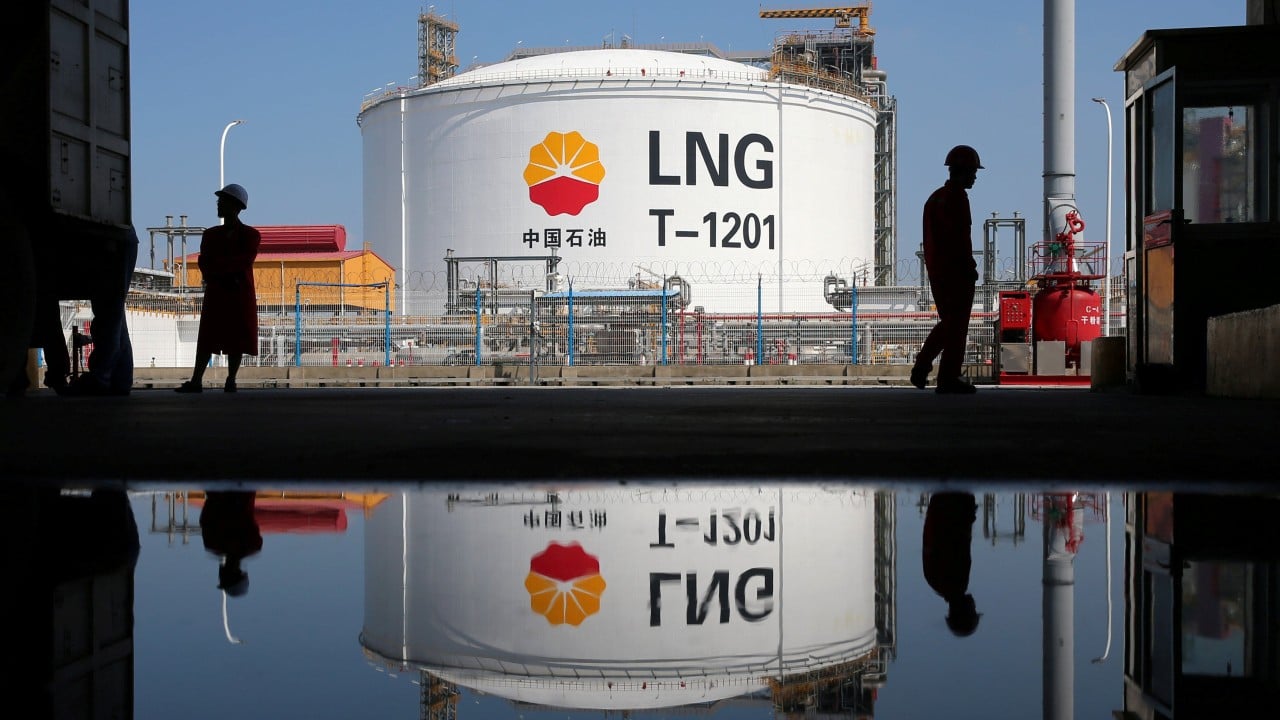
China has unveiled a dedicated five-year plan to increase crude oil drilling and expand energy infrastructure as the world’s largest importer of fossil fuels faces heightened supply risks. Announced on Monday by the National Development and Reform Commission and the National Energy Administration, the plan calls for natural gas storage capacity to exceed 13 per cent of national consumption by 2030. China also aims to raise annual liquefied natural gas (LNG) terminal handling capacity to 200 million tonnes and increase overland pipeline import capacity to 114 billion cubic metres of natural gas a year by 2030. The measures reflect Beijing’s effort to strengthen energy security amid geopolitical risks, including the prolonged conflict in the Middle East and disruptions to shipping through the Strait of Hormuz. For investors, the targets point to continued state-backed activity across upstream production, pipeline construction, gas storage and LNG infrastructure. Under the oil and gas plan, China is targeting domestic supply of 440 million tonnes of oil equivalent by 2030. It also plans to add 20,000 km of long-distance oil and natural gas pipelines, taking the national network to 220,000 km—enough to circle the Earth more than five times. The programme includes development of intelligent drilling rigs capable of reaching depths of 15 km, highlighting Beijing’s push to improve access to domestic resources through advanced technology. Such efforts could support supply resilience, although the plan does not quantify associated investment or production gains. At the same time, the plan explicitly calls for China to reach peak oil consumption. Beijing aims to curb oil demand and emissions through greater use of green fuels, improved energy efficiency and electrification. The policy therefore combines near-term expansion of supply capacity with a longer-term effort to limit fossil-fuel demand. China also issues sector-specific development plans covering energy, manufacturing, technology and agriculture. The oil and gas targets form part of broader government priorities rather than a standalone infrastructure programme. Investors will be watching whether spending on pipelines, storage, LNG terminals and intelligent rigs strengthens energy security while peak demand, electrification and efficiency reshape the outlook for oil consumption.
asia
Be The Investor Research
Read Original Source (Scmp)
China plans for peak oil demand amid pipeline increase, intelligent rig development
China’s new five-year oil and gas plan targets peak oil consumption while expanding domestic supply, pipelines, LNG terminals and gas storage as geopolitical tensions and Strait of Hormuz disruptions sharpen energy-security priorities.