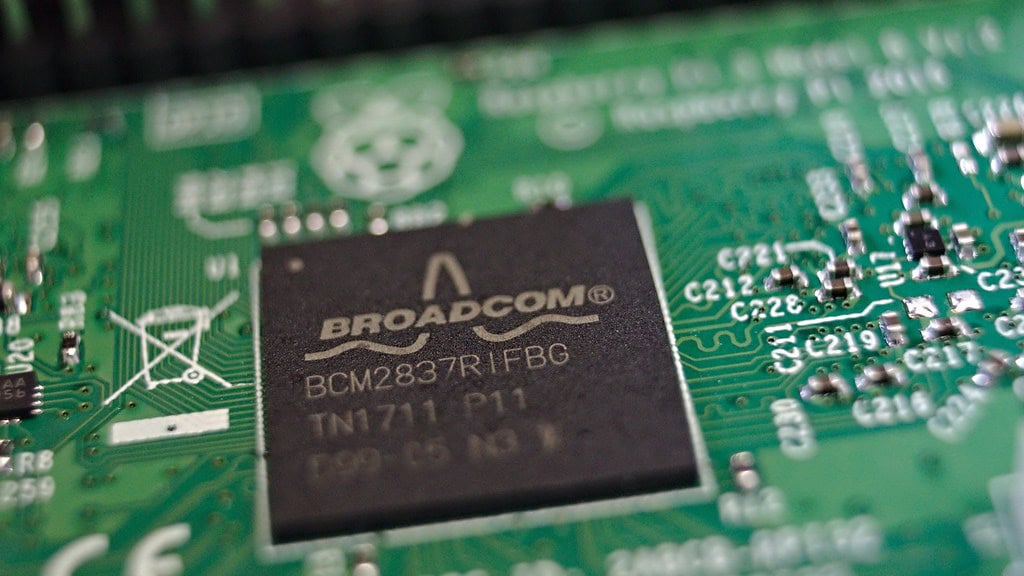
Broadcom is building an AI semiconductor business around custom accelerators and networking rather than selling a general-purpose GPU to every customer. That model ties the company closely to a smaller group of hyperscalers, trading broad customer reach for deeper design relationships and greater revenue visibility.
The latest quarter confirms the scale
Broadcom reported fiscal third-quarter 2026 revenue of $29.59 billion, up 86% from a year earlier. AI semiconductor revenue reached $16.7 billion, an increase of 221% year over year and 54% from the prior quarter. Management expects fourth-quarter AI semiconductor revenue of $21.7 billion, up 236% year over year, within total revenue guidance of about $34.8 billion.
Those figures are company-reported results and guidance, not analyst price targets. They show that AI demand is already affecting Broadcom's financial statements. Free cash flow was $13.67 billion in the quarter, giving the company substantial capacity to fund investment and service debt.
Why custom chips can be attractive
A custom accelerator, often called an XPU, is designed with a specific customer for a defined workload. It can improve performance per dollar or per watt, while Ethernet networking connects large clusters of those chips. Multi-generation programs can be sticky because changing suppliers requires new design work, software validation and deployment planning.
The same structure creates concentration risk. A delay, spending cut or sourcing change at one large customer can affect a meaningful share of expected revenue. Custom products can also carry a different margin mix from software or higher-margin semiconductor products. Broadcom guided fourth-quarter non-GAAP operating margin to about 66%, but investors should avoid assuming today's product mix is permanent.
The comparison with Nvidia needs care
Broadcom and Nvidia overlap in AI infrastructure, but their models are not identical. Nvidia sells widely used GPUs and a software ecosystem, while Broadcom helps selected customers build custom silicon and networking. A lower valuation multiple alone does not establish that Broadcom is cheaper if its growth, margins or customer concentration differ.
BTI's conclusion is that Broadcom has moved beyond an AI promise to measurable revenue and cash flow. The next tests are whether fourth-quarter guidance is delivered, whether new custom programs ramp on schedule and whether margins remain resilient as the mix changes. A strong business can still be a weak investment if expectations already assume flawless execution.