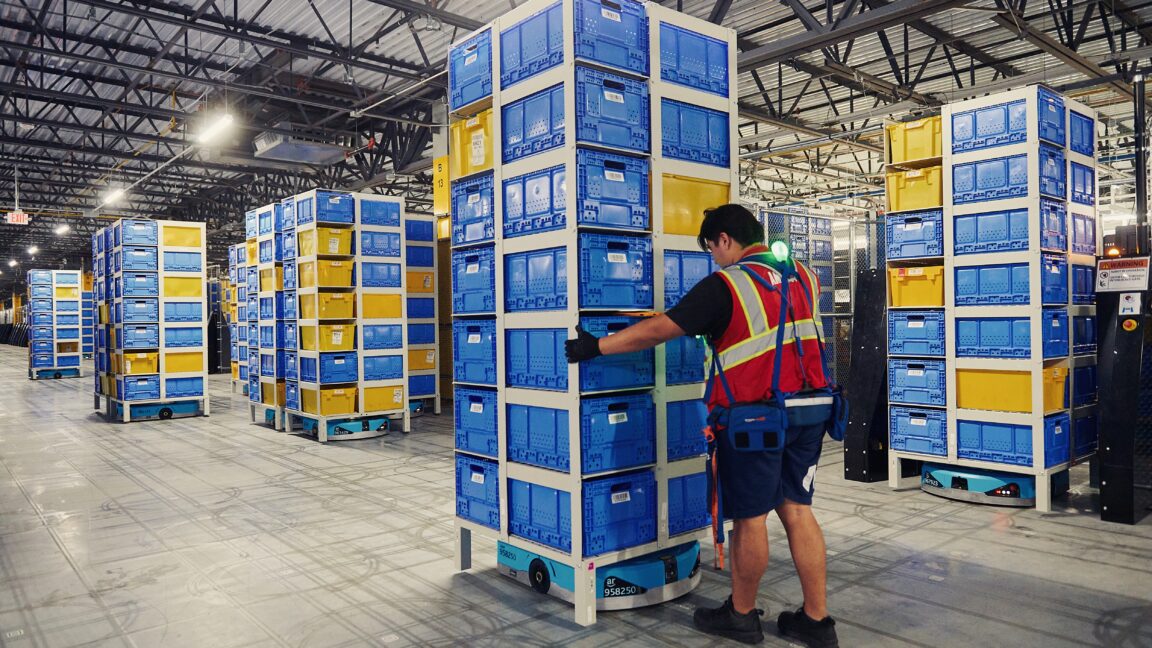
Amazon has deployed more than one million robots across its operations network. At that scale, even a small improvement in travel time or pick success can affect delivery speed and fulfillment cost. The question is whether robotics produces durable operating leverage without transferring new risks to workers or locking the network into expensive systems.
Coordination matters as much as robot count
Amazon said its DeepFleet foundation model improved robot travel efficiency by 10%. The system coordinates paths and reduces congestion when fleets share warehouse lanes. Mobile robots move inventory, while robotic arms sort, lift and stow packages that still require different levels of human supervision.
The company's 2025 Form 10-K reported approximately 1.576 million full-time and part-time employees. That scale shows why automation does not translate directly into eliminating the workforce. Advanced sites also need maintenance, engineering and reliability roles, even if each package requires fewer manual steps.
Safety evidence is mixed
Amazon says robots can take over heavy tasks and points to lower companywide incident rates. The original article also cited independent research finding fewer severe injuries but more repetitive-strain injuries at robotic sites using older data. Those findings can coexist if automation changes the type and pace of work rather than removing risk.
Amazon does not separately disclose robotics capital spending, savings per package or project payback. Investors must look for improvement in fulfillment expense, delivery coverage, inventory productivity and operating margin. A milestone robot count is not a return-on-investment measure.
What investors should watch
Track fulfillment cost as a share of sales, same-day delivery expansion, employee roles and safety disclosures. The most useful disclosure would connect a named system to labor hours, throughput, error rates and capital cost.
BTI's bottom line
Amazon's robotics scale can widen its logistics advantage, but durable value requires lower cost per order, safer work and reliable peak performance. The financial return still needs to show up consistently in operating results.