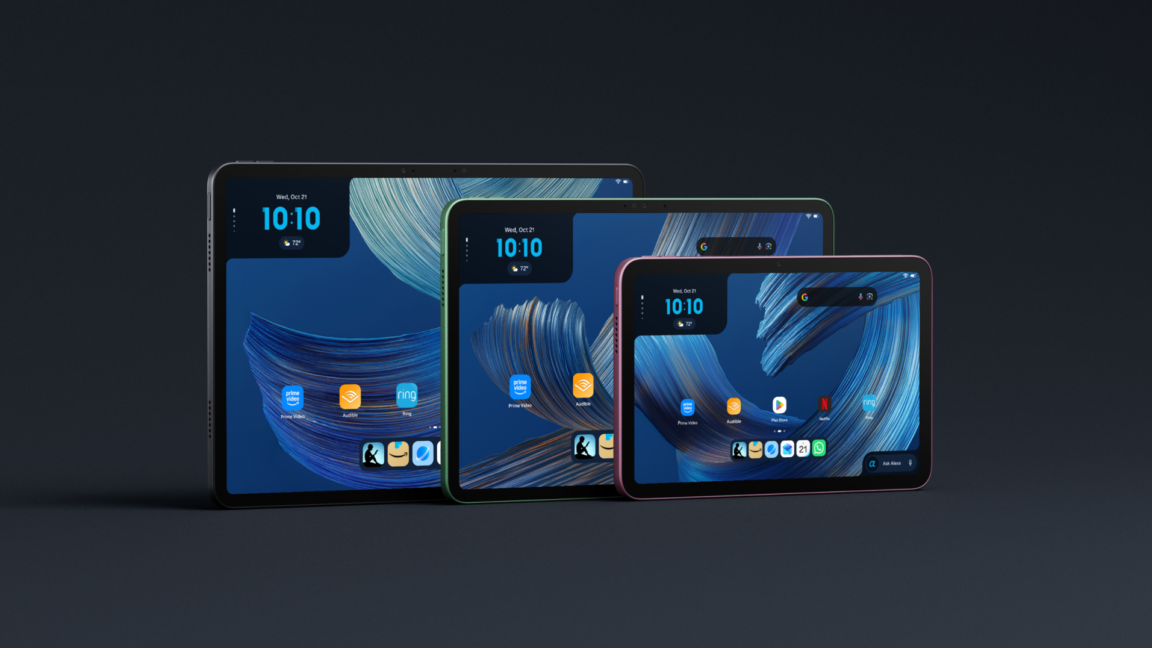
Amazon is replacing the Fire tablet brand with Alexa Tablets and, more importantly, opening the devices to the Google Play Store. The change removes one of the product line’s biggest limitations: buyers no longer depend on Amazon’s narrower app catalog. It also shifts the investment case from ultra-low-price hardware toward a broader Alexa+ distribution strategy.
Amazon introduced three aluminum models. The Alexa Tablet 8 starts at $229.99, the Tablet 11 at $329.99, and the Tablet 12 Pro at $499.99. The Pro version offers 8GB of memory, 128GB of storage and optional keyboard and pen accessories. U.S., Mexican and Canadian sales begin October 14, followed by major European markets on October 19.
Why Google Play changes the product
The old Fire model used Android underneath but steered customers toward Amazon’s own software and store. Full Play Store access makes mainstream apps easier to install and reduces a reason to choose an iPad or Samsung tablet instead. It also means Amazon accepts a larger Google presence on a device designed to make Alexa+ central to search, recommendations and shopping.
That compromise makes strategic sense if the tablet’s primary value is engagement rather than hardware profit. Alexa+ can connect device usage to Prime Video, Kindle, Audible, Amazon Music and commerce. More capable hardware may increase time spent in those services, while the screen gives Amazon a persistent surface for AI-driven product discovery.
The economics remain uncertain
Prices are materially above the entry level historically associated with Fire tablets. Better processors, displays and aluminum construction increase the bill of materials, and Amazon has not disclosed expected unit sales or device margins. The base products remain cheaper than some premium tablets, but the $500 Pro model competes in a market where Apple has stronger tablet-specific software and customer loyalty.
Android’s software gap is another risk. Google Play offers millions of apps, but many are still optimized for phones rather than large screens. Amazon can solve access; it cannot by itself guarantee that developers improve the tablet experience.
For AMZN investors, this is unlikely to move consolidated earnings on hardware sales alone. The larger opportunity is whether Alexa+ turns the tablet into a recurring-services and commerce channel. Evidence would include device sell-through, Alexa+ engagement, Prime attachment and purchases initiated through the assistant.
The launch is therefore a distribution bet disguised as a hardware refresh. Google Play makes the device more useful, but the return depends on whether Amazon can convert that broader utility into higher-value engagement without sacrificing price competitiveness.