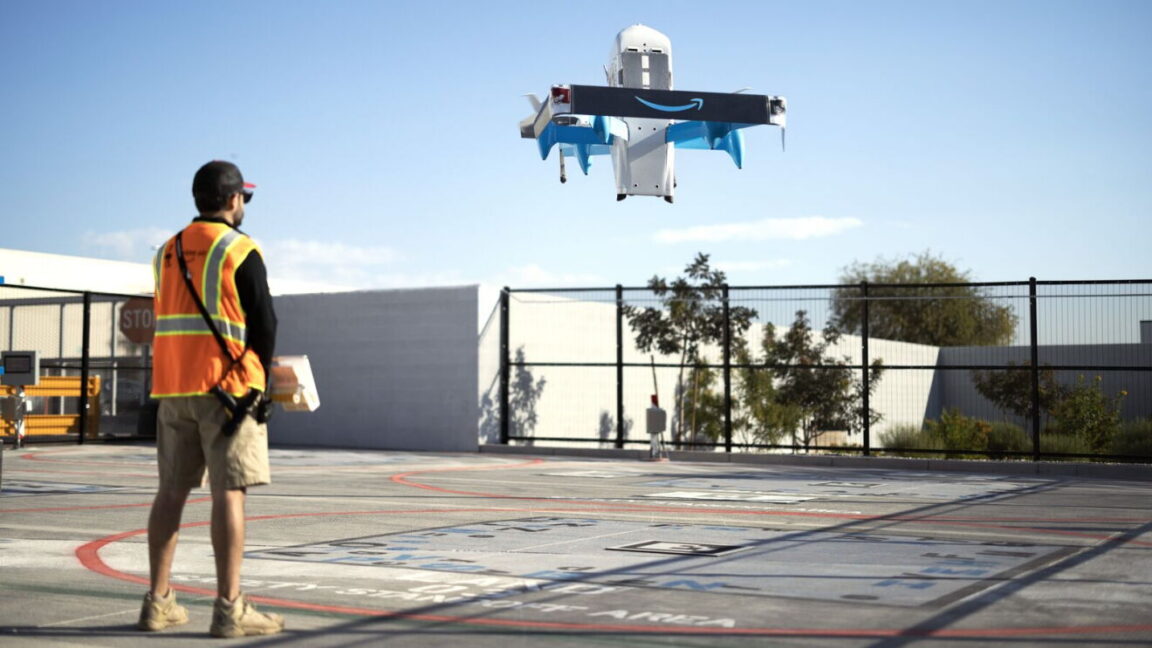
Amazon plans to expand Prime Air nearly sixfold, reaching nearly 500 U.S. cities and towns by the end of 2026. On August 19, it announced launches in Chicago, Cleveland, Atlanta, Syracuse, New York, and Boise, Idaho. Each site covers about 175 square miles, with deliveries in 30 to 60 minutes. Prime Air already operates from warehouses in 10 cities across seven states, including suburban areas near Phoenix, Tampa, Kansas City, Omaha, Nebraska; Baton Rouge, Louisiana; Detroit; Houston; and San Antonio, Dallas and Waco, Texas. The expansion comes as Walmart works with Wing and Zipline. Walmart has surpassed 1 million drone deliveries from 66 stores across four states and plans to expand to more than 270 stores by 2027. Zipline partnered with Uber to target 1 million daily drone deliveries by the end of 2029. The company, which pioneered long-range blood and medical-supply deliveries in Africa, says it has completed more than 2.7 million deliveries worldwide. DoorDash is developing DoorDash Air after receiving FAA Part 135 certification in July, although its drone and operating plans remain preliminary. The investment case includes rapid delivery, battery-electric operations, potentially lower emissions and lower costs without adding last-mile vehicles. Constraints include payload capacity: Amazon says its drones can handle nearly all items weighing five pounds or less that fit in a large shoebox. Strong winds, heavy rain, snow and extreme cold can halt service. Safety and community acceptance are significant risks. Zipline says its autonomous drones have flown more than 100 million miles and use backup parachutes. Amazon drones struck a construction crane in Tolleson, Arizona, in October 2025, severed an Internet cable in Waco in November 2025, and hit an apartment building in Richardson, Texas, in February 2026. FAA and National Transportation Safety Board investigations remain ongoing. Wing drones caused incidents in Brisbane in September 2022 and Kemah, Texas, in March 2026. Residents report frequent noise and privacy concerns, while Richardson residents protested in June. Amazon says onboard cameras support navigation and obstacle detection, with no live human-monitored feed. FAA drone noise complaints remain low compared with helicopter and fixed-wing complaints, but could rise with expansion.
tech
Be The Investor Research
Read Original Source (Arstechnica)
Amazon aims for delivery drones to reach 500 US neighborhoods by end of 2026
Amazon’s nearly sixfold Prime Air expansion could accelerate adoption and reduce last-mile costs, but payload, weather, safety, regulatory, privacy and noise concerns may constrain returns as rivals scale.