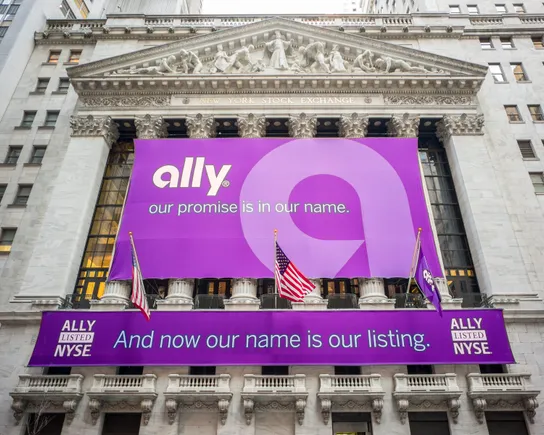
Ally Financial's strategic reset is producing clearer operating priorities: digital consumer banking, auto dealer finance and corporate lending. The company exited mortgage originations and sold its credit-card program, using the released capital in part to reduce interest-rate risk. The investment case now turns on whether concentration improves returns faster than funding costs and consumer credit pressure rise.
Second-quarter figures cited by Banking Dive show profit of $367 million, up 13% from a year earlier and 26% sequentially. Core return on tangible common equity reached 11.8%, still below management's mid-teens objective. Consumer banking customers grew 7% over the prior year, auto originations rose 10% in 2026 after a similar gain in 2025, and corporate-finance loan volumes increased about 40% from the start of 2025.
Why focus can improve returns
Ally has a durable position in dealer finance, where its roots extend back to GMAC, and management says it holds roughly 7% market share. Corporate finance is smaller in share but offers room to grow through sponsor-backed middle-market lending. The digital bank supplies deposits without a branch network and gives Ally a direct relationship with consumers.
Exiting mortgages reduces the mismatch between 30-year assets and shorter-duration bank funding. Selling the card portfolio also removed a customer segment that management believed did not fit its higher-earning digital-bank base. A narrower organization can deploy marketing, technology and capital around businesses where it has scale or specialist relationships.
The funding and credit counterweight
Ally's retail deposit base was about $144 billion in the second quarter, and the average retail portfolio yield was 3.12%, according to Banking Dive. Higher policy rates can lift new-loan yields, but competition for high-yield savings and certificates of deposit can reprice funding quickly. Margin improvement depends on asset yields rising enough to offset that cost.
Auto credit is the second major risk. Consumer stress can raise delinquencies, repossessions and loss provisions, while aggressive competitors can compress loan pricing. Corporate finance adds sponsor and economic-cycle exposure even though management cites low historical losses.
Ally is scheduled to report third-quarter results on October 20. Investors should track net interest margin, retail deposit cost and mix, auto net charge-offs, used-vehicle recovery values, corporate-finance growth and progress toward the mid-teens return target.
Capital allocation will reveal whether the strategy is durable. The card sale released capital, but future growth in auto and corporate loans consumes it again. Management must balance originations, reserves, dividends and repurchases without reducing the cushion against a weaker labor market or lower used-vehicle prices.
The focused model is credible because it aligns capital with businesses where Ally has a reason to compete. It is not yet fully proven: the next phase requires better returns without loosening underwriting or overpaying for deposits.