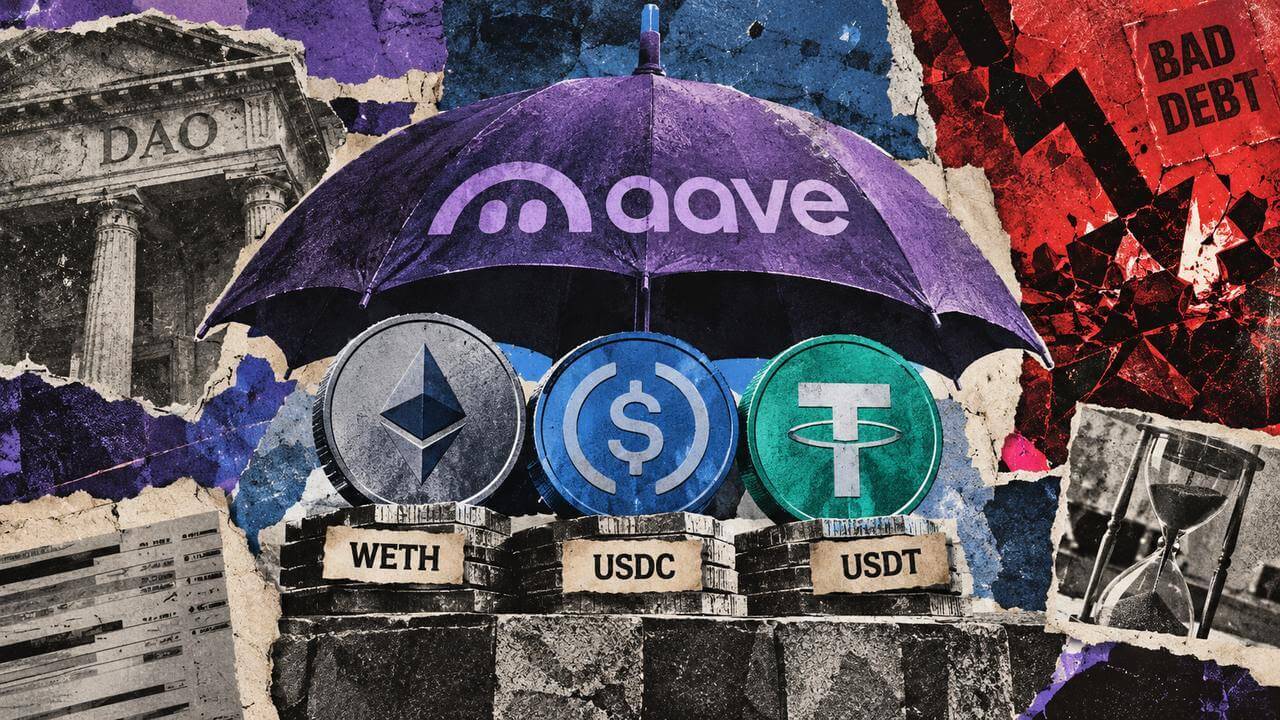
Aave V4 is proposing a significant change to how lending losses are absorbed, placing DAO-controlled capital earlier in the protection stack.
The supplied source says the proposal would use DAO funds as a first-loss buffer before losses are pushed further into the system.
That is an important governance choice.
A lending protocol always needs to decide who bears losses when collateral fails to cover debt.
Traditional banks use equity capital and loan-loss reserves.
DeFi protocols use combinations of collateral, liquidation mechanisms, insurance modules and governance-controlled reserves.
Aave’s proposal moves the DAO closer to the role of an equity holder.
That can improve user confidence because depositors know there is a designated capital layer available before losses reach them.
The cost is that governance capital becomes more exposed.
If the protocol repeatedly absorbs bad debt, treasury resources that could have funded development, incentives or buybacks may instead be used to repair lending losses.
The mechanism can also change incentives.
Users may be willing to supply more capital if they believe the DAO stands behind the market.
That is positive for growth.
But overly generous loss absorption can create moral hazard if risk parameters become too loose because governance believes the treasury will cover mistakes.
The strength of the system therefore depends on risk management before losses occur.
Collateral factors, oracle quality, liquidation speed and market liquidity remain more important than the size of the backstop.
A large treasury can protect against one event.
It cannot make a structurally poor lending market safe.
For AAVE holders, the proposal links token-governed treasury resources more directly to protocol risk.
That can make Aave more credible as financial infrastructure, but it also means bad-debt events have clearer economic consequences for the DAO.
The size of the DAO treasury relative to protocol risk will therefore become an important metric.
A first-loss buffer looks reassuring only if it is large enough to absorb realistic stress without exhausting strategic reserves.
Investors should also examine whether the backstop is funded in liquid assets or in volatile governance tokens.
A treasury dominated by AAVE could lose value at the same time lending losses rise, weakening protection precisely during market stress.
A more diversified reserve would offer stronger loss-absorption capacity, though it could reduce upside for token holders during bull markets.
That balance between resilience and capital efficiency will shape how credible the V4 safety model becomes.
What investors should watch: final V4 loss-waterfall design, size of DAO first-loss capital, bad-debt history, liquidation performance, collateral standards and whether the new structure changes supplier growth or borrowing costs.
BTI’s bottom line: Aave V4 is moving toward a more explicit capital model. Putting DAO funds first in line can strengthen depositor protection, but it also makes governance capital more economically responsible for lending risk.